
Gen Phoenix pushes circularity from ambition to action with CirculAir Playbook

Nicola Rapley, Director of Marketing & Aviation Sales, Gen Phoenix
As the aviation industry faces mounting pressure to reduce waste and improve sustainability, a growing shift is taking shape behind the scenes, one that starts not at end-of-life, but at the very beginning of product design.
Gen Phoenix’s CirculAir Playbook positions circularity not simply as an environmental initiative, but as a fundamental design and engineering challenge that could reshape how aircraft interiors are developed for decades to come.
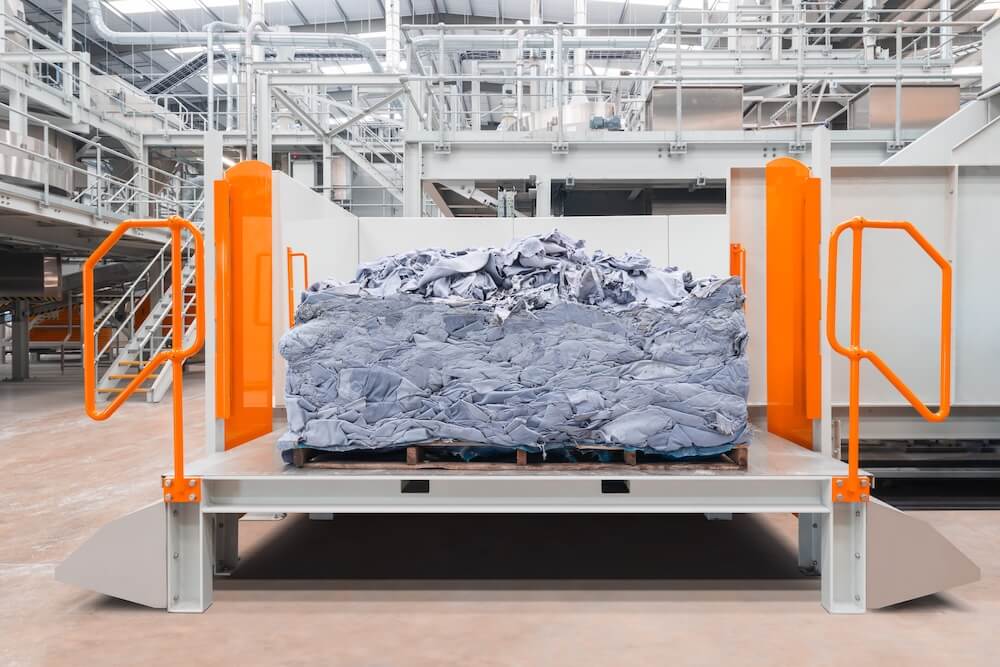
Gen Phoenix’s CirculAir Playbook positions circularity as a fundamental design and engineering challenge that could reshape how aircraft interiors are developed for decades to come
Scaling circular solutions
At the heart of this shift is a simple but powerful idea: materials should be designed with their entire lifecycle in mind. For decades, cabin interiors have been engineered primarily for in-service performance, with little consideration for what happens once products are removed from aircraft. The result is a largely linear system, where materials are discarded at end-of-life with limited recovery options.
“Circularity changes the starting point for how cabin interiors are developed,” says Nicola Rapley, Director of Marketing & Aviation Sales, Gen Phoenix. “What the playbook sets out is a shift toward designing for full lifecycle value from the outset.”
That shift carries significant implications for the industry. It requires rethinking not only materials, but also construction methods and product architecture, integrating sustainability into core engineering decisions rather than layering it on afterward.
The urgency is clear. More than one million aircraft seat dress covers are discarded annually, highlighting the scale of waste generated by traditional cabin materials, Rapley points out. Yet while circular solutions exist, scaling them remains a complex challenge.
Certification requirements, often cited as a barrier, demand that any new materials meet stringent aviation standards. But Rapley emphasizes that this is not an insurmountable obstacle.
“The materials and approaches we are presenting are designed to meet these standards,” she says, adding that the playbook demonstrates how circular concepts can comply with FAA and EASA requirements.
Beyond certification, the challenge becomes systemic. Supply chains are not yet fully equipped to support material recovery, and infrastructure for recycling aviation-specific products remains limited.
“Scaling circularity is therefore a system-level challenge,” Rapley explains, pointing to the need for alignment across certification, manufacturing and end-of-life recovery.
This is where collaboration becomes critical. Circularity spans the entire value chain, from design and material innovation to manufacturing and recycling. No single stakeholder can drive the transition alone.
“Circularity spans the entire value chain… and no single organization controls all of those elements,” Rapley says.
Industry-wide collaboration, supported by initiatives like Gen Phoenix’s Circular Dress Cover Innovation Engine, is already demonstrating how progress can be accelerated when stakeholders align. Designers, OEMs, suppliers and recyclers must work in tandem to create solutions that are not only sustainable, but also commercially viable and certifiable.
Innovation in materials is also playing a key role in enabling this transition. Traditional foam-backed laminates, which have long been a staple of seat cover construction, present challenges for recycling due to their multi-layer complexity. Rapley says that new alternatives, such as spacer fabrics, offer a path forward.
By simplifying material architecture and eliminating foam layers, these constructions enable full recovery and recycling, while also improving durability and maintaining passenger comfort.
“Comfort, aesthetics and overall performance can all be maintained or enhanced,” Rapley says, reinforcing that circularity does not require compromise.
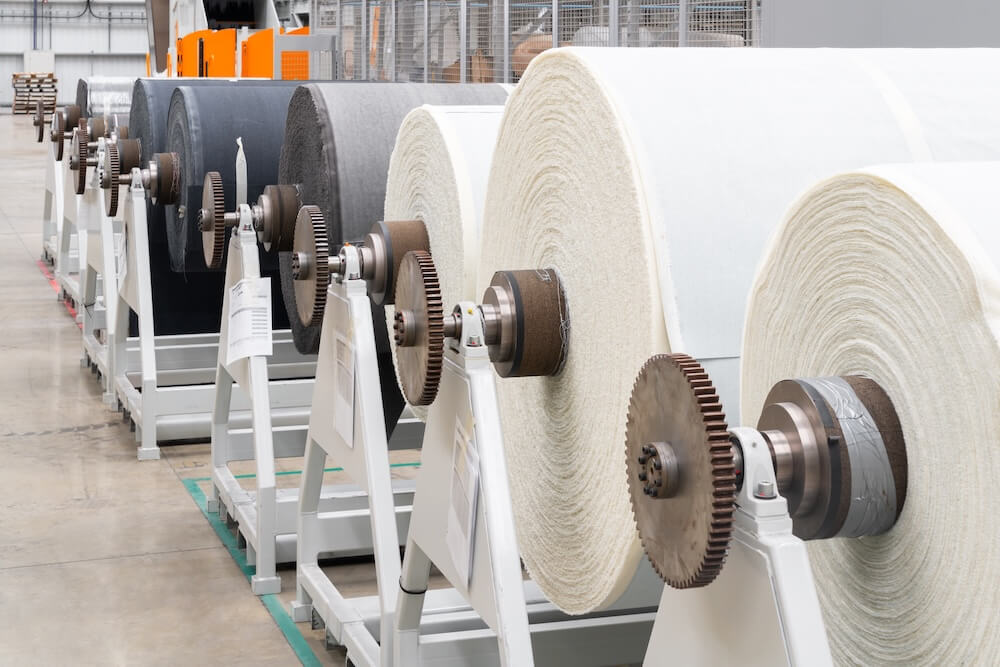
Circularity spans the entire value chain, from design and material innovation to manufacturing and recycling
Circularity from the outset
Perhaps the most important lesson emerging from early adoption efforts is that circularity cannot be retrofitted.
“If you try to retrofit it later, particularly once materials and constructions are locked in, it becomes very difficult to recycle without complex and costly disassembly techniques, which quickly become economically unviable,” Rapley notes.
Instead, circularity must be embedded into products from the outset, supported by simplified designs and early alignment across stakeholders.
Looking ahead, meaningful adoption of circular design principles will require more than isolated innovation. It will depend on systemic change—where circularity becomes standard practice rather than a niche initiative.
Rapley envisions a future where seat materials are designed for recovery as standard, supported by infrastructure that enables collection, processing and reintegration into new products.
“The focus of our work is no longer on proving circularity can work, but on enabling consistent, scalable implementation across the industry,” she says.
The CirculAir Playbook is not just a roadmap, it is a call to action. For an industry built on precision engineering and long product lifecycles, the transition to circularity will not happen overnight. But by shifting the starting point of design, aviation has an opportunity to rethink not only how products perform in the air, but how they live beyond it.
