
WTCE roundtable explores digital path to profitable inflight food retail
This is a special feature from the March 2026 Special Meals/Pre-WTCE issue of PAX International, on page 20.
Ahead of this year’s World Travel Catering & Onboard Services Expo (WTCE), organizers hosted a virtual roundtable in partnership with media partner PAX International with the theme “Rethinking food as retail through digital paths to achieve a profitable and personalized passenger experience.”
The session brings together a panel of leading experts from across the airline retail ecosystem, including Rodney Duty, COO of Paxia Solutions; Almas Rakhimov, Customer Success and Communications at Aviasoft; Veronica Lauvås Sørdahl, Category Manager Inflight Retail, Norwegian Airlines; Paul Bilham, Chief Revenue Officer, Data Clarity – an Immfly company; and Kian Gould, Founder and Chairman of Omnevo. Jane Hobson, Managing Editor at PAX International, joins the discussion as co-moderator with Kai Kosicki, Founder of ExpAir and WTCE Retail Technology Ambassador.
The discussion centers on a fundamental challenge: transforming inflight food and beverage (F&B) service from a necessary cost center into a dynamic, digitally enabled ancillary revenue stream.
Making a mindset shift
The first step toward this transformation is a complete change in perspective, moving away from viewing F&B as an operational check box. Lauvås Sørdahl summarizes this vision, stressing that the Norwegian Airlines team has expanded because F&B is a business opportunity.
"We have put a big emphasis on actually including the word retail in our team. It is not just about what fits in the trolleys. F&B is a big business opportunity for us, and we need everyone to see it that way too,” she says. “We like to say that we have one of the smallest shops in the world."
Kosicki of ExpAir suggests that while revenue is important, the true metric of success lies in passenger experience.
“The real profit and the revenue derived from onboard retail, especially when it comes to F&B, may assume a secondary importance to the enhancement of the customer experience and personalization,” he says.
Aviasoft’s Rakhimov notes, "It is about optimizing what you are putting on there, making the most of the space in terms of the passenger satisfaction and the revenue that is coming from it, and trying to view this as a profitable exercise, not a necessary thing to do."
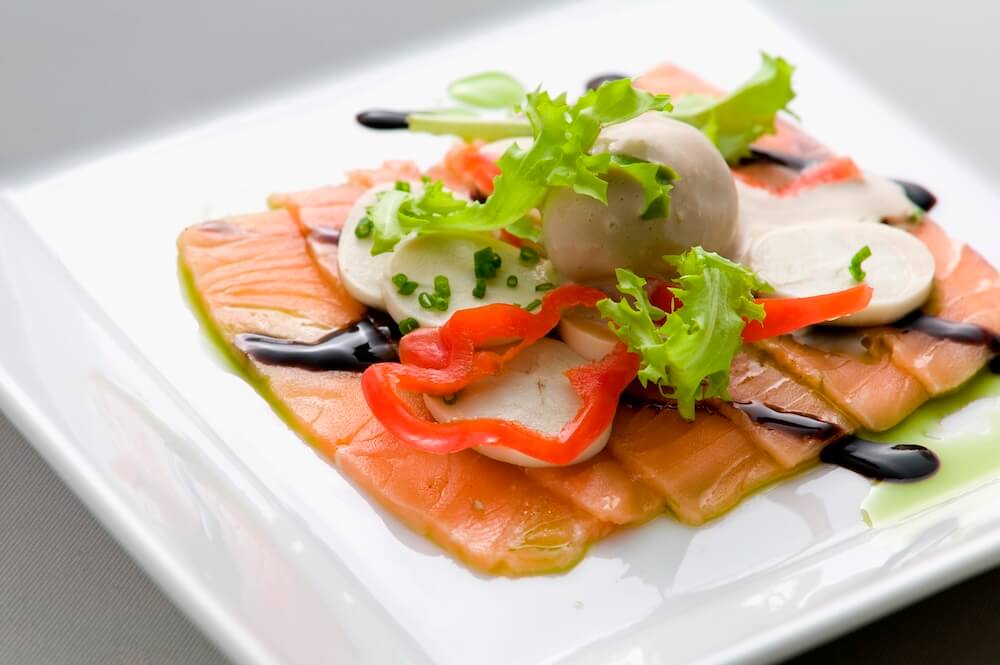
To drive adoption, pre-order systems must overcome passengers’ unfamiliarity with ordering ahead, offering menus that go well beyond standard trolley fare
The power of pre-order
The most immediate and substantial financial argument for digitalization lies in operational efficiency, specifically through waste reduction. The process of coupling pre-order sales with data-driven forecasting begins to guarantee a pot of savings. Omnevo’s Gould makes a compelling financial case.
"One of the key things that is often overlooked is when you combine pre-order with buy onboard in a very efficient, data-driven, forecasted way, you can save a couple of million on your waste cost as well.”
For a pre-order system to achieve the necessary penetration, however, it must overcome the fact that ordering food ahead on a flight is not yet a learned passenger behavior. Airlines must incentivize them by expanding the menu far beyond standard trolley fare.
Complexities of data integration and forecasting
The transition to a highly efficient retail model requires a sophisticated technological and logistical backbone. Advanced forecasting models, now capable of 90 to 96 percent accuracy, integrate historical sales with passenger variables.
Bilham explains, “The same flight on this day last year may have a different number of passengers or have flown on a different day of the week. It also depends on whether or not it is a holiday period. Then you have to look at other external factors, like events and concerts. You also look at the aircraft layout.”
However, achieving successful execution of responsive loading requires joint effort across the entire supply chain. Paxia Solutions’ Duty highlights the broad collaboration needed to implement successful programs.
"When looking at a retail program, it needs to take into account the broadness of supply chain partnerships to succeed. For example, the capabilities of the regional catering units are different. They ultimately dictate what type of product can be put on board."

To deliver truly personalized service onboard, airlines must integrate siloed data — from loyalty status and booking preferences to pre-order history — directly into the EPOS device
The essential human-digital connection
The digitalization effort must not sideline the human element. Instead, it must support it. Gould stresses that if an airline wants to offer personalized service, it must connect all siloed data – from loyalty status and booking preferences to pre-order history – into the EPOS device.
This data-driven approach allows the crew to offer genuinely personalized service. Kosicki champions the simple, yet powerful act of involving the passenger, sharing an example in which the most popular food item bought on board was selected based on passenger input.
The path to a profitable and personalized onboard experience is a dual one: technological integration is required to drive efficiency and reduce waste, while the human element – the engaged crew and the acknowledged passenger – drives satisfaction and unlocks premium revenue. The digitalization of F&B is not just a retail strategy; it is a core factor of future airline competitiveness.
The roundtable discusses transforming inflight food and beverage service from a necessary cost center into a dynamic, digitally enabled ancillary revenue stream
