
Guest column: Why special meals matter now
In this guest column, Marc Warde, Special Meal Program Director, Foodcase International, highlights the necessity of special meals onboard and the growing demand to normalize these offerings.
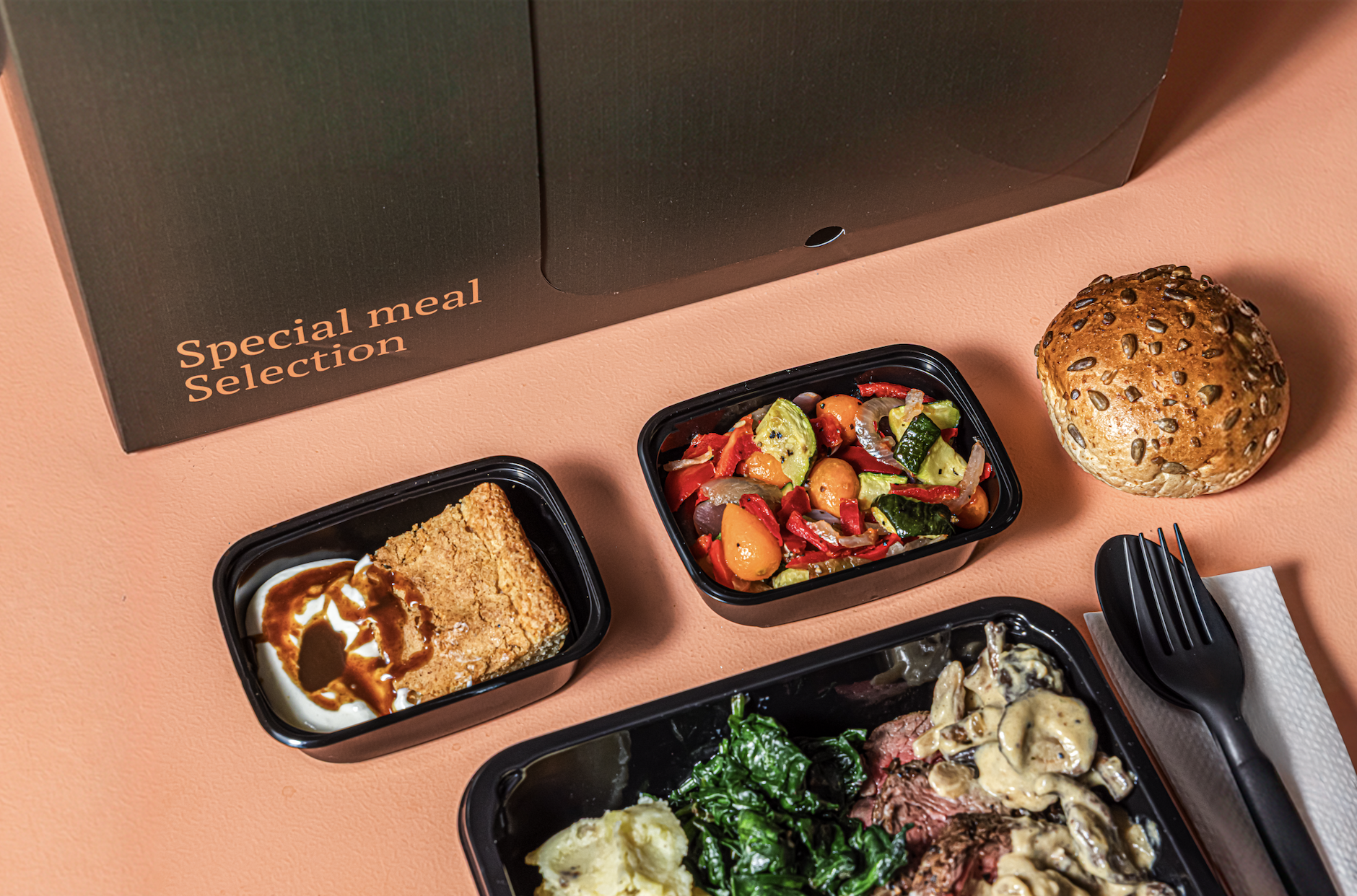
Foodcase says special meals need not remain stuck in operational limbo
Airlines love progress. New aircraft. New cabins. New apps. New sustainability pledges. New coffee cups made from something that used to be a tree but now feels like papier-mâché.
And yet, when it comes to special meals, much of the industry appears to be emotionally parked somewhere around 1989.
That, coincidentally, is when many of the IATA special meal codes were first assembled — at a time when food allergies were barely discussed, diabetes advice was simplistic, and “low fat” was still considered revolutionary nutrition science and we were still smoking at the back of the plane.
Fast forward to 2026, and the world — medically, culturally and legally — has changed. Airline special meals, for the most part, have not.
Let us start with a simple truth: people have not suddenly become difficult. They have become diagnosed. (Actually, some have!)
Today’s passengers are not asking for special meals because they are bored, fashionable, or trying to ruin catering forecasts. They are asking because their GP, consultant, dietitian or paediatrician told them to. Or because their immune system, digestive tract or blood sugar has issued a firm and non-negotiable instruction.

Marc Warde, Special Meal Program Director, Foodcase International
Roughly one in 10 adults in the U.K. is diabetic or pre-diabetic. Around one in 100 people have coeliac disease. Between four and eight percent of the population lives with at least one food allergy, with rates higher in children — many of whom, also travel on planes.
Add to this the millions managing heart disease, hypertension, IBS, metabolic syndrome and autoimmune conditions through diet, and suddenly “special meals” start looking suspiciously… normal.
Yet many airline systems still behave as if SPML passengers are a fringe group — a handful of awkward souls who refuse to eat bread or insist on oat or rice milk for attention.
Here’s the thing: no one risking an emergency diversion is doing it for attention.
Food allergies alone are now a global public health issue. Severe reactions on aircraft, while statistically uncommon, are medically serious, expensive and deeply unpleasant for everyone involved — especially at 35,000 feet with limited equipment and an audience who just love watching when there is anything big going down on board. Emergency landings are not cheap. Lawsuits are even less so.
And yet, in 2026, we still have a situation where some airlines ban nuts entirely, while others scatter them across every menu like festive confetti — as if not eating a cashew for six hours were an assault on basic human freedoms.
This inconsistency is not reassuring to passengers. It is baffling. I can cope without a snickers (other nutty bars available) or nuts for the duration of a flight and like the vast majority don’t really see it as an issue, given the potential circumstances. If my 11-year-old son can manage a whole school day without nuts (most U.K. schools ban nuts) I think adults should be able to.
Meanwhile, allergies are only one part of the story.
Medical diets have evolved significantly. Diabetes management today is nothing like it was even 15 years ago. Heart-healthy diets are now specific, evidence-based and often personalised. Low-GI, low-sodium, renal-appropriate and post-cancer nutritional guidance is standard medical practice.
But airline special meal categories often fail to reflect this reality. Nutritional data is vague or missing. Meals labelled “diabetic” may bear little resemblance to modern clinical advice along with the compulsory SPML dessert high fructose fruit salad! Passengers are expected to trust, without information that the food in front of them won’t cause harm.
That is a bold ask.
Then there are religious meals. Halal, Kosher and Hindu options are usually available, though standards and definitions vary wildly. Jain meals, once offered more consistently, have quietly disappeared from many menus, should true Jains even be flying?
And lifestyle diets? Keto, high-protein, low-FODMAP, whole-food plant-based — these are no longer fringe trends discussed only on social media. They are mainstream dietary frameworks followed by millions, often for medical reasons. Supermarkets have entire aisles devoted to them. Airlines, for the most part, do not. Which is odd, because airlines already have the technology to support pre-ordering, personalization and premium pricing. Passengers with dietary needs are used to paying more and planning ahead. This is not a cost centre waiting to happen, it’s a revenue opportunity quietly sobbing in the corner.
Instead, special meals remain stuck in a strange operational limbo.
Meals for passengers with serious food allergies are frequently produced in standard airline kitchens — environments designed for speed and volume, not allergen control. Cross-contact risks are real. Precautionary “may contain” statements are often present but discreetly tucked away, like a small-print apology no one wants to read. You might find a sticker on your meal saying GFML (or SPML selected) but oddly no ingredient, nutrition, or allergen labelling, you have to ask for it before crew wade through the paperwork or look at their crew apps for the information.
Terms such as “gluten-friendly” or “vegan-friendly” are used generously, despite having no legal meaning in many jurisdictions. They sound comforting, but legally they offer about as much protection as crossing your fingers.
Passengers, unsurprisingly, are no longer amused.
Across the world, airlines and caterers are facing legal challenges linked not just to allergic reactions, but to misleading terminology, inadequate disclosure and failures in training. These cases do not arise because passengers are demanding luxury. They arise because passengers expect compliance with the same food laws that apply everywhere else, and just in case you didn’t realise, it is the law of the land that applies to where airlines are registered.
Flying does not suspend legislation.
Children deserve a special mention here — not because they are special, but because they are statistically the most likely to have food allergies and among the least likely to be properly catered for. Families routinely board aircraft armed with wipes, snacks, backup snacks, emergency snacks and a quiet sense of dread. They keep quiet for fear of being denied boarding – a real fear, it happens a lot!
That is not a great passenger experience.
Mental health is finally being recognized in aviation through training, visibility and accommodations. Sunflower lanyards, discreet signalling and awareness campaigns are now normal. So, the question becomes uncomfortable but necessary: why are medically driven dietary needs still treated as awkward requests rather than legitimate passenger care?
Free-from cooking, when done properly, is not inferior. It is technical. It requires training, discipline and respect for the science behind it. But done well, the result is food that is safe, delicious and indistinguishable from its conventional counterpart which, speaking selfishly as a coeliac myself, frankly, is the whole point.
The reality in 2026 is this: dietary needs are diverse, medically grounded, culturally significant and legally protected. Passengers know it. Regulators know it. Lawyers definitely know it.
Airlines now have a choice. Continue to rely on legacy codes, voluntary governance and hopeful wording — or modernise special meals into a system that reflects contemporary medicine, law and human reality. Hopefully in a joined-up way, I have sent letters to the appropriate people, lots of letters, government are on side so its moving in the right direction.
Because the next time someone says, “We’ve always done it this way,” the passenger in seat 32B may already be reaching for their EpiPen.
And that is not a situation any airline wants to explain in a press release.
