
IFSA returns to Asia with airline hospitality on the agenda
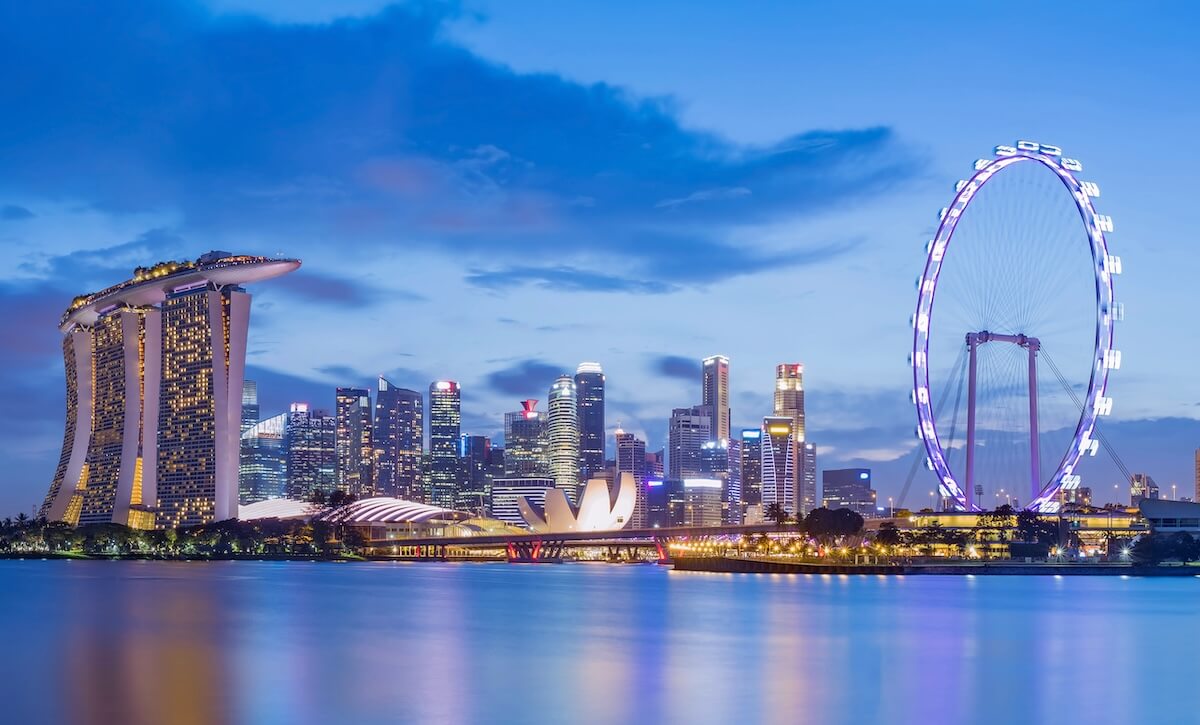
The IFSA Inflight Services Zone debuts at APEX FTE EXPO from November 18 to 19 at the Marina Bay Sands in Singapore
Next month, IFSA returns to Asia with its new dedicated IFSA Inflight Services Zone at APEX FTE EXPO in Singapore, running from November 18 to 19 at the Marina Bay Sands.
This is great news for numerous reason—not just for me because Dallas (this year’s host-city for IFSA Global EXPO) is quite a schlep from where I am in Malaysia—but for the industry in this region as well.
With the major travel hospitality events traditionally hosted in Europe and the U.S., Asia often gets side-lined, making attendance at the events time-consuming, expensive and frankly less relevant to many industry contributors in this part of the world.
Also, this gives the major players from beyond this region the opportunity to gather close to our home and demonstrate that they are also able to participate in this region’s indisputable success and access the markets here.
IFSA recognizes this. It also recognizes that the Asia-Pacific, Middle East and Indian region is not only the fastest growing sector globally (by a significant margin) but also hosts most, if not all, the leading airlines in terms of service quality.
IFSA presence and programming
The IFSA presence at APEX FTE EXPO is peppered with ideal networking opportunities and of course some key presentations and discussion forums – not least my very own. Those of you familiar with this reporter’s particular approach will not want to miss this, nor any of the other important forums IFSA will host.
The November 18 scene-setting presentation, covering “What business are airlines really in? Is it transportation, hospitality or both?” will kick off a larger panel conversation entitled, “Practical solutions to airline hospitality challenges.”
I am particularly honored to have this opportunity to address one of the most fundamental issues I, and indeed the industry, has had to wrestle with in all the 40+ years I have worked in it.
We will be looking at how the world’s carriers, large, small, low-cost or legacy, have either succeeded, failed or not bothered to understand the true value of the onboard F&B and service product.
A deep, no-holes-barred dive into the psyche of the people who we serve and what the future may demand. We will not be shying away from posing some difficult questions or glossing over the hard truths.
We will analyze where we are as an industry in terms of growth and quality of service, where we came from and how we got to the current situation. Then, most importantly, how we need to approach the future with confidence and retain our important role – providing a positive passenger experience.
Significantly, we will look at where the Asia-Pacific market is going and whether it can sustain its renowned high-level of quality with the growth pattern. There is no question that currently the Middle East and Asia lead the way in service quality. Some European legacy carriers have recently attempted to up the game and that is to be welcomed, but overall, across all classes and across all routes, the Middle East and Asia carriers still dominate when it comes to quality-of-service food and beverage.
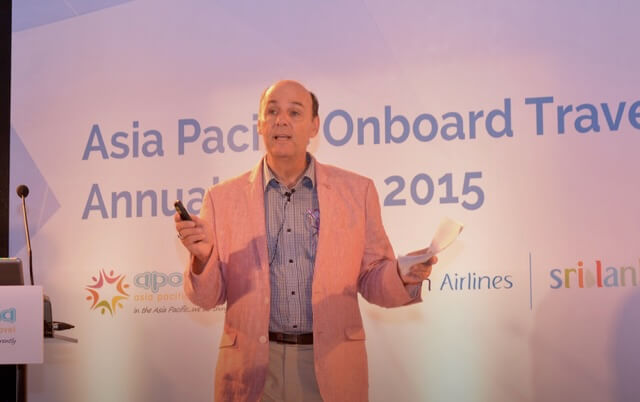
Jeremy Clark, Asia Correspondent, PAX International, presenting at APOT 2025
Joining me on the podium to ponder the problems will be Air New Zealand’s Head of Culinary Justin Koen representing the airline’s take on things. To speak for the passenger base, I am delighted to have the CEO of Statusmatch Mark Ross-Smith on the panel, and for the caterers and providers, Robert Smithson, Executive General Manager Product, dnata catering & retail Australia.
Following the presentation and the panel discussion, we will move straight into a food experience provided by Chef Christian Bruhns and his team from dnata Singapore who will be on hand to dish out delicacies to the audience.
A presentation hosted by IFSA will then address other important issues, including the out-sourcing conundrums for caterers and airlines. The business model here in Asia is, for the most part unchanged compared to the U.S./European model, still very much “in-house.” Is that all about to change? What has prevented this from happening? All this and more will be discussed.
F&B as key contributors to passenger experience
With IFSA and its well-established members strongly present at this event, we have a better and bigger opportunity to show what it is we have to offer and how we can support airlines in improving brand through service and product.
In my 40+ years in the industry, I have frequently been asked by accountants, CFOs and COOs: how can additional spend in service and food show positively in the bottom line?
My answer is pretty much always the same. They do not.
However, if you choose not to invest in treating your passengers better, you will notice this in your bottom line over time—and eventually it may even kill you.
There are of course always exceptions to this rule: Airlines who make it a point to remind passengers not to expect anything other than the absolute bare minimum. We know who they are as well. Many often fail but some of them are extremely successful because there will always be a segment of the market for whom no amount of discomfort and misery is too much if they can save a dollar on a fare.
That said, even this customer base has a place in IFSA’s purview because ultimately everyone needs to eat and drink something, somewhere at some time — and how that is delivered, provided and paid for is our expertise.
Whether you are operating in Asia as an airline, supplier, caterer or any peripherally relevant business, this conference is not to be missed. Attendees will benefit from the networking and opportunities to learn something you did not know before. I guarantee it!
