
Passenger Experience Conference 2026 accelerates future of aviation
Last updated: Monday, April 13, 5:46 p.m. CEST. Find updates below, with all timings in local time.
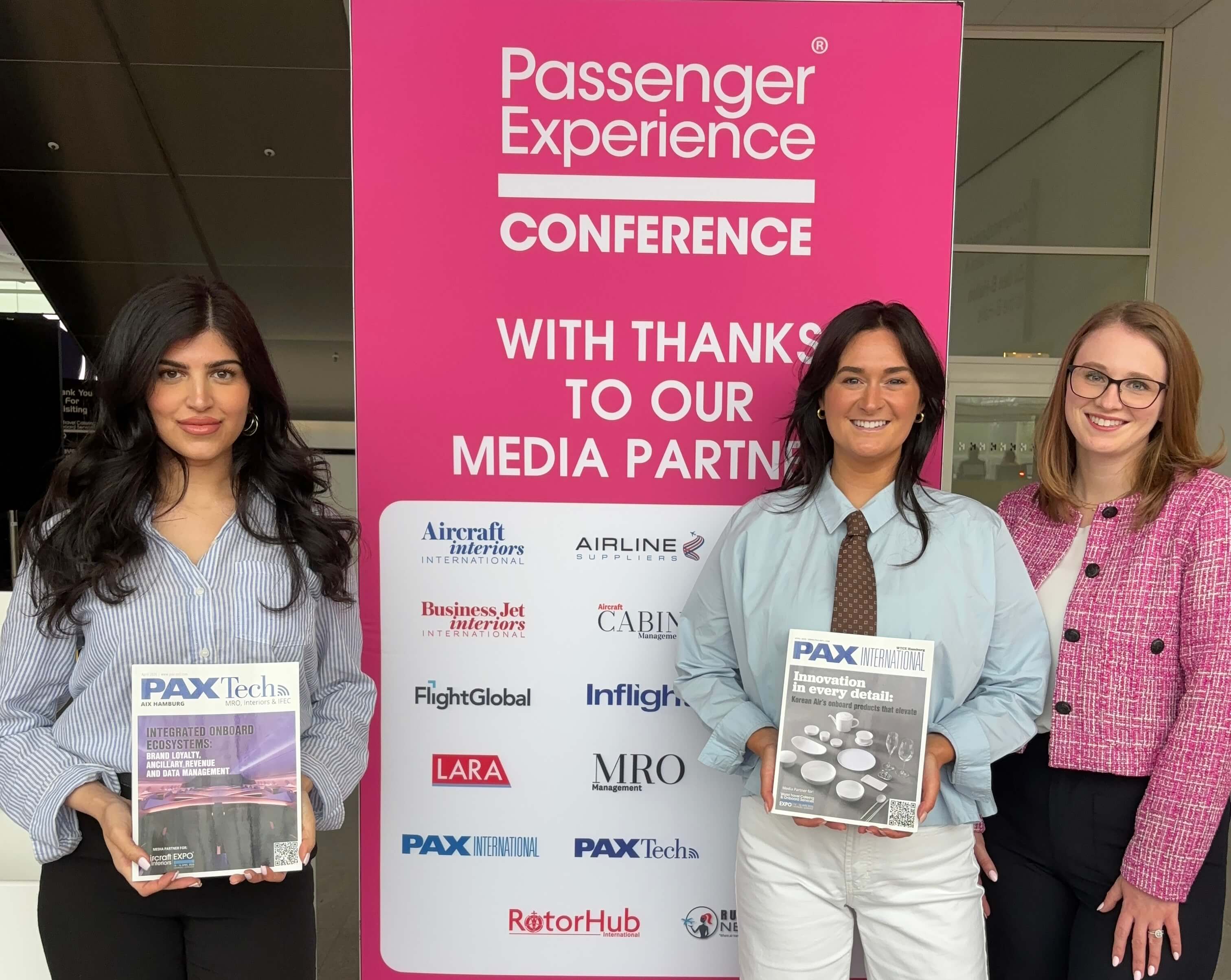
Left to right: PAX International and PAX Tech's Eman Khan, Business Development Executive; Jane Hobson, Managing Editor and Robynne Trueman, Business Editor at PEC 2026
The Passenger Experience Conference 2026 is underway at the Hamburg Messe in Hamburg, Germany. The conference marks the beginning of a busy week for the aviation industry in Hamburg, bringing suppliers, airlines and media together for insights from expert speakers and thought provoking discussion panels, under the theme of "the catalyst for the future."
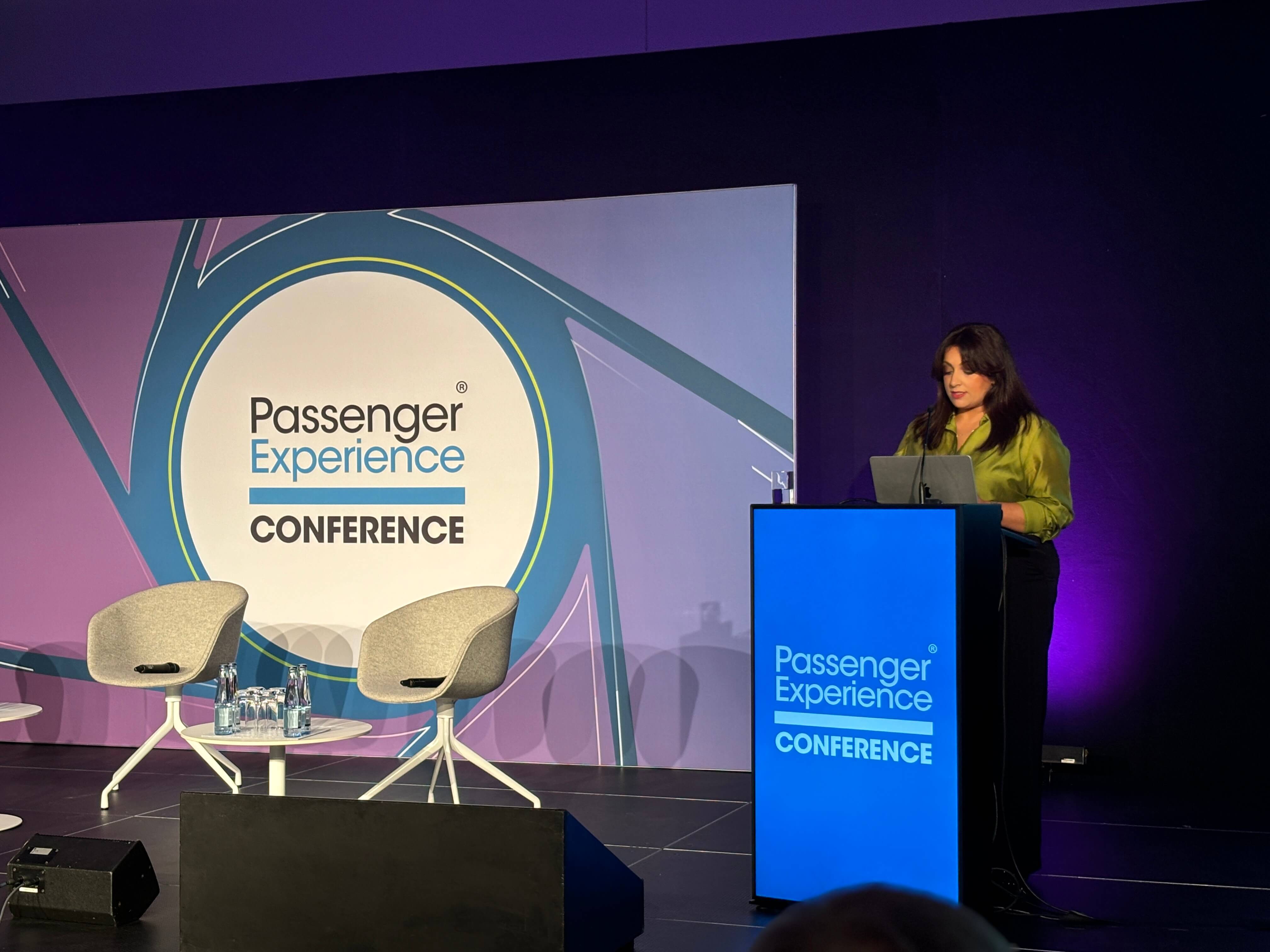
AIX Event Director Archana Dharni delivers the welcome address at the Passenger Experience Conference 2026
AIX Event Director, Archana Dharni, kicked off the conference with a welcome address at 9:30 a.m.
"The aviation industry has always been resilient," said Dharni. "Our theme this year [at PEC] is the 'catalyst for the future' of the industry because that is exactly what this is. Not just a place to talk but a place to accelerate the experience."
Dharni emphasized that 2026 marks the 25th edition of the event.
In closing, she said, "25 editions. One global community. And a future that is still being written. Today is about ideas. The next few days are about action."
Next, Johnny Clark, Founder, TheDesignAir and Managing Director, INK, took the stage for a session entitled "The plateau problem: When everyone’s premium, who wins?" In this address, Clark examined how airlines can deliver a premium passenger experience that stands out from others on the market.
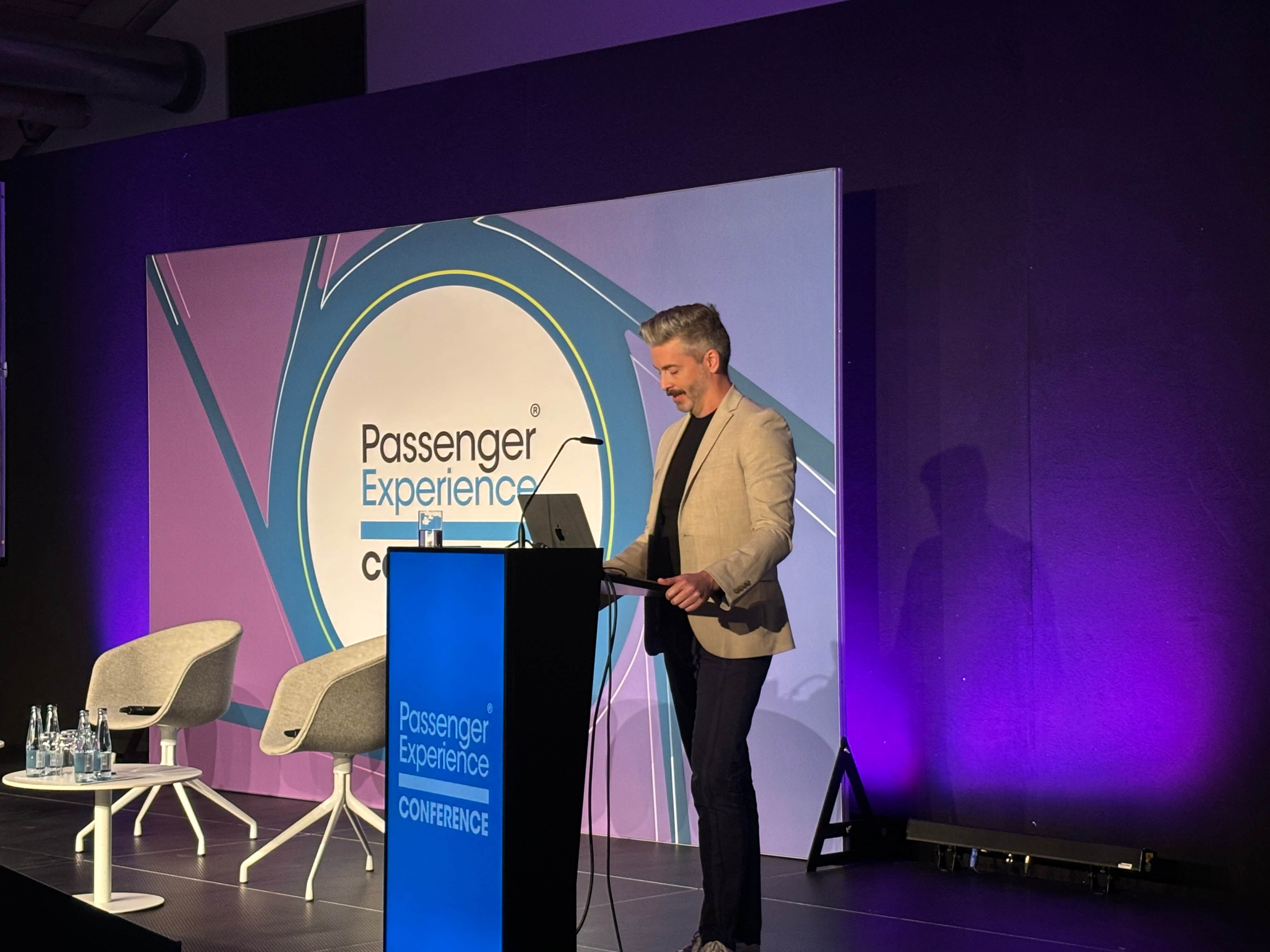
Johnny Clark, Founder, TheDesignAir and Managing Director, INK at PEC 2026
He urged attendees of AIX 2026 and WTCE 2026 this week not just to consider whether a product or concept is innovative.
"Ask whether it makes the experience more ownable, more memorable and unmistakably, a brand. Innovation alone is no longer enough," he said.
Clark's session was followed by the Keynote Panel "The Great UXcape", with speakers John Davidson, Head of Customer Experience, FS Advisory and Michael Raasch, Chief Growth Officer, Tourvest Retail and Catering, moderated by Lee Hayhurst Editorial Director, Aviation Business News.
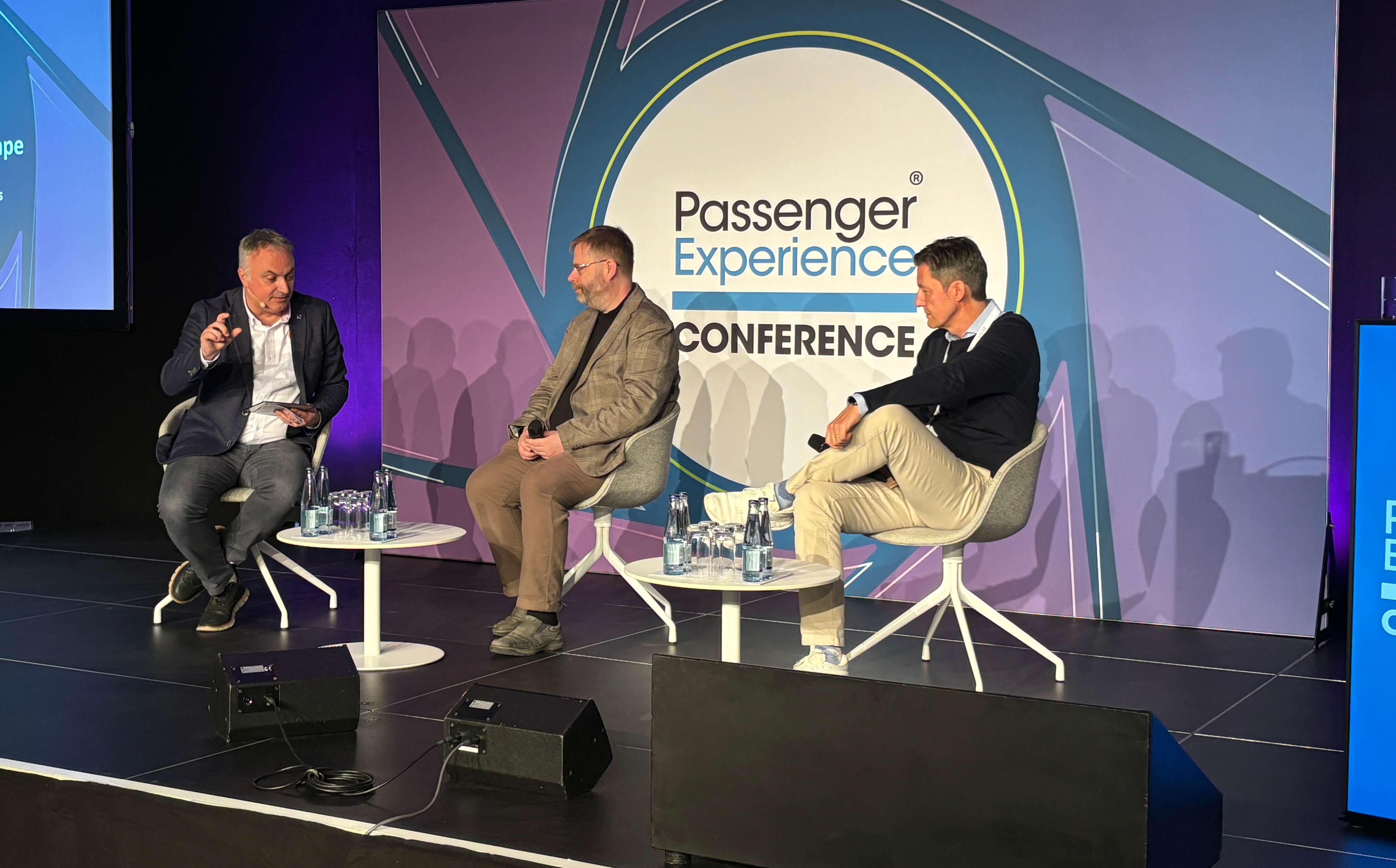
"The Great UXcape" keynote panel at PEC 2026
This session examined how airlines are escaping outdated user experiences and redesigning the passenger journey through innovation, design and tech.
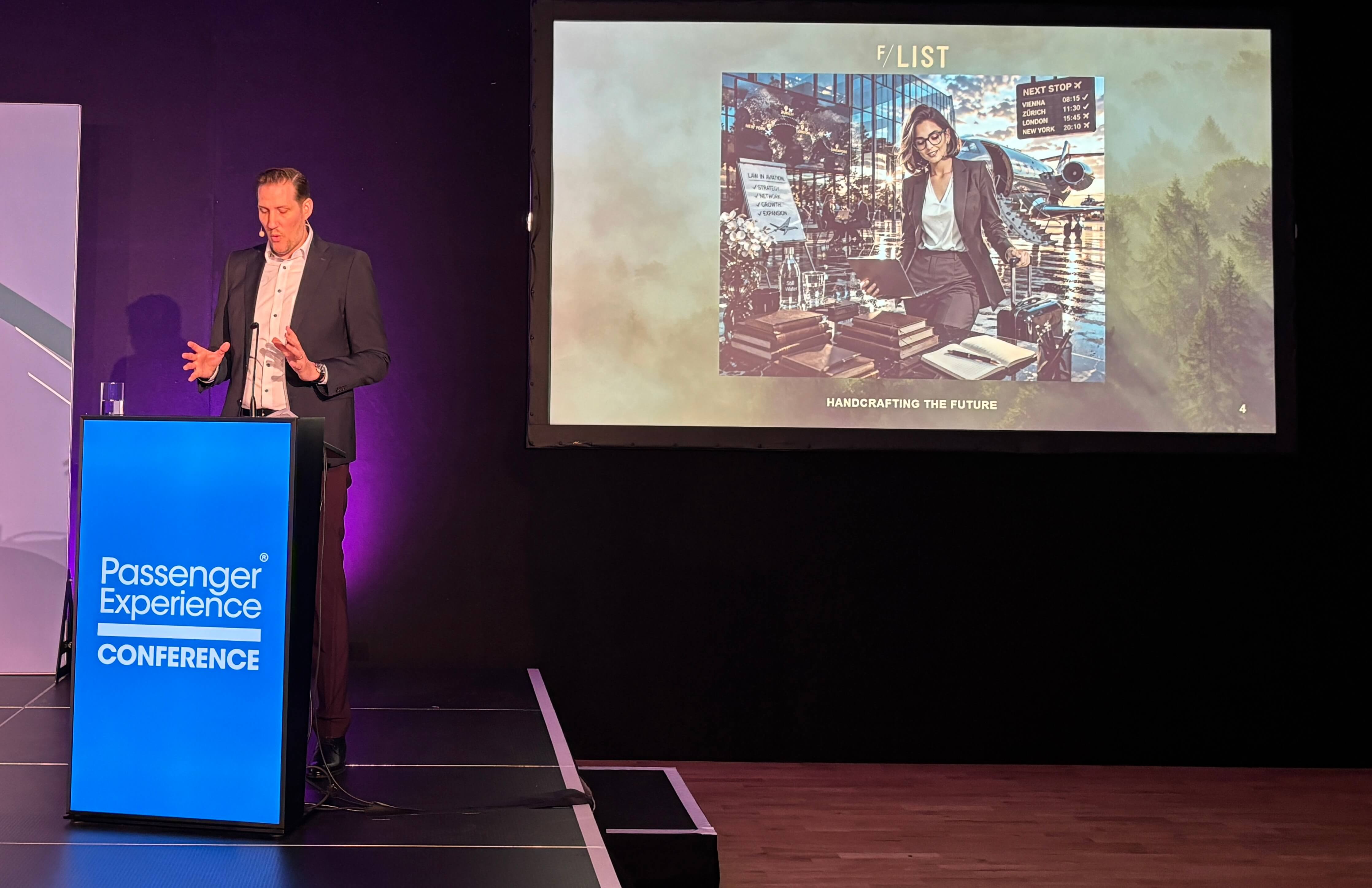
Christoph Hofer, Head of Customer Relations & Sales Middle East, Asia & Pacific Commercial Aviation, F/LIST
Wrapping up the morning's keynotes, Christoph Hofer, Head of Customer Relations & Sales Middle East, Asia & Pacific Commercial Aviation, F/LIST, spoke on "Executive travel: Unrivalled luxury. Unmatched performance."
He emphasized the importance of creating an exceptional travel experience and differentiating the product between Business Class and First Class. According to Hofer, executive passengers are not seeking an everyday experience. They require a reliable, peaceful and consistent passenger experience where they can focus and work onboard.
"For passengers, the cabin is the airline," said Hofer. "Everything is visible. Every new cabin is viewed globally and compared across platforms like YouTube, Instagram and TikTok. This makes interiors a business decision."
Breakout sessions
Following a coffee and networking break, PEC attendees headed into the afternoon's breakout sessions. Cristian Sutter, Managing Director, Sutter Aviation is moderating the sessions for the Personal, Intelligent & Intuitive Stream until 6:00 pm today.
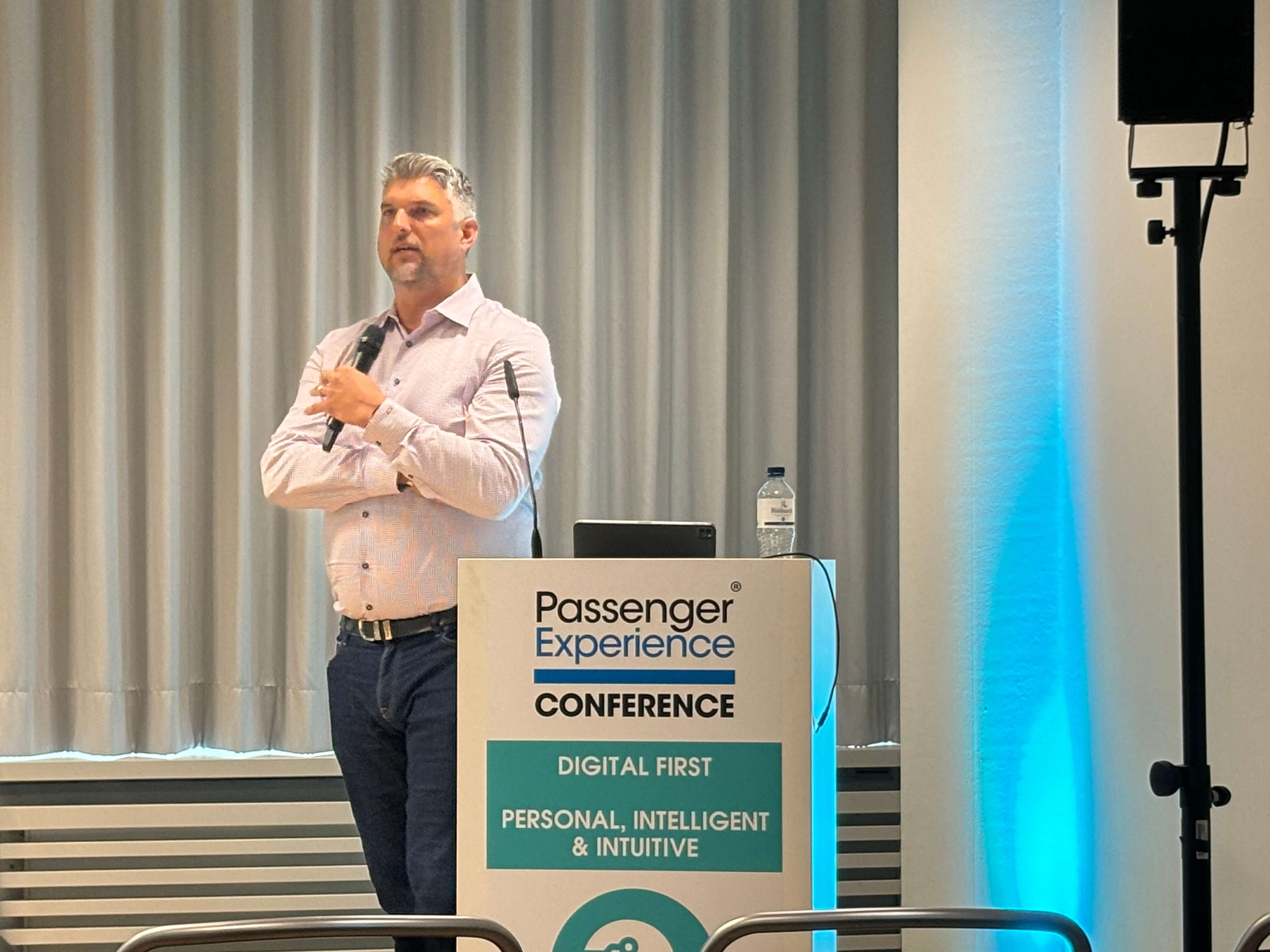
Patrick Biggerstaff, Senior Director, Product Line Management - Digital Solutions, Panasonic Avionics at PEC 2026
Panasonic's Patrick Biggerstaff, Senior Director, Product Line Management - Digital Solutions, spoke on the importance of delivering a passenger experience onboard that makes passengers feel welcome and understood, driving loyalty.
"We want to focus on value. Anything we do from personalization needs to deliver value – for the passenger and the airline," he said.
Biggerstaff explained that while airline's have clear metrics for defining value, such as NPS scores and ROI, the way a passenger defines value is more of a gray area. This comes down to factors such as delivering the right content at the right time and connecting with the passenger at relevant touchpoints.
He noted the personalized experience in the cabin should feel, "Personable but not predictable."
Biggerstaff also said that digitalization is not meant to replace personalized service touches by cabin crew. Rather, digitalization can support and expand that personal reach.
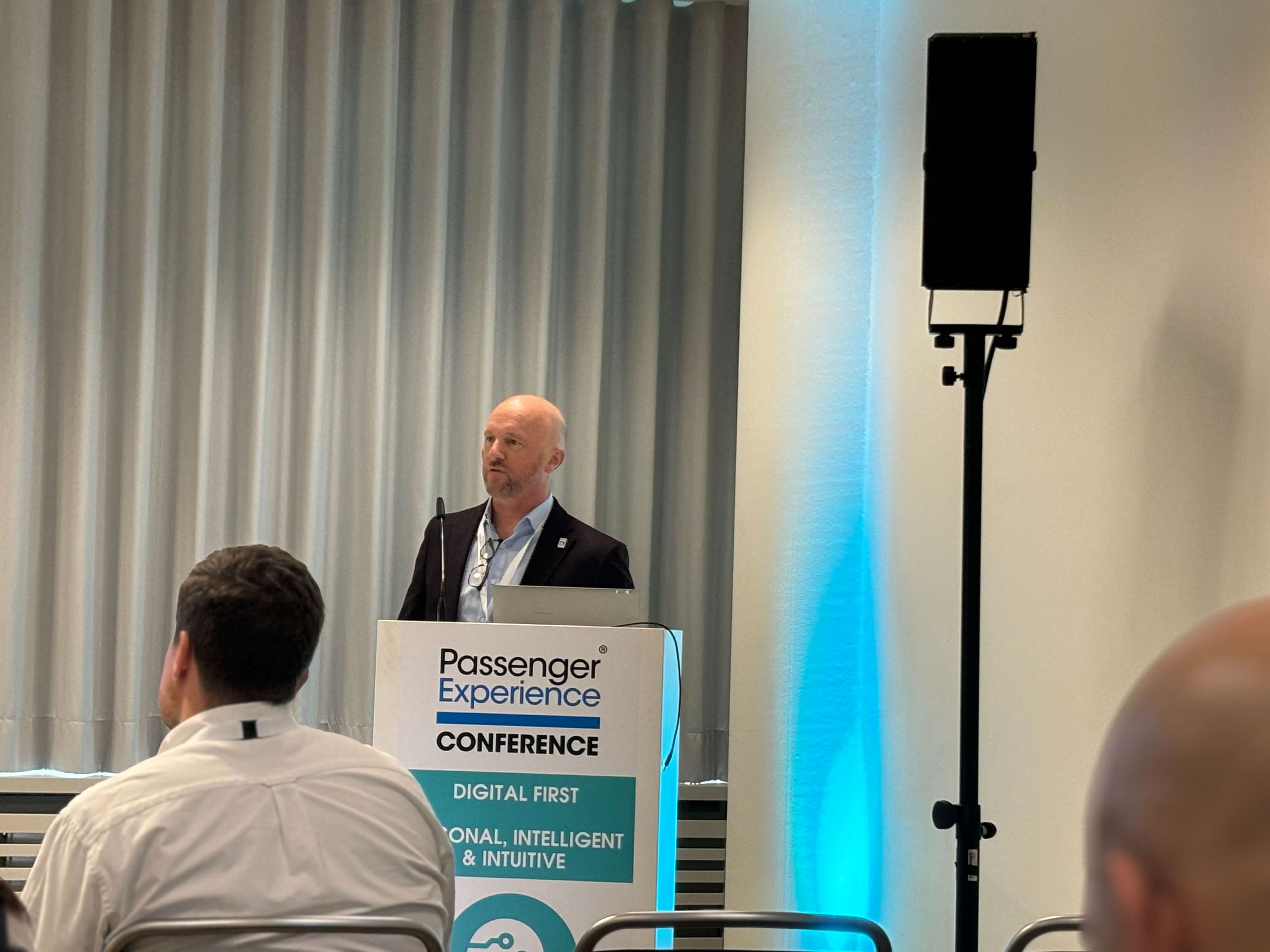
Dominic Green, Director Inflight Entertainment, United Airlines at PEC 2026
Next, Dominic Green, Director Inflight Entertainment, United Airlines, spoke on "Flight path to perfection: Smart data for smooth skies."
In this session, Green discussed how to actively collect passenger data and work with either an in-house analytics team, or third-party providers, to develop dashboards for surveys and pilot projects
He framed the modern IFE system as a the third digital channel for communicating with passengers, in addition to the website and app.
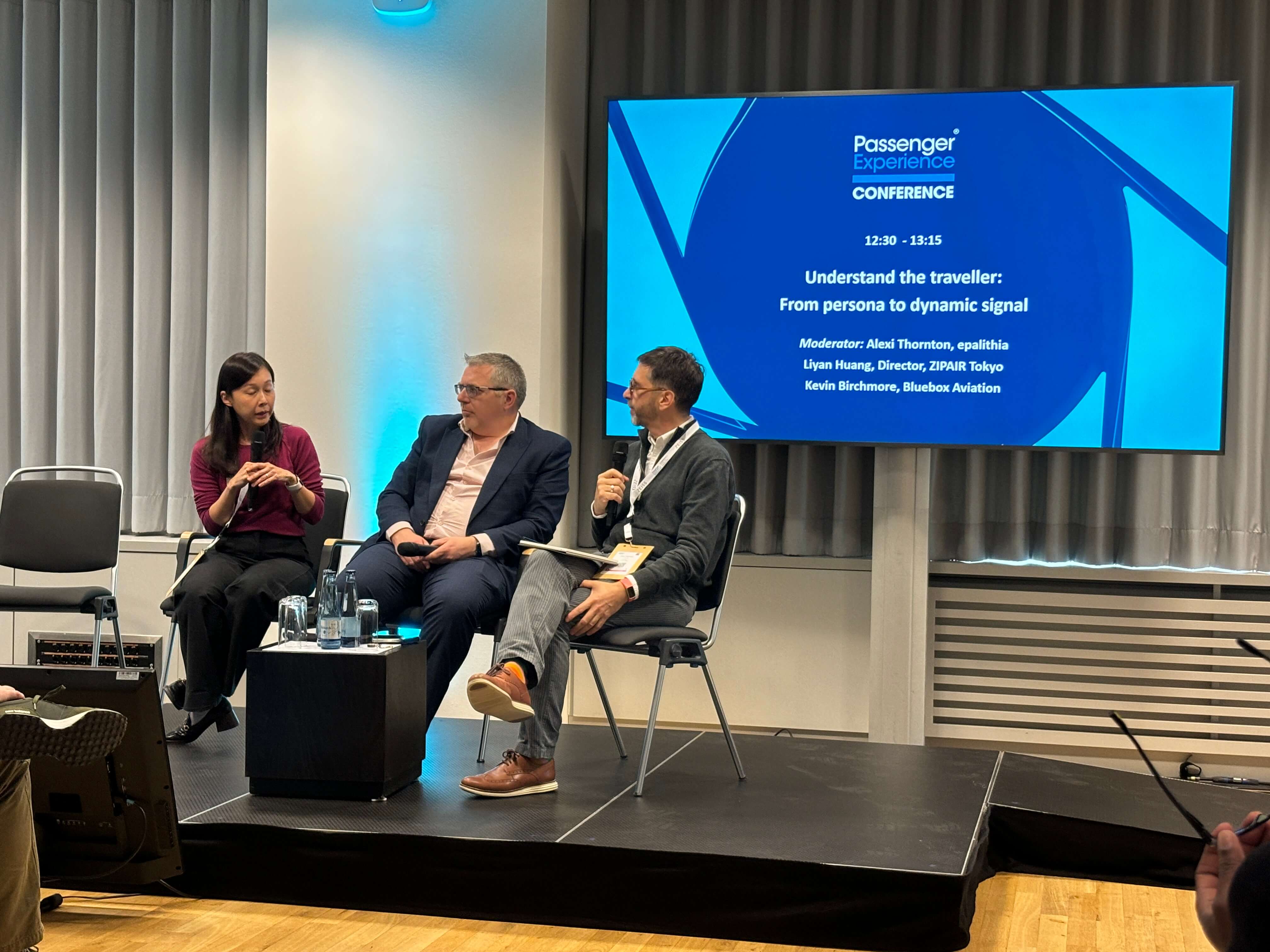
Digital Stream panel "Understand the traveller: From persona to dynamic signal" at PEC 2026
At 12:30 p.m., Kevin Birchmore, Chief Commercial Officer, Bluebox Aviation and Liyan Huang, Director, Inflight Systems, ZIPAIR Tokyo, joined moderator Alexi Thornton epalithia, for the panel "Understand the traveller: From persona to dynamic signal."
The sessions discussed delivery of the seamless and memorable journey for every traveler and strategies for revolutionizing the relationship between the airline and passenger.
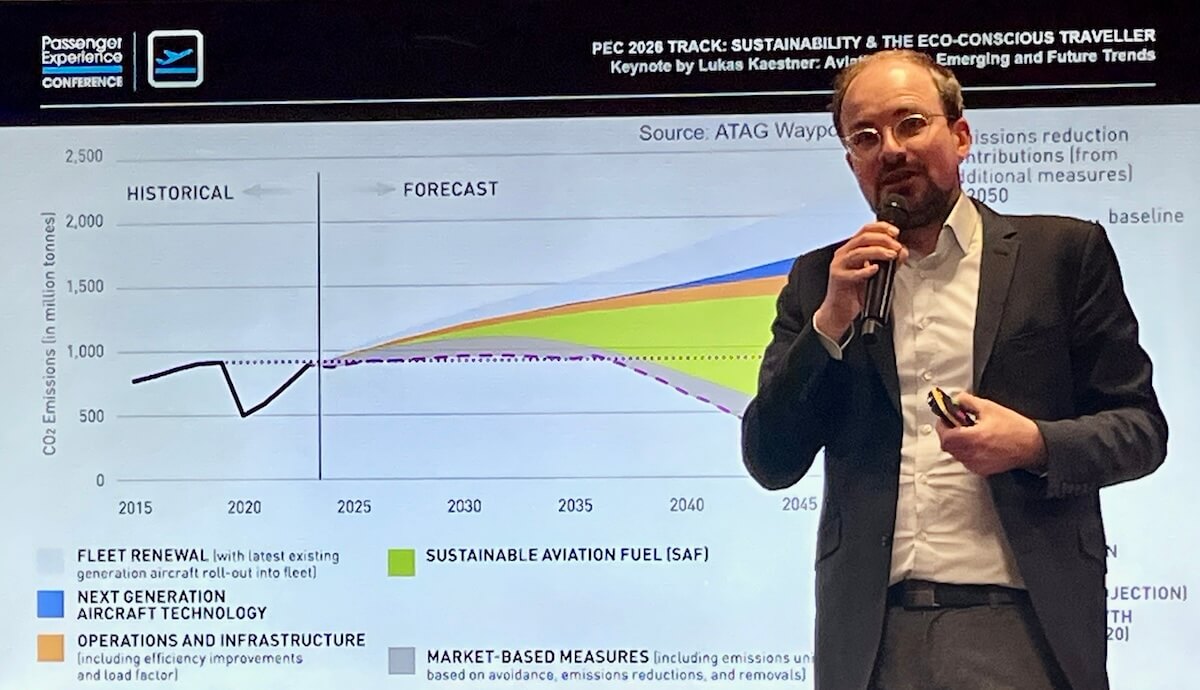
Lukas Kaestner, Co-Founder of Sustainable Aero Lab
The sustainability sessions, under the theme “Sustainability and the eco-conscious traveler,” opened with a forward-looking examination of aviation’s long-term environmental trajectory and the accelerating role of data and artificial intelligence in driving operational change across the industry.
It began with an overview from Lukas Kaestner, Co-Founder of Sustainable Aero Lab, who outlined emerging and future trends shaping aviation through 2040. Kaestner highlighted the impact of advances in lightweight materials and aerodynamic fleet efficiency in reducing emissions and fuel burn, framing these developments as critical contributors to the sector’s decarbonization pathway.
He closed his remarks with a challenge to the audience, emphasizing the urgency of coordinated action.
“The clock is ticking. How do we move the needle? What are the ways to really make an impact and use the next 13 and a half years as efficiently as we can?”
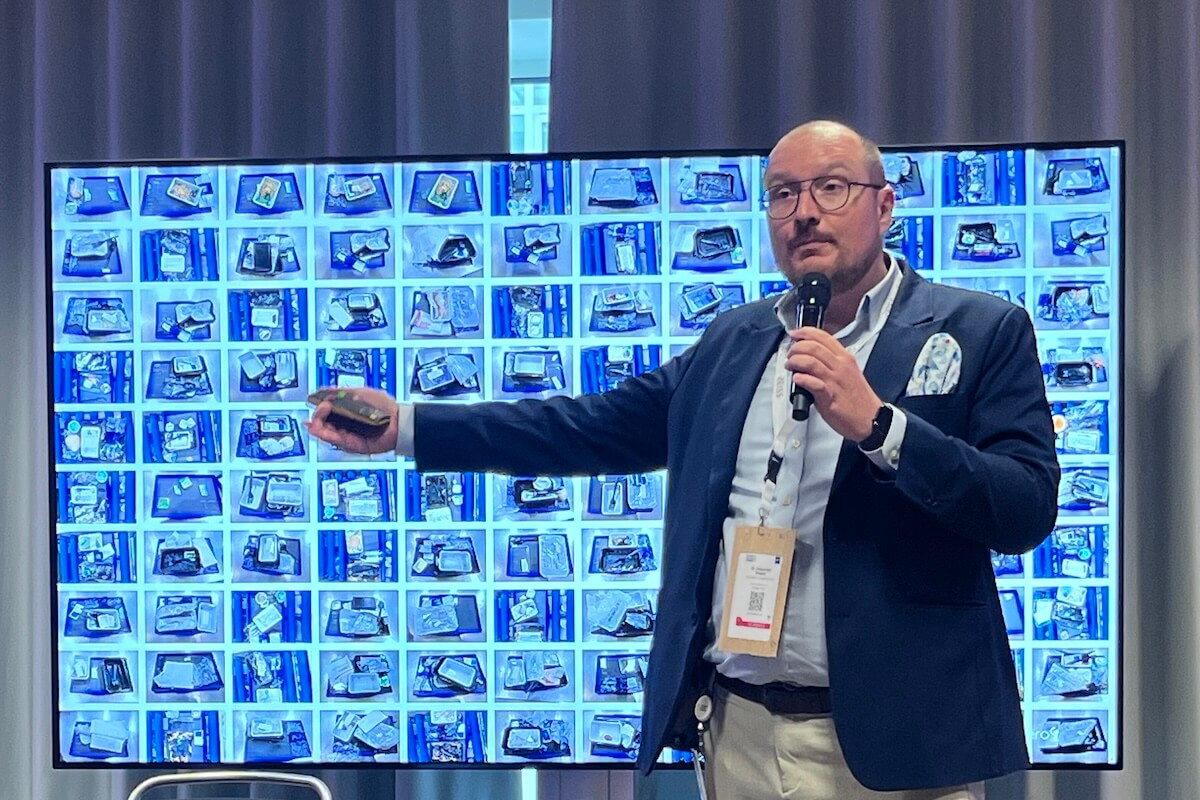
Dr. Alexander Motzek, Principal Data Scientist at zeroG, Lufthansa Group during the "Breaking new ground: Airline catering with AI" session
The discussion then shifted to the inflight catering environment in a session titled “Breaking new ground: Airline catering with AI,” featuring Dr. Alexander Motzek, Principal Data Scientist at zeroG, Lufthansa Group. Motzek explored how AI is increasingly being used to support sustainability initiatives in airline catering operations, particularly through the analysis of large volumes of passenger and operational feedback.
With nearly a decade of experience in the field, Motzek underscored the importance of maintaining a human-centered approach while leveraging AI tools.
“We are giving the humans the power through AI. We cannot take the humans out of it.”
A key focus of his presentation was the analysis of passenger feedback to identify sustainability and service-related issues. Crew input, he explained, can be logged and categorized so that insights are routed directly to relevant departments, including catering providers and airline operations teams. While this type of feedback analysis was once highly manual and time-intensive—requiring systems to convert free text into structured datasets—modern AI tools now enable similar outputs in a single prompt.
Motzek noted that earlier systems, developed approximately eight years ago, already allowed airlines to transform unstructured feedback into actionable data tables. Today, those capabilities have evolved significantly.
He illustrated this with a real-world example in which passenger complaints about beverage temperatures revealed a broader operational issue. A cluster of feedback from Brazil, for instance, pointed to insufficient dry ice availability—an issue that was not initially a data problem, but an operational constraint. The insight ultimately led to a supplier change, demonstrating how data-driven analysis can translate directly into corrective action.
Motzek emphasized that such feedback loops are now far more efficient, allowing airlines to track what was reported, what action was taken and how issues were resolved in a continuous cycle of improvement.
Beyond operational troubleshooting, AI is also being used to better understand onboard consumption patterns and reduce food waste. Cabin crew feedback and onboard data collection help identify what meals are consumed, partially eaten or left untouched, enabling airlines to optimize catering loads and reduce unnecessary weight uplift.
According to Motzek, AI-enabled tray analysis—using camera-based systems with up to 97 percent accuracy—now allows airlines to evaluate consumption behavior at a granular level. This includes identifying route-specific trends and distinguishing between fully eaten, partially eaten and untouched meals across different services such as breakfast, coffee/drinks service and dinner.
All data is processed and integrated into central data warehouses, where it is combined with operational datasets to support planning and decision-making. The result is improved passenger experience, reduced food waste and more efficient fuel usage through optimized catering weight.
Wine consumption analysis is also emerging as a new frontier, with technologies being developed to track bottle usage and quantify service levels more accurately.
Motzek added that the insights have also helped resolve long-standing assumptions about passenger preferences. In some cases, data revealed that certain menu items—such as desserts—are well received, but only at specific times of day or on particular routes.
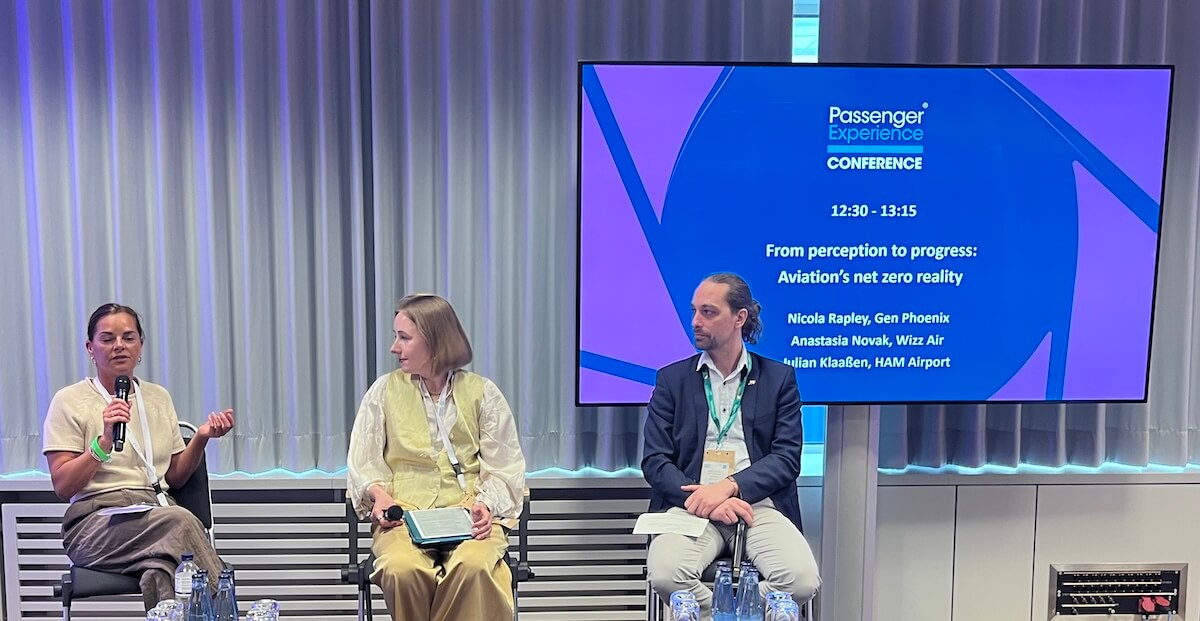
Left to right: Nicola Rapley, Director of Marketing and Aviation Sales at Gen Phoenix; Anastasia Novak, Corporate & Sustainability Communications Manager at Wizz Air; and Julian Klaaben, Head of Sustainability at Hamburg Airport
The morning’s final sustainability session, “From perception to progress: Aviation’s net zero reality,” brought together industry stakeholders to examine how sustainability is being perceived by passengers versus what is actually being delivered across the aviation ecosystem.
The panel featured Nicola Rapley, Director of Marketing and Aviation Sales at Gen Phoenix; Anastasia Novak, Corporate & Sustainability Communications Manager at Wizz Air; and Julian Klaaben, Head of Sustainability at Hamburg Airport.
Drawing on findings from recent Wizz Air passenger survey on sustainability, including journeys from check-in to landing, the panel explored where emissions and waste reductions are being achieved and how innovation is accelerating progress across different touchpoints.
“Passengers are experiencing sustainability but not necessarily understanding it,” said Rapley to kick things off.
Novak emphasized the structural challenges facing the industry while underscoring the importance of collaboration.
“This is one of the most difficult industries to decarbonize. We cannot do it alone, it will heavily depend on industry collaboration, and government and regulation bodies. But at the end of the day, it really comes down to the passengers and what they are willing to pay for,” she said.
Wizz Air surveyed more than 16,000 passengers who had flown with the airline at least once in the previous year. The results highlighted a significant perception gap, with passengers estimating aviation’s environmental impact to be more than 10 times higher than it actually is.
Novak noted that this misunderstanding reflects a broader disconnect in public awareness.
“Passengers are completely overestimating what is happening. A different reality to what is actually being done.”
Klaaben added that many travelers incorrectly assume that the majority of emissions originate from airport operations rather than the flight itself, describing the finding as a “wake-up call.”
He also highlighted ongoing infrastructure developments supporting airport decarbonization, including expanded public transport connectivity, the rollout of low-emission bus fleets, and the growing adoption of electric and hydrogen-powered taxis. He noted that many of these initiatives are already well advanced in Hamburg.
The panel also discussed the importance of reducing airport waste streams and minimizing single-use plastics as part of broader sustainability efforts.
Novak stressed that passenger education remains a key challenge, noting that while consumers increasingly recognize sustainability in everyday products, airline initiatives are harder to communicate effectively.
Rapley concluded by emphasizing the importance of framing sustainability progress in accessible terms.
Educating passengers on the "incremental but still impactful” efforts of airlines is important, said Rapley.
Afternoon breakout sessions
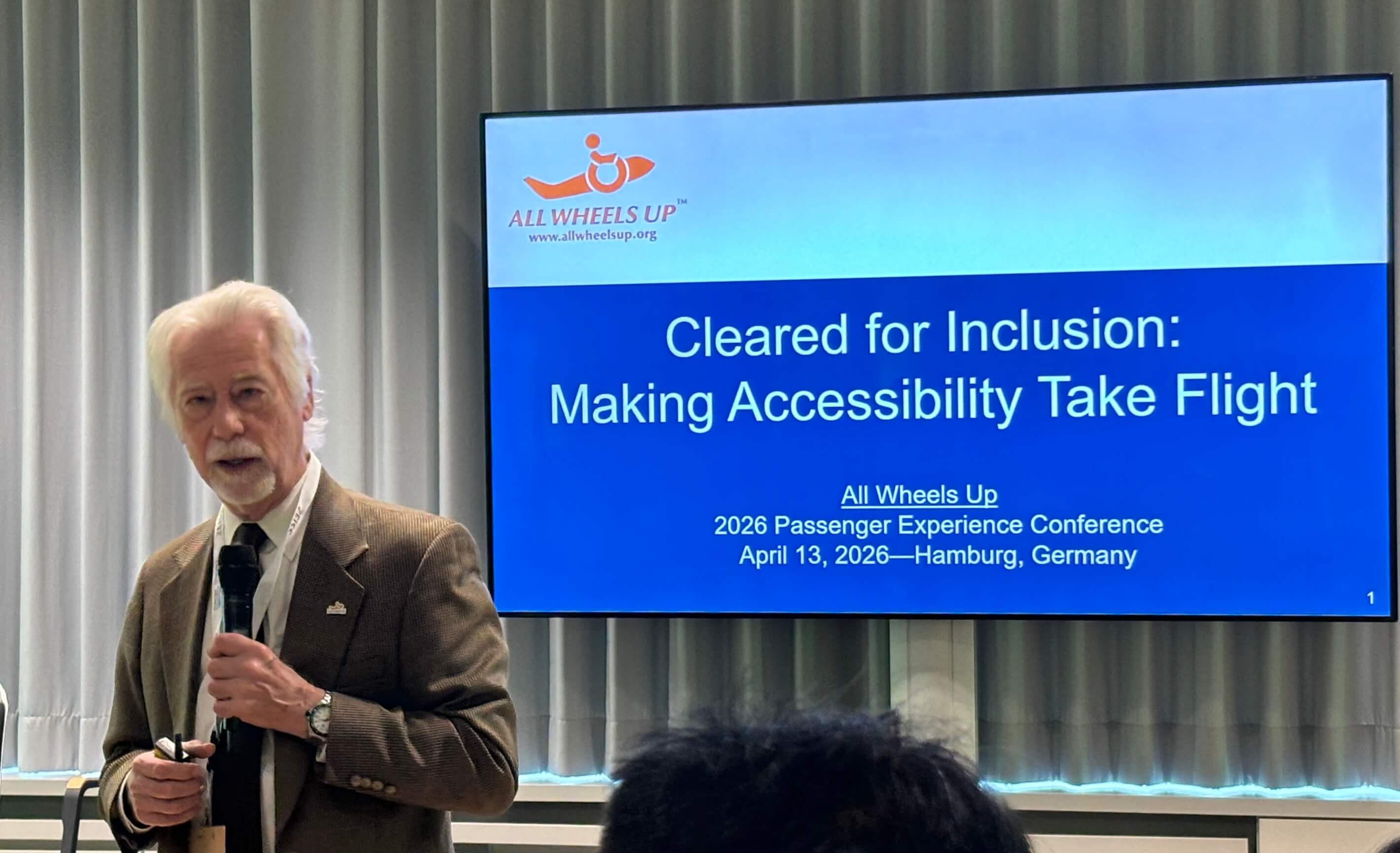
Blake Emery, Board Member, All Wheels Up at PEC 2026
PEC attendees enjoyed a buffet lunch and networking opportunities before the commencement of the afternoon breakout sessions. Blake Emery, Board Member, All Wheels Up, starts up the afternoon discussion in the Wellness Stream with the session "Cleared for inclusion: Making accessibility take flight."
Emery spoke on embracing accessibility as a core pillar of passenger experience to ensure every journey is inclusive, dignified and stress free. He highlighted research, advocacy and education as the key areas of focus for All Wheels Up. Compliance, Emery said, is the "ground floor" in terms of accessibility.
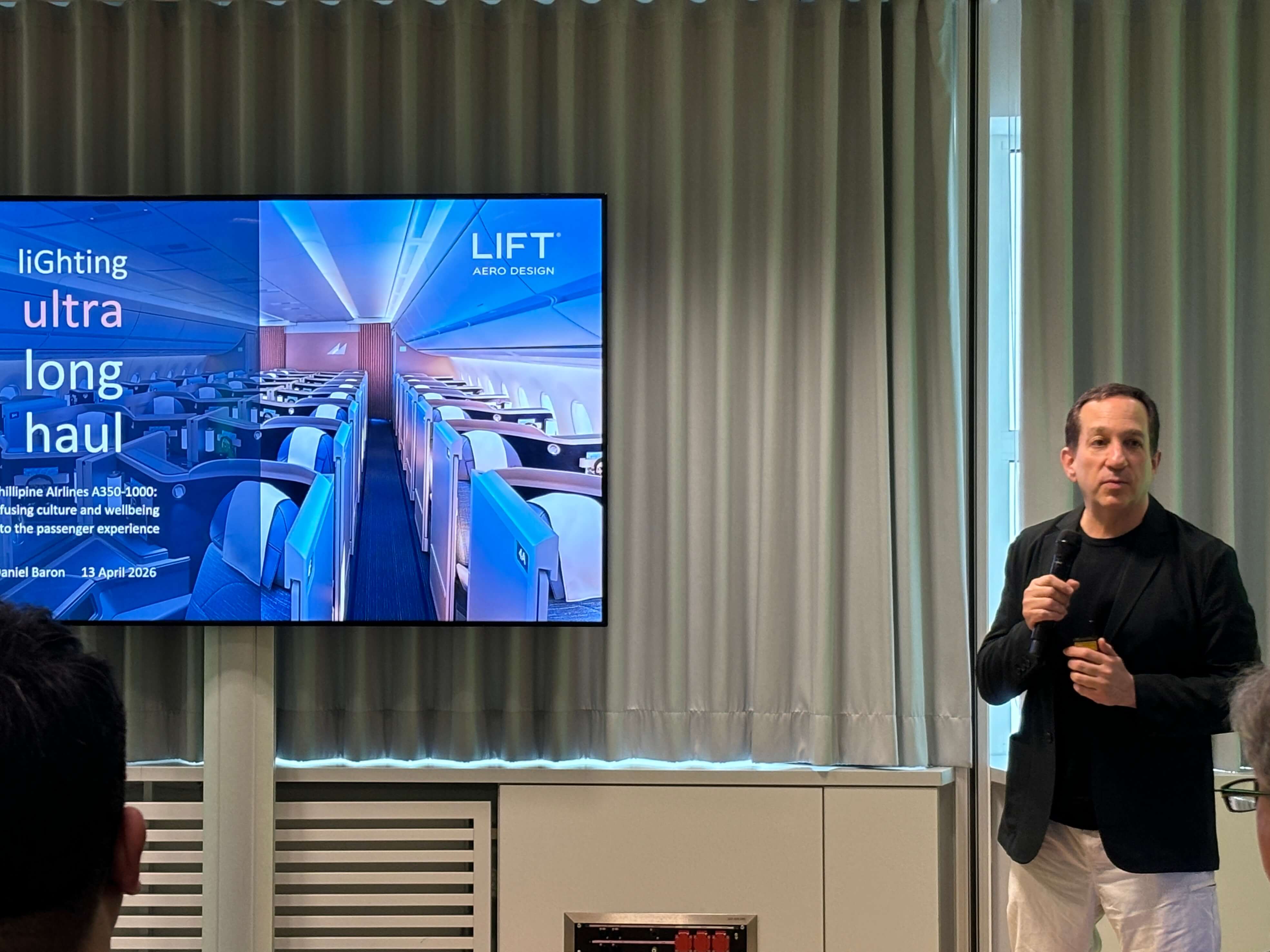
Daniel Baron, Managing Director, LIFT Aero Design at PEC 2026
Daniel Baron, Managing Director, LIFT Aero Design, addressed attendees in the Wellness Stream on the topic of "Lighting ultra-long haul: Infusing culture and wellbeing in the passenger experience."
He highlighted that Philippine Airlines uses its A350-1000 on 17-hour flights between Manila and North America. Looking at this case study of ultra-long haul customer experience, Baron examined the strategies behind weaving the "wow factor" with wellbeing.
Baron said, "Wellness is no longer an afterthought [of the passenger experience]."
Cabin lighting plays an important role not just in the way passenger's rest and adjust to jetlag in flight, but also in how a passenger experiences the onboard food, beverage and retail options. Baron said that brighter lighting is needed onboard to allow passengers to accurately read fine print and see all the options available to them.
According to Baron, some of the bottom line questions for airlines to ask on this topis are "What is your goal?" and "are you delivering clear differentiation from competitors?"
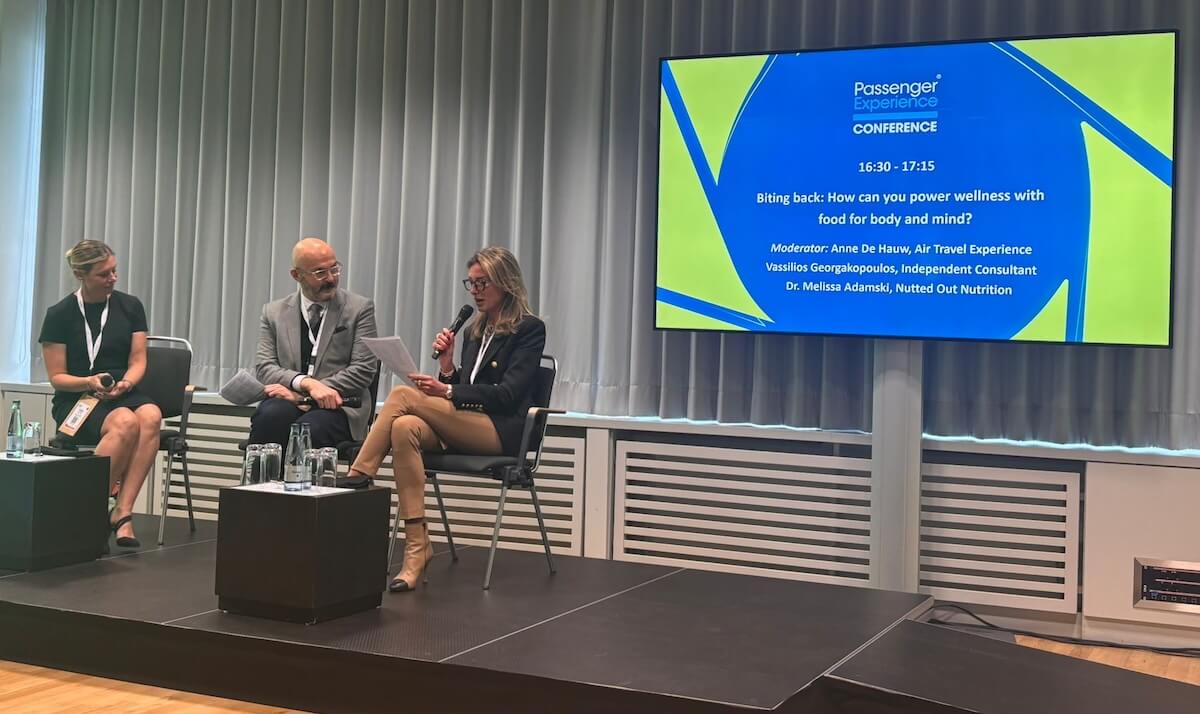
Panelists for the final sustainability session of the day, titled “Biting back: How can you power wellness with food for body and mind?” included Anne De Hauw, Founder of Air Travel Experience; Vassilios Georgakopoulos, Independent Consultant; and Dr. Melissa Adamski, Director and Lead Travel Dietitian at Nutted Out Nutrition and WTCE Ambassador of Travel Nutrition
The final sustainability session of the day, titled “Biting back: How can you power wellness with food for body and mind?” explored how inflight catering can move beyond basic sustenance to actively support passenger well-being, comfort and overall travel satisfaction.
The panel brought together Anne De Hauw, Founder of Air Travel Experience; Vassilios Georgakopoulos, Independent Consultant; and Dr. Melissa Adamski, Director and Lead Travel Dietitian at Nutted Out Nutrition and WTCE Ambassador of Travel Nutrition. Together, they examined how thoughtfully designed cabin meals can help combat fatigue, reduce stress and improve the passenger experience at altitude.
A key theme throughout the discussion was the need to reframe how the industry defines “healthy” inflight food—and how it translates into something passengers will actually choose and enjoy.
“Nutrition is a science but eating is a behavior,” said Adamski.
That distinction, the panel emphasized, is critical for airlines when designing onboard menus. While nutritional science can define what is optimal from a health perspective, passenger behavior ultimately determines what is consumed—and whether wellness goals are truly achieved onboard.
Panelists highlighted the ongoing challenge of balancing nutrition with taste, satisfaction and cultural expectations. Simply offering “healthy” options is not enough; airlines must ensure that meals are appealing, familiar where appropriate, and enjoyable in the unique context of air travel.
Another key point raised was the importance of meal timing and its impact on passenger wellbeing. The panelists noted that inflight service schedules do not always align with the body’s natural rhythms and this can negatively affect digestion and comfort. As one example, serving heavy or strongly spiced meals such as curry in the middle of the night may not be ideal for passengers trying to rest.
Beyond timing, the discussion also explored the physiological challenges of flying. Reduced cabin pressure, limited movement and changes in hydration levels can all impact digestion and comfort. Panelists stressed that these factors should be more deeply considered when designing inflight menus, particularly in relation to gut health and the potential for discomfort such as bloating or gas.
Sensory experience was another major focus of the session. The panel emphasized that inflight food is experienced in a highly altered sensory environment, where taste perception, smell sensitivity and even visual appeal can shift due to cabin conditions. As a result, airlines need to take a more holistic approach to menu development—ensuring that meals are not only nutritionally balanced, but also optimized for taste, aroma and presentation at altitude.
Ultimately, the discussion reinforced the idea that inflight wellness is not achieved through nutrition alone, but through a careful integration of science, psychology and sensory design. By understanding how passengers actually eat and experience food in the air, airlines have an opportunity to create meals that support both physical wellbeing and emotional comfort—enhancing the journey in a more meaningful way.
PAX as your trusted source for news and event coverage
PAX is proud to be a media partner for this event, providing live updates from Hamburg and delivering exclusive post-show interview coverage. Follow along on LinkedIn and Instagram to stay up to date.
