
Industry experts talk content rights at APEX TECH day two
Last updated at 4:37 p.m. PST, on January 28, 2026
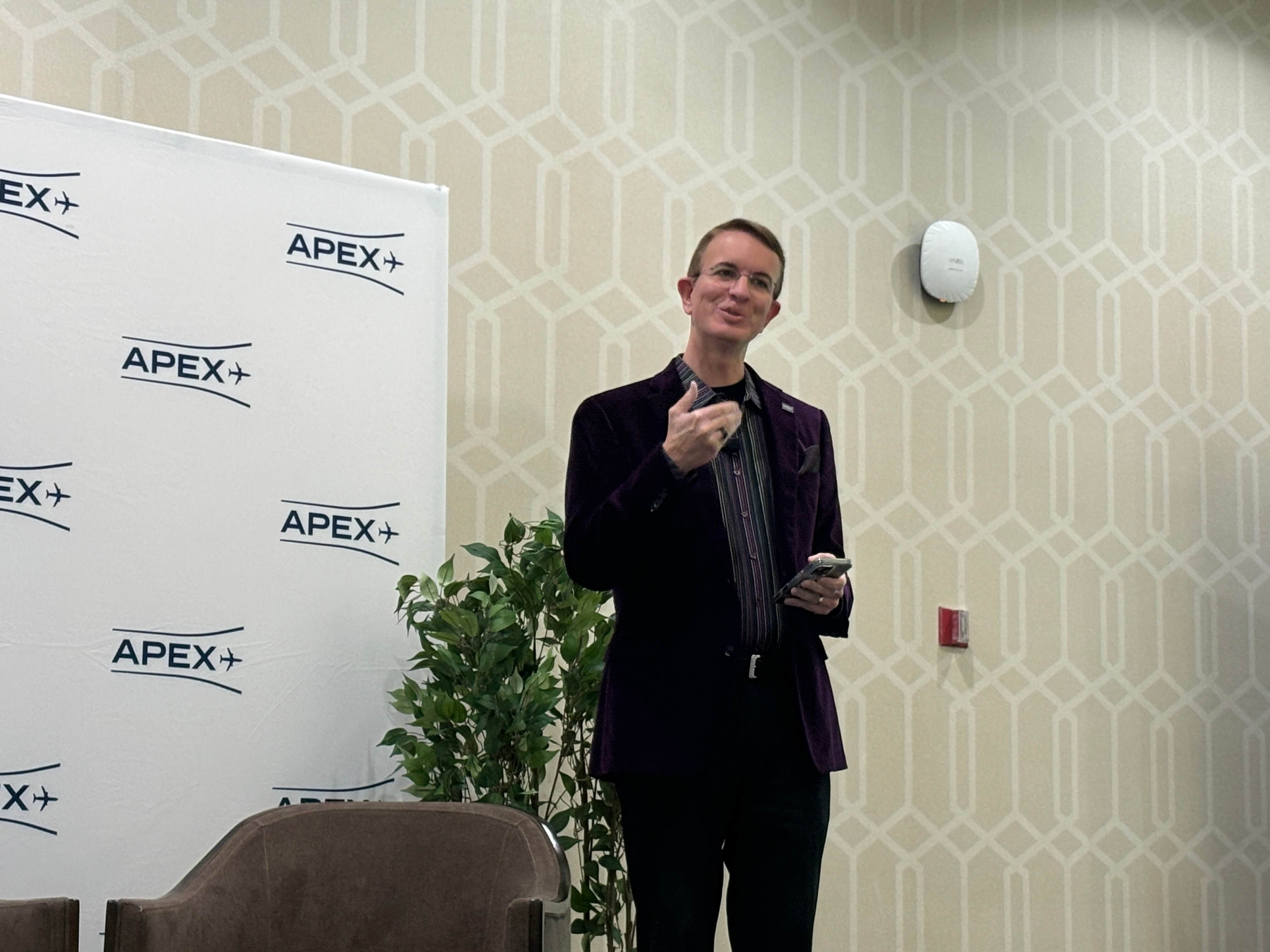
Dr. Joe Leader, CEO, APEX, introduces the keynote address for the second day of APEX TECH 2026
The second and final day of APEX TECH 2026 is underway in Los Angeles, at the Sheraton Gateway Hotel with PAX Tech as a media partner. Following yesterday's heavy focus on IFEC, the day two lineup promises a closer look at content rights for IFE through panels and workshops. The day began with a welcome address from APEX's Steve O'Connor at 9:00 a.m.
O'Connor reiterated appreciation for all of APEX TECH 2026 sponsors for their support in making the event possible, including headline sponsor Panasonic, Diamond Sponsors Spafax and West Entertainment, Gold Sponsors Anuvu, Safran and Thales and Silver Sponsors, Above, Axinom, CineSend, Connected Aero and Reaktor.
He then passed the mic off to Dr. Joe Leader, CEO, APEX, who thanked Spafax for sponsoring last night's poolside networking reception, before introducing today's keynote speaker.
9:10 a.m. – Keynote address: "United’s Kinective Media: Turning Passenger Satisfaction into Major Airline NPS and RASM Increases"
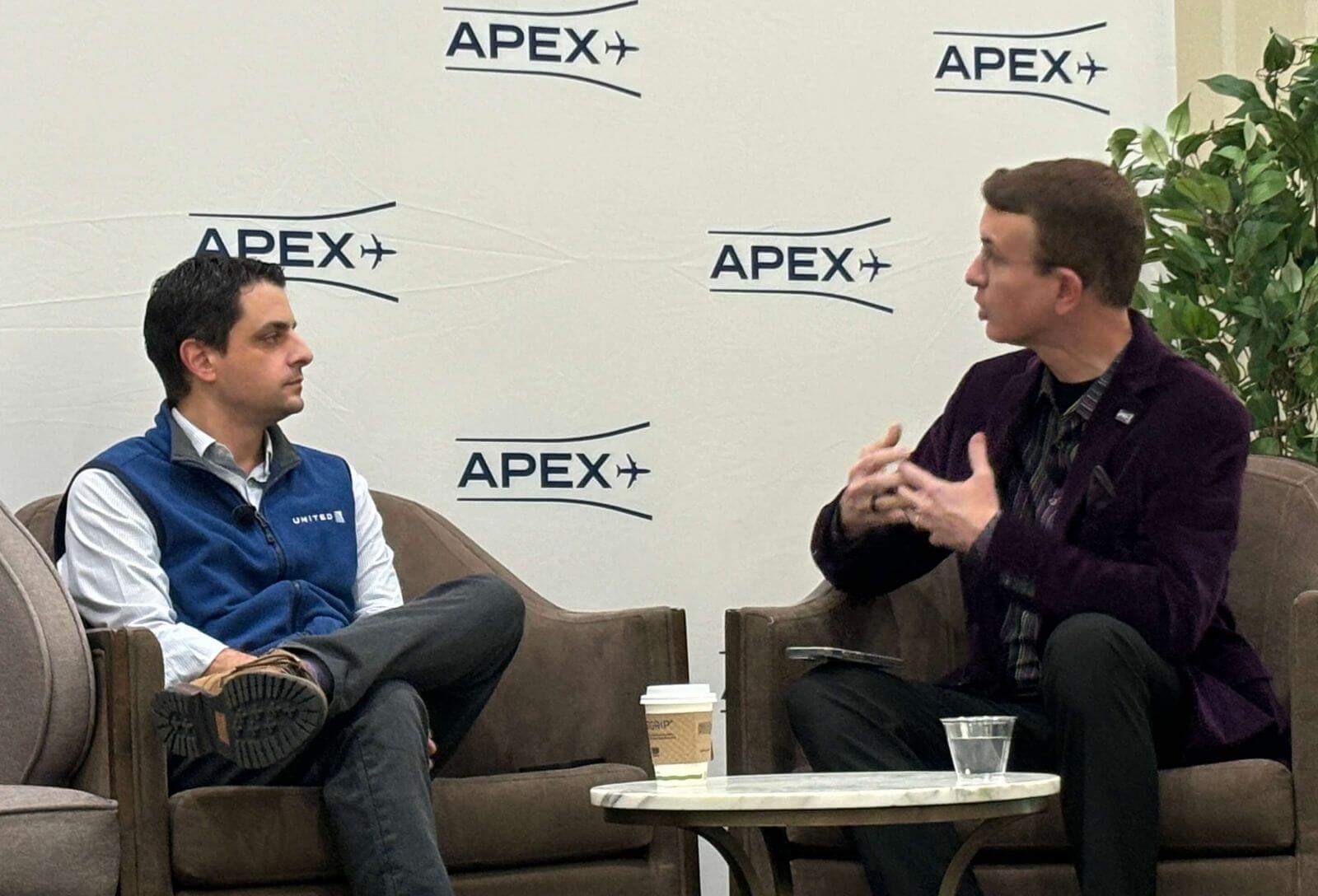
Mike Petrella, Managing Director, Strategic Partnerships, United Airlines, in conversation with Dr. Joe Leader, CEO, APEX at APEX TECH 2026
The opening keynote today was delivered by Mike Petrella, Managing Director, Strategic Partnerships, United Airlines. The session examined how United Airlines has paired the fastest expansion of inflight entertainment in the industry with a fundamentally new approach to passenger engagement and monetization, grounded in United’s purpose of "Connecting People. Uniting the World."
On creating an individual passenger experience, Patrella said people in general have become accustomed to receiving targeted content online.
“The human race has grown to have this expectation of personalization,” Patrella says, explaining that connected media is the opportunity for the application of personalization inflight.
On knowing when the personalized approach with a passenger is working well, Patrella says airlines can tell how passengers are engaging with entertainment and ad content on the aircraft. Noting the metrics of engagement points (such as what ads passengers click on, whether they finish a movie inflight or click away from it) are all taken into consideration to ensure the airline delivers the right messaging to the individual.
9:40 a.m. - APEX FlightTrack project update
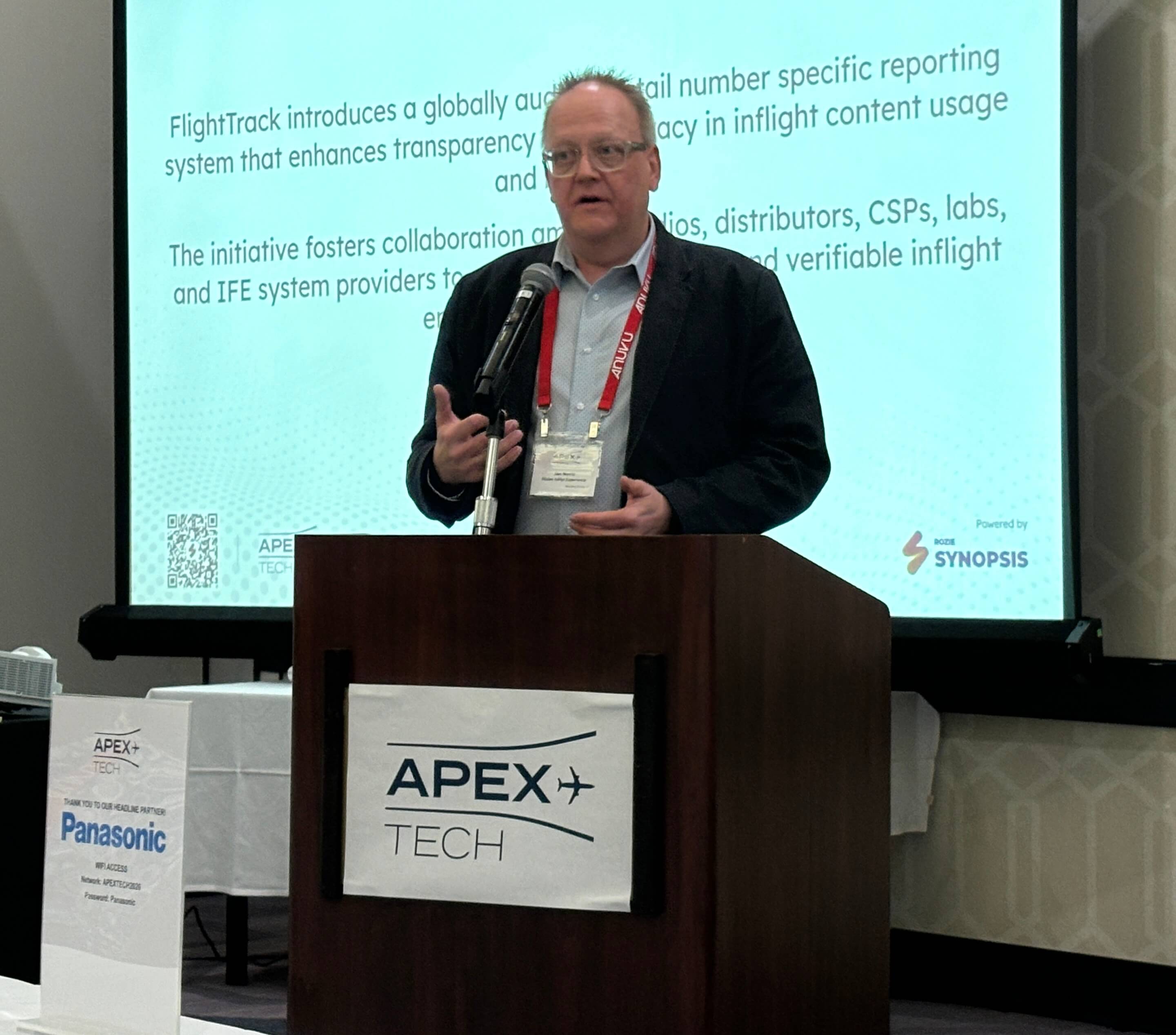
Jon Norris, Director of APEX STREAM & APEX FlightTrack
Next, Jon Norris, Director of APEX STREAM & APEX FlightTrack, delivers an APEX FlightTrack update, the first complete, tail number-specific, globally auditable reporting structure for licensed inflight content usage.
Norris, who says he is wearing his “APEX hat” this morning rather than his “Thales hat” explains that the update provides academic research-based exploration of inflight content rights in a next-generation connectivity environment.
He explains that the intent of FlightTrack is that APEX, on behalf of its members, will provide a 2025 retro billing report and verifiable reporting from 2026 onwards.
On content rights, Norris discusses the relevance of copyright law to private versus public licensing of content. He highlights that APEX's role is to provide a database for information for airlines to access and interpret.
9:55 a.m. - Panel discussion – “From Studio to Screen: Managing Rights within the Future Content Mix”
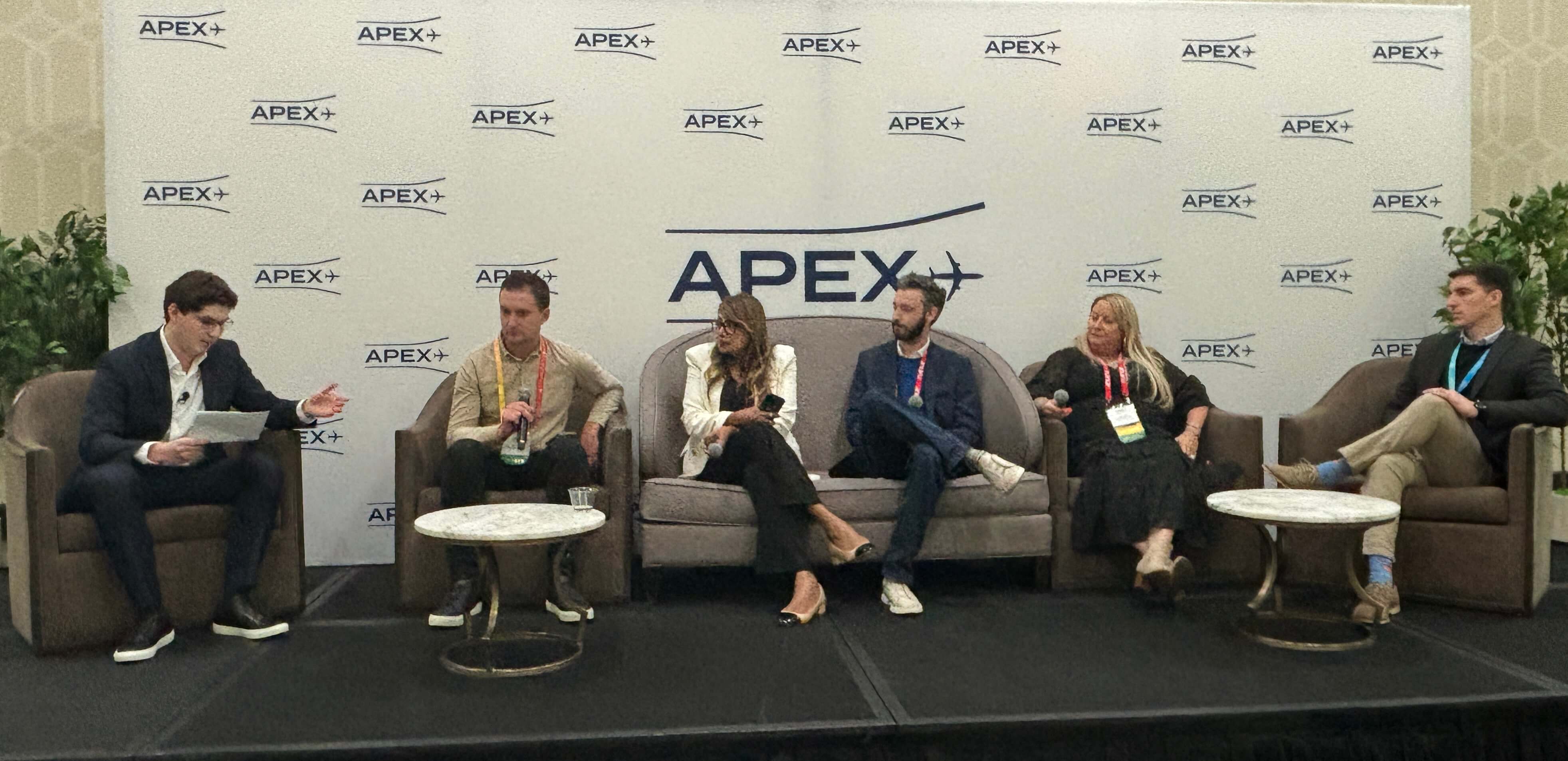
“From Studio to Screen: Managing Rights within the Future Content Mix” at APEX TECH 2026
The first discussion panel of the day, entitled "Panel discussion – “From Studio to Screen: Managing Rights within the Future Content Mix” was moderated by Joshua Kupietzky, Journalist, APEX Media.
Panelists include Sam Allen, CEO, Stellar Entertainment; Sonali Amarasingham VP of Business Development, Inflight Dublin; Simon Cuthbert VP, Licensing Programming & Distribution, Anuvu; Kate Groth, President, West Entertainment; and Carlos Martinez, Head of Sales, Conetic Group.
In this segment, industry experts examined the rise of passenger-centric content delivery, supported by modern streaming capabilities, reshaping priorities across the media and entertainment landscape. And, as cloud-based distribution is expanding opportunities to bring content to travelers while navigating increasingly complex licensing rights, APEX is working to define a distribution architecture that enables content owners to enforce preferred licensing rights and business models, while still meeting evolving passenger expectations.
As part of this discussion, Kupietzky poses the question of whether IFE will move toward a more direct, passenger-driven experience, or if it will remain anchored in a B2B licensing environment.
11:15 a.m. - Workshop: "From Studio to Screen: Managing Rights within the Future Content Mix"
Following another caffeinated speed networking break, sponsored by Above, attendees gathered in the Laguna Room for the second workshop of the conference. With this opportunity to break into smaller discussion groups, delegates worked through a series of questions on the topic, "From Studio to Screen: Managing Rights within the Future Content Mix."
12:45 p.m. - Lunch sponsored by Panasonic
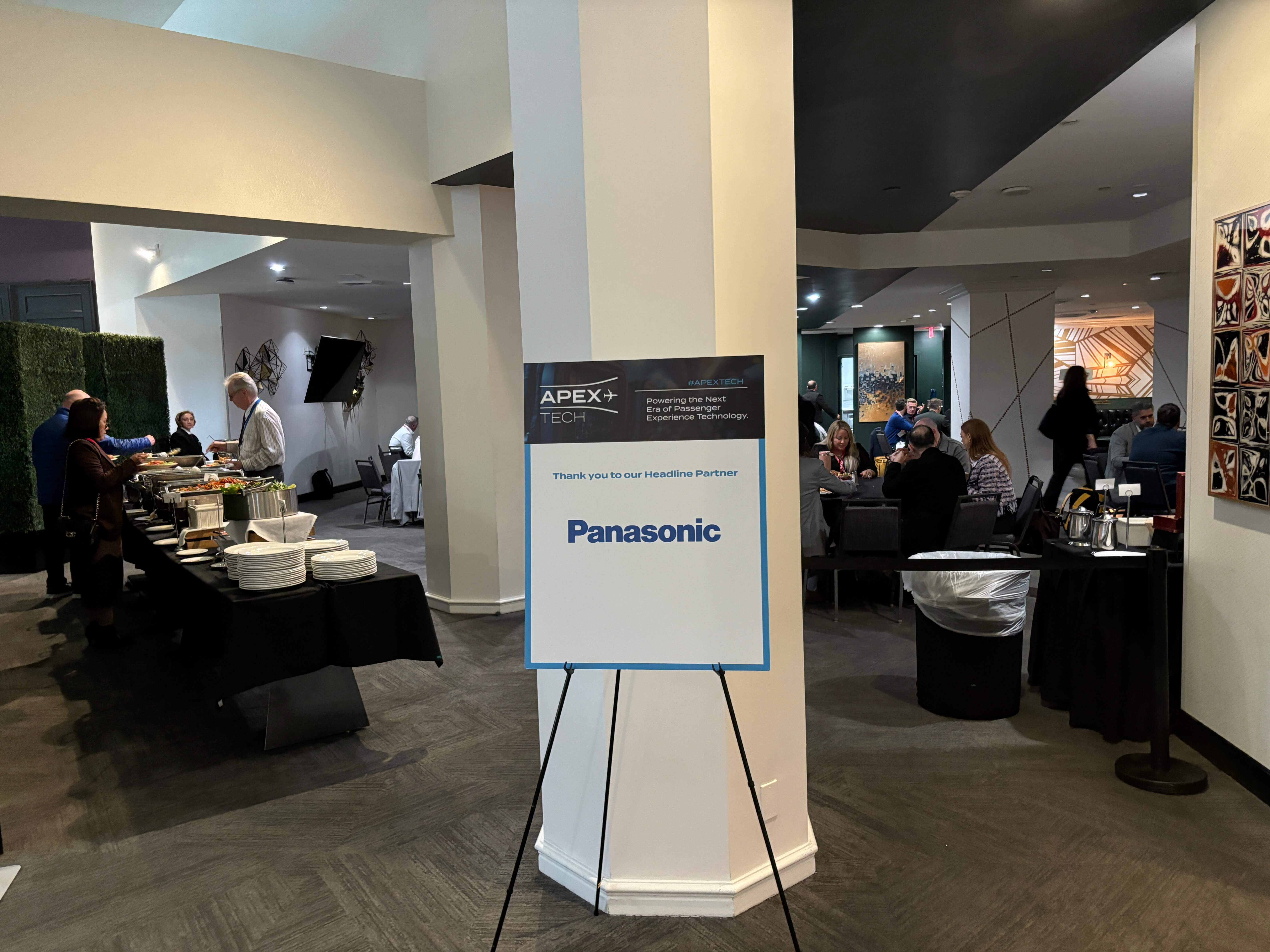
Lunch at Costero California Bar + Bistro sponsored by Panasonic
Following the workshop, attendees got a chance to relax and refuel with a delicious lunch, sponsored by Panasonic. The meal was a buffet-style spread at Costero California Bar + Bistro at the Sheraton Gateway Hotel Los Angeles.
1:45 p.m. – Panel: “Engineering the Next Generation of Connected Travel – Performance, Data Integration, and Intelligent IFEC Systems”
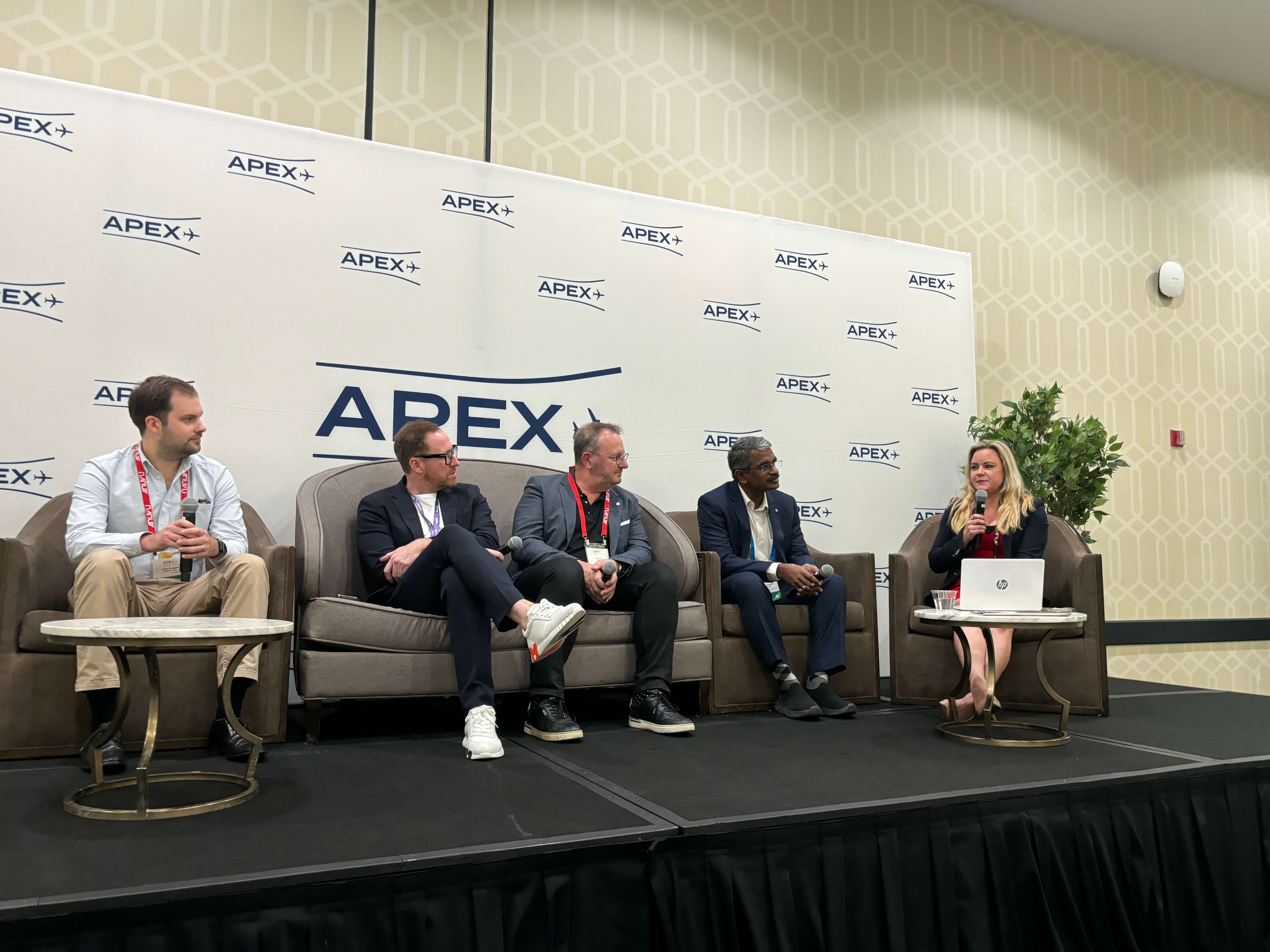
“Engineering the Next Generation of Connected Travel – Performance, Data Integration, and Intelligent IFEC Systems” panel at APEX TECH 2026
After lunch, attendees gathered for “Engineering the Next Generation of Connected Travel – Performance, Data Integration, and Intelligent IFEC Systems,” a panel offering a deep dive into the engineering behind the next evolution of inflight connectivity and entertainment systems.
The session, moderated by Inflight Magazine’s Satu Dahl and sponsored by Reaktor, features panelists Walter Berggren, Head of IFEC Engineering, Reaktor Aero; Cyril Jean, CEO, PXCom; Premjith Manapetty, Head, IFEC, Digital & Tech, Air India; and Mark Wright, Global SVP of Business Development, Spafax.
Dahl begins by asking panelists what they believe is the most significant shift happening right now in IFEC engineering.
Reaktor’s Berggren says, “I think for a long time a mantra in this industry has been that the hardware is lagging behind.” But, now he says with the quality of seatback screens processors onboard, this take is outdated. So, he says, “It is time to double down on software. That is where we are going to see great improvements moving forward.”
Air India’s Manapetty agrees, adding, “You have to build an ecosystem that is updateable and upgradable. Software has to catch up with the rest of the technology on the ground.”
Connectivity is key to many of these changes.
PXCom’s Jean explains, “We need to keep in mind that there are air-to-ground technologies that are emerging that are really affordable.” He says the challenge for an airline like Air India is that air-to-ground 5G technology might be suitable for domestic routes, but there is a challenge to seamlessly hand over the connectivity to satellites on international flights.
“LEO to GEO to Air-To-Ground is another challenge to overcome,” Jean says.
Spafax’s Wright tells APEX TECH attendees: “Audiences just want reliability. They do not care about air-to-ground versus LEO connectivity – they just want it to work.”
In terms of the most exciting emerging technologies in the industry right now, Berggren points to LEO.
“LEO connectivity or just excellent connectivity onboard. But how that transfers into the seatback experience is a bit more nuanced.” He says watching a movie on one flight and finishing it on another is not something that requires LEO specifically, but that LEO is opening this conversation about the connected passenger experience within the industry.
In terms of evolving technologies, Berggren says, “We need to start treating software as software.” He explains that launching software and leaving it onboard as it was on Day One is not the right mindset. “Day One is just when the real work starts. Then you make updates, changes and improvements based on feedback.”
As for how realistic it is for airlines to offer an individualized experience to every passenger, Wright says to a degree, this is already happening on airlines like United.
“I think that is the right way to go,” he says. “They are already personalizing their ads, but what we need to keep an understanding of is privacy and trust. I go back to trust that I see every day when I am talking to airlines about how data is used, how they are using data to target people etc.”
Berggren says it is easy to make personalization “too creepy,” but that this is more of a product problem.
Wright agrees that the presentation and nuance of the personalization matter. “When you start blending that [targeted content] with IFE, it is about the experience, and it gives advertisers a better way to sell to people.”
Berggren adds, “An exciting point is that the hardware is maturing now. Whatever we build now, we can build out a great software platform and adopt that software mindset.” He notes it is important to stop thinking about individual touchpoints and building these components separately. Instead, suppliers must zoom out and think about how the endpoints fit together in a comprehensive way and keep evolving them throughout their lifecycle.
Jean says he doesn’t envy the position of airlines making IFE decisions today. “I would not like to sit in the shoes of an airline today because things evolve so rapidly. [Looking to the future, as an airline], I would take systematic approach, because you need connectivity, you need a good antenna. And you need to have it futureproofed.”
2:30 p.m. - Fireside keynote: “Evolving the Non-Theatrical Ecosystem: Rights, Content and Collaboration”
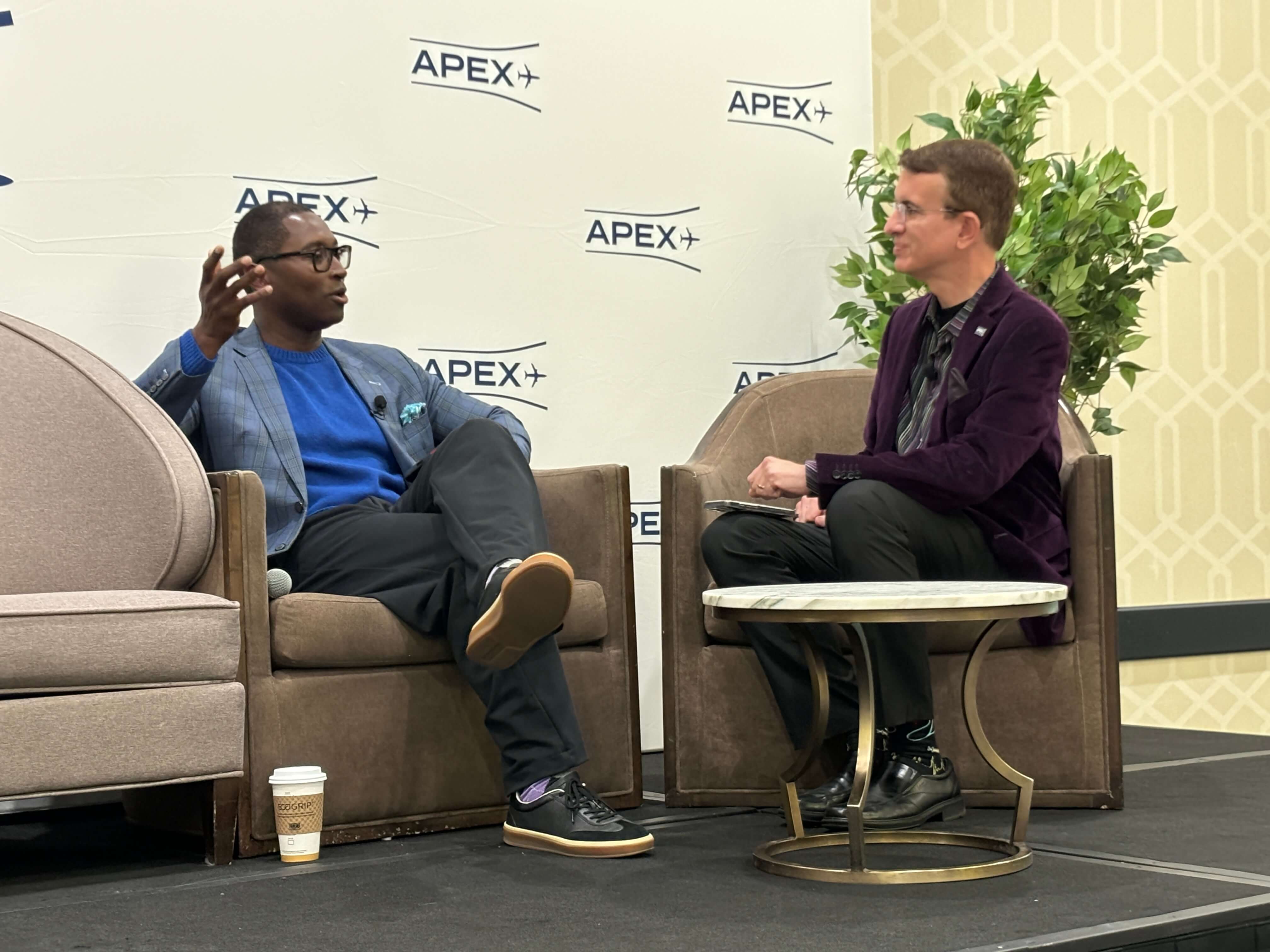
Dr. Joe Leader, CEO, APEX, in conversation with Esdra Lamy, SVP Content Sales, IFE at APEX TECH 2026
This one-on-one keynote reframes inflight entertainment at a time when streaming platforms influence consumer behavior on the ground and airlines face growing pressure to mirror that at-home experiences onboard in a fully licensed manner. This session with Dr. Joe Leader, CEO, APEX, in conversation with Esdra Lamy, SVP Content Sales, IFE, Syndication, Warner Bros. Discovery, challenged that assumption, reinforcing why curated, rights-compliant and purpose-built IFEC continues to outperform open streaming models in engagement, satisfaction and brand impact.
“The biggest shift for everyone is what that means for the licensing of it all,” says Lamy of this pivotal moment in time. “When the shift continues to happen that way, no longer the traditional path, where there is no longer just one gatekeeper with everything going through the Hollywood pipeline. Now, in the last 10+ years, you can become a content creator on your cellphone.”
Leader asks what misconceptions airlines have about inflight streaming and licensing, to which Lamy explains, “I think the approach sometimes is that because the consumers have already been conditioned to consume and watch content a certain way, there is an idea to tap into that at 35,000 feet to give them that experience.”
However, he notes that at 35,000 feet, there is a much more curated experience that comes along with that. Trying to duplicate the at-home experience and tapping into a person’s home streaming is “cheating” the inflight experience they could have when an airline offers curated content and pulls together something that elevates the passenger journey.
3:15 p.m. - Keynote address: “Air India in Transformation: Engineering a New Global Airline Through Customer Experience Strategy, Technology, and Cultural Reset”
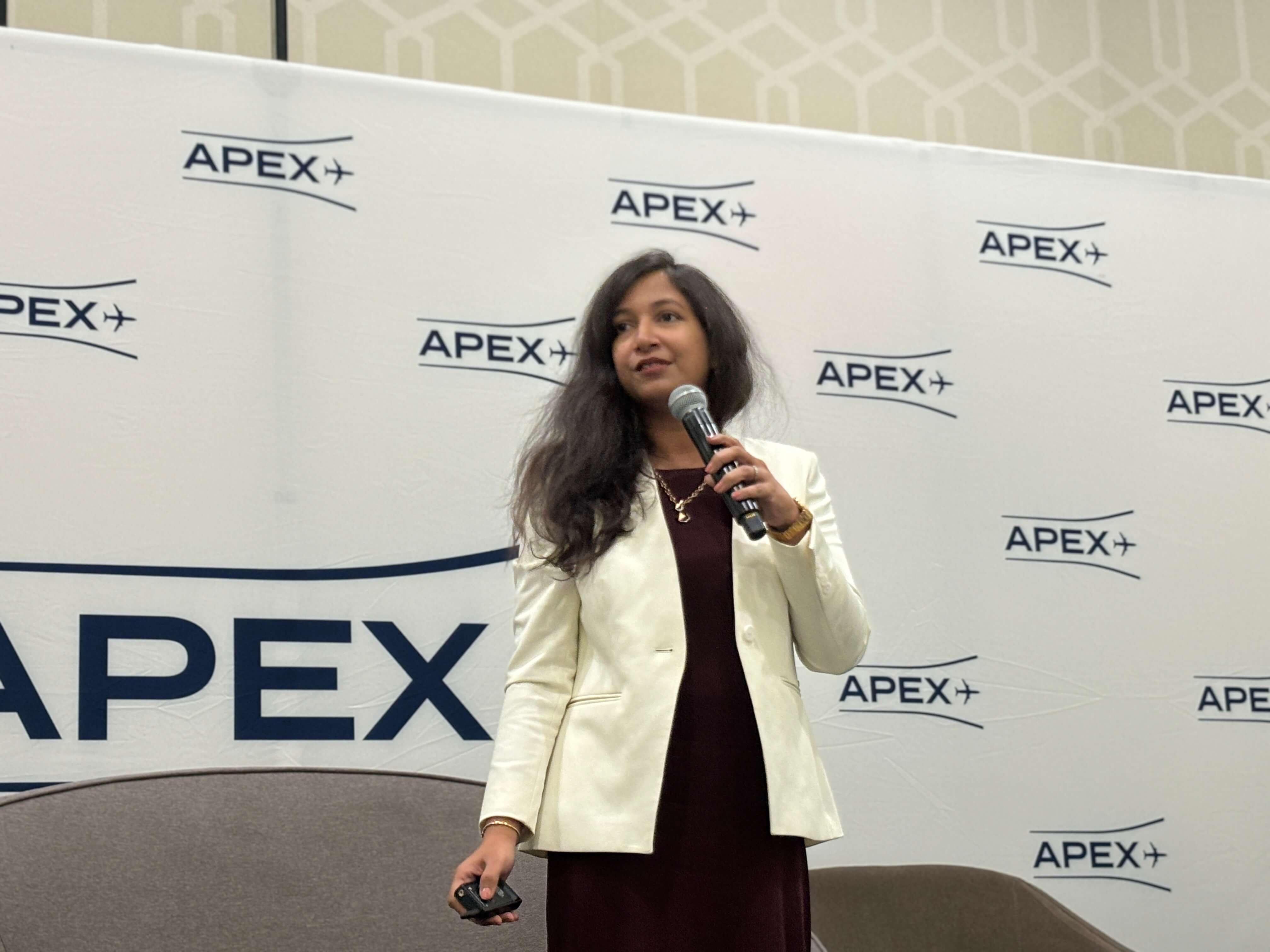
Anjali Birla, Vice President – CX Strategy & Intelligence, Air India
Air India’s Anjali Birla, Vice President – CX Strategy & Intelligence, delivers the closing keynote of APEX TECH 2026, beginning with a brief history of Air India ahead of its CX transformation. Fast forward to 2022, she highlights the airline’s return to the Tata Group with several challenges, including what The Economist called “The Everest of corporate turnarounds.”
“As an organization, we sat together and created a roadmap for the transformation in the next five years. We called it VIHAAN.AI,” Birla says, adding that Vihaan in Sanskrit means “the dawn of a new era.”
Air India has completely revamped its digital ecosystem, it has built South Asia’s largest training academy to train more than 2000 people per today, and it launched a new brand, a new livery and new uniforms. The airline also merged four airlines into two distinctly new airlines (Air India and Air India Express) within a span of two and a half years, Birla shares.
The airline has welcomed its first A350 aircraft to its growing widebody fleet and, one of the key things the airline focused on in its corporate turnaround, was a “massive cultural transformation.”
Birla says Air India focuses on a #CustomerFirst culture and mindset, which she calls “critical” for all of the airline’s internal departments. Consistent execution, absolute ownership, and warm and intuitive service are among the values the airline is using to champion the customer experience.
After her initial address, Dr. Joe Leader, CEO, APEX, sits down with Birla for further discussion, asking what role IFE played in designing Air India’s new vision.
“When we started the transformation, there were more than 200 things we needed to fix,” Birla says. “So we knew we needed to prioritize. We did not want to do this based on what consultants were telling us or what we wanted, but based on what customers really wanted.”
The airline interviewed customers to understand what matters most to them when they choose an airline and used that data to come up with a list of priorities. IFEC, Birla reveals, was in the top 10 items on that list.
“From day zero, we were clear that inflight entertainment and connectivity were going to be a big driver of customer affinity, customer loyalty,” Birla says. “What has worked for us is defining a clear vision from the start.”
“We focused on building our app and our website to be at an acceptable, world-class level.” She adds that when it came to connectivity, because four airlines merged to create two, the fleet was mixed, presenting a challenge in delivering consistency. The first thing Air India did to combat this was work on a UI that was uniform across the fleet for a common interface that creates a consistent passenger experience.
“We want to be a world-class airline with a deeply rooted Indian heritage and culture,” Birla says, explaining that passengers will find a combination of bollywood and hollywood IFE content onboard.
She says right now the airline offers a static, uniform IFE experience that caters to a lot of cohorts, but they are on a journey to deliver a more dynamic experience in the future.
As for the best tool to determine what passengers want, Birla says, “I feel that number one tools is still just observing what is happening onboard the aircraft and at the airport. There is absolutely no substitute for that.”
She also points to NPS data for scores that provide insight into from passengers on the experience as well as social media feedback from travelers.
PAX Tech as your trusted source for news and event coverage
PAX Tech is proud to be a media partner for this event, providing live updates from Los Angeles and delivering exclusive post-show interview coverage. Follow PAX Tech Magazines on LinkedIn and Instagram to stay up to date.
