
IFEC emerges as key focus on day one of APEX TECH 2026
Last updated at 8:36 p.m. PST, on January 27, 2026
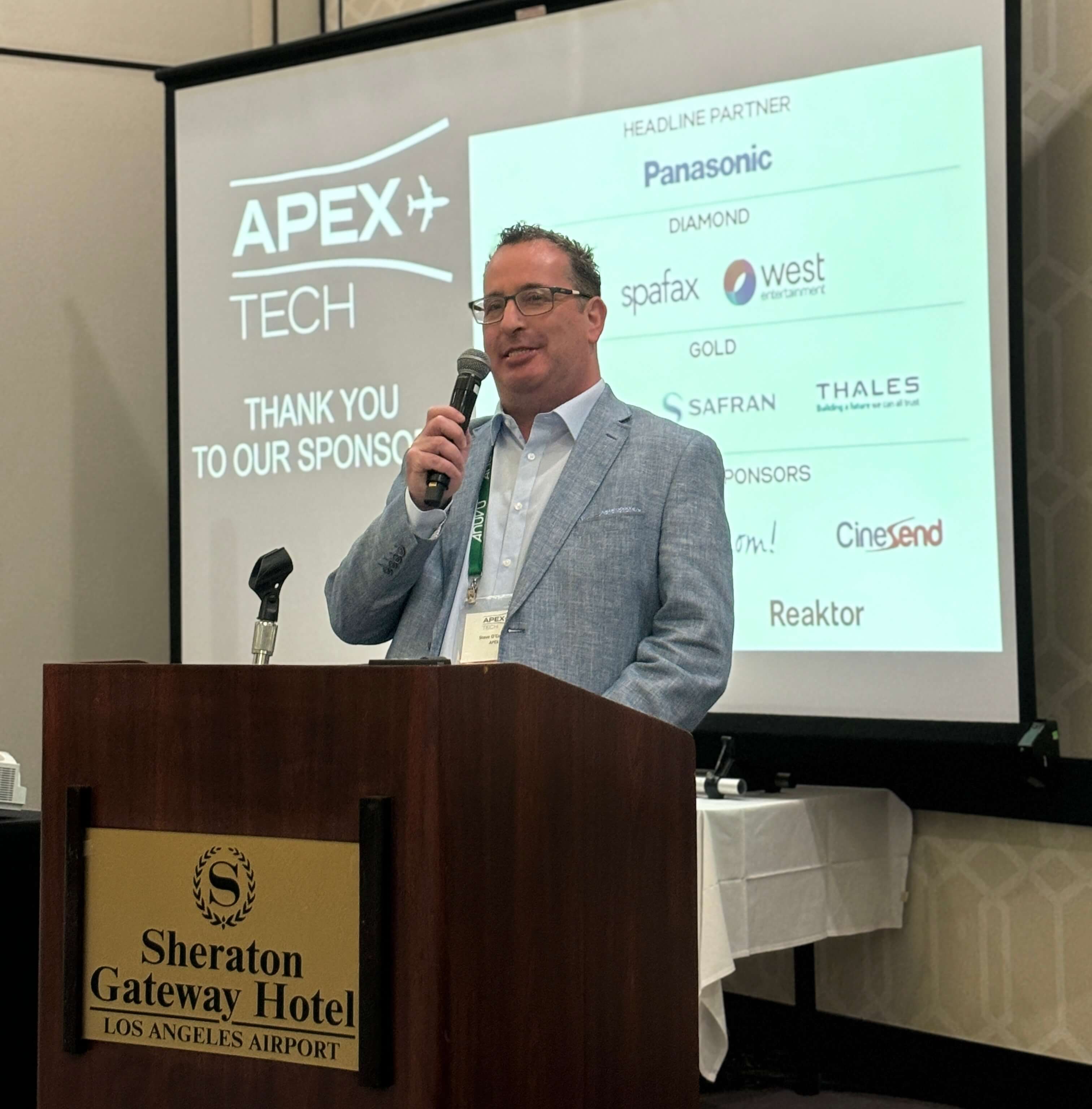
APEX's Steve O'Connor welcomes attendees to APEX TECH 2026 in Los Angeles
APEX TECH 2026 is underway in Los Angeles from January 27 to 28, with PAX Tech as a media partner. Taking place at the Sheraton Gateway Hotel, the two-day event commenced this morning at 8:00 a.m. with coffee and registration, followed by a welcome address and opening insights from APEX's Steve O'Connor at 9:00 a.m.
O'Connor opened by thanking the APEX TECH 2026 sponsors for their support in making the event possible, including headline sponsor Panasonic, Diamond Sponsors Spafax and West Entertainment, Gold Sponsors Anuvu, Safran and Thales and Silver Sponsors, Above, Axinom, CineSend, Connected Aero and Reaktor.
"We are proud to be a headline partner of APEX TECH, looking forward to giving back to tech and developing standards that benefit the entire industry," says Kent Craver, Head of Marketing, Communications & Events at Panasonic. "Looking forward to a productive two days."
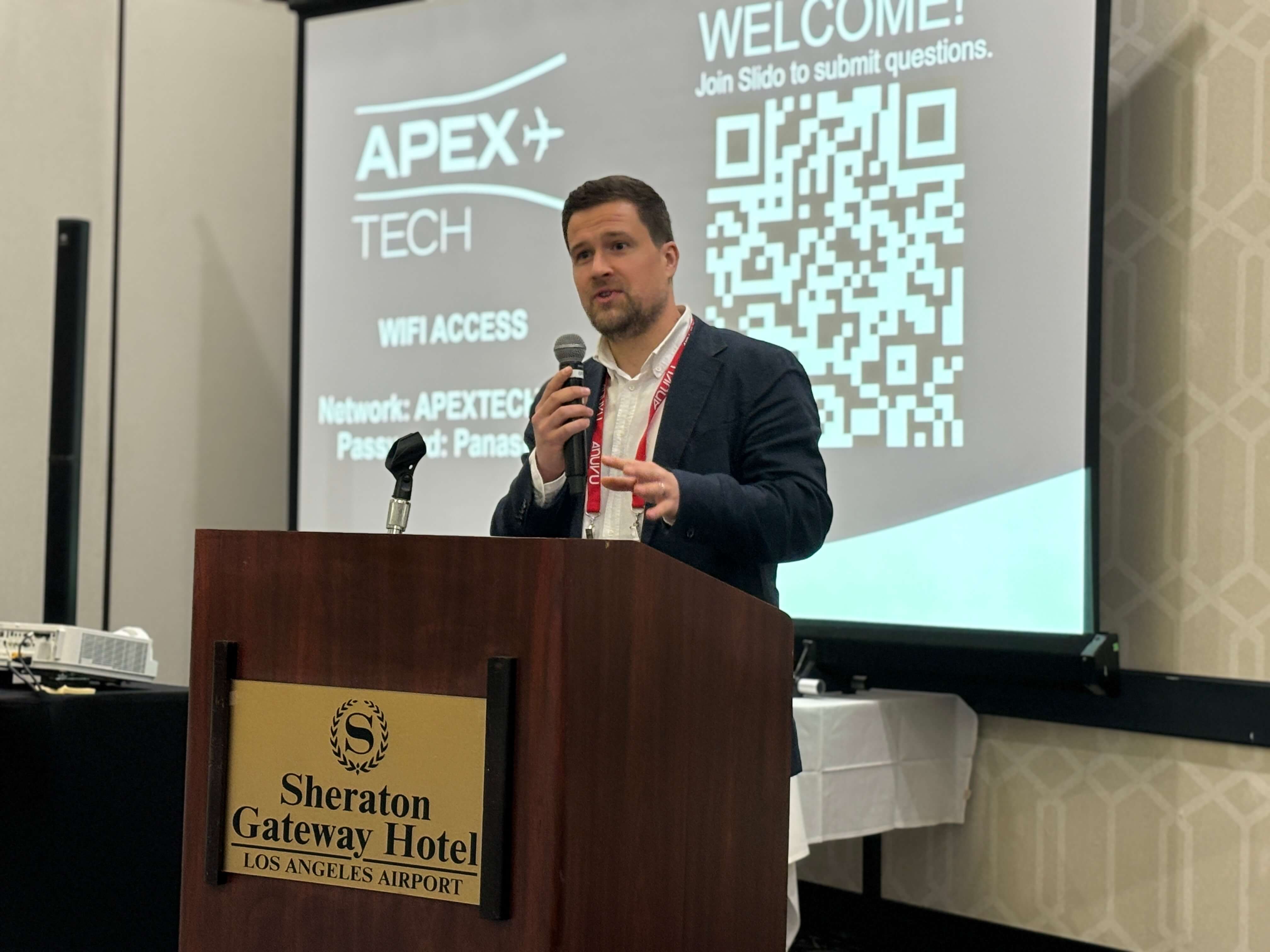
Jonas von Kruechten at APEX TECH 2026 in Los Angeles
Jonas von Kruechten, member of the APEX Board of Directors, welcomed attendees to the event, saying, "The industry is changing rapidly. Technologies are changing and we are all here to have a genuine exchange. APEX TECH is not meant to be a sales show. This is a genuine exchange to see where the inudustry is headed." he said. "This is what APEX TECH Is about, I think it is fantastic, I am looking forward to speaking to many of you today and I wish you success."
Von Kruechten previews the day ahead with two panels and working groups that will allow attendees to break into smaller groups for ideation and discussion.
This year, APEX TECH will continue to focus on the critical technologies shaping aviation today and tomorrow, within the core focus areas of:
- Inflight Connectivity (IFC)
- Media Content & Supply Chain
- Data Capture & Intelligence
- Ancillary Revenue & Passenger Experience Use Cases
9:10 a.m. Keynote address: "Integrating Intelligence - Data-Driven Blueprint for IFE & Connectivity"
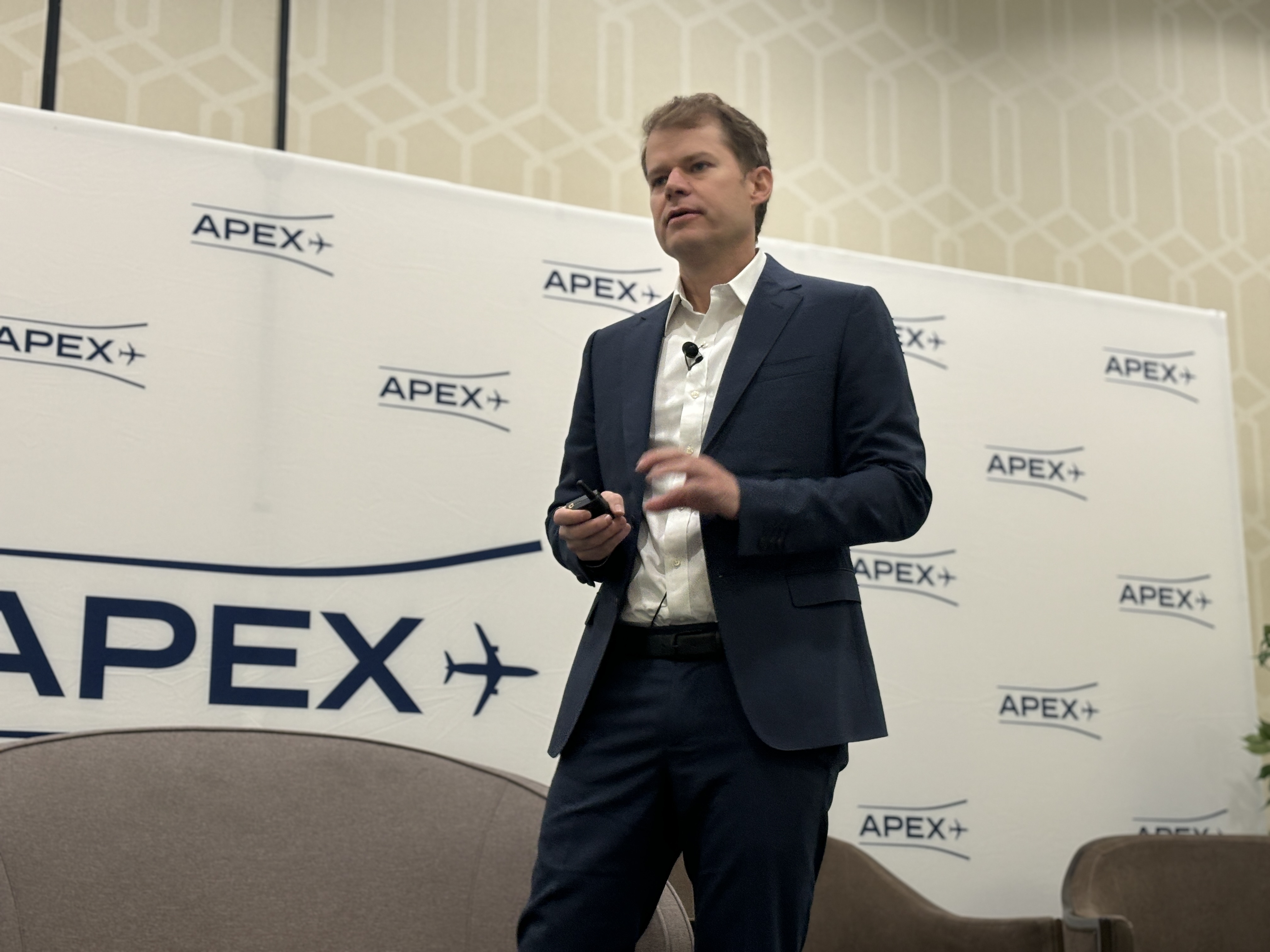
Andrés Castañeda Ochoa, Chief Digital and Customer Experience Officer, Aeroméxico delivers the keynote at APEX TECH 2026
Von Kruechten then introduced the keynote address on “Integrating Intelligence - Data-Driven Blueprint for IFE & Connectivity,” delivered by Andrés Castañeda Ochoa, Chief Digital and Customer Experience Officer, Aeroméxico.
Castañeda Ocho outlined how AI and enterprise data strategies are reshaping the future of inflight connectivity and entertainment. He shared how integrated intelligence across operations, customer touchpoints and onboard systems enables more personalized, reliable and revenue-generating digital experiences.
"It has been almost nine years since I had the opportunity to be here, speaking at APEX TECH. It is amazing to see everything that has happened within the tech space and the airline industry," says Castañeda Ocho as he takes the stage, adding that he will give his perspective today on "where we are and where we should go."
"[Aeroméxico]'s purpose is to deliver extraordinary experiences. We exited our structure in 2023 and have had the best years in our history," Castañeda Ocho reveals. "In the last two years, we have been the most on-time global airline in the world and for six years, a five-star global airline."
Castañeda Ocho says it goes back to the airline's pillars of data, connectivity and AI, noting the importance of having a consistent product. He shared that a challenge he sees today is how airlines can move beyond connectivity to intelligence.
Castañeda Ochoa speaks from the hardware, software, content and connectivity perspective. He says U.S. airlines have room to invest and improve specifically in the software space.
"You can see airlines design programs, personalize. You need to be intelligent and understand your customers," he emphasizes. "How can you create an ecosystem that improves the relationship between airline and customer, and adds value at the same time?"
In terms of content, Castañeda Ochoa points to watching sports as an example of the challenge for airlines to offering content varieties to passengers onboard. "We should be there. Especially with connectivity."
Castañeda Ochoa says connectivity solves a lot of these challenges with obtaining a wide breadth of content for IFE and an architecture to support streaming.
"I do not think that improving technology will solve this gap. I think we need to be intelligent about how we solve for this progress," says Castañeda Ochoa."When we put our customers at the center and understand their needs, we can bring the best technology to solve a specific problem."
Castañeda Ochoa says the partnership with AWS for the past five years has meant bringing Aeroméxico's applications into the cloud, modernizing them.
He points to a Unified Data Foundation, explaining that when you have your applications in the cloud, it makes it easy to have more relevant content. For the airline, this data allows for more personalization with the carrier knowing who the passenger is from the time they purchase their ticket.
Next, Castañeda Ochoa underscored Intelligence at Scale, saying data strategy and becoming a data-driven organization, "We need to invest in quality data – now it is time to make it easier to discover connect and apply. The strategy empowers teams to move faster and more confidently with trusted insights."
Looking at an Omnichannel experience, he added, "For me, once you have solved the technical part, this is the most relevant. In the next five years, how can we create a cloud-native IFE software?"
He says airlines need to be out of the cycle of uploading content every two months for example, instead moving to real-time content ingestion and distribution, powered by the cloud. Then, the aircraft becomes part of a living, learning ecosystem.
"This is what I am seeing, as I said there are some structural challenges we have as an industry. But I think we need to find a solution to be faster, to be better, to be more personalized."
Castañeda Ochoa closed his speech with a video on Aeroméxico's 2030 roadmap, emphasizing on-time operations driven by data.
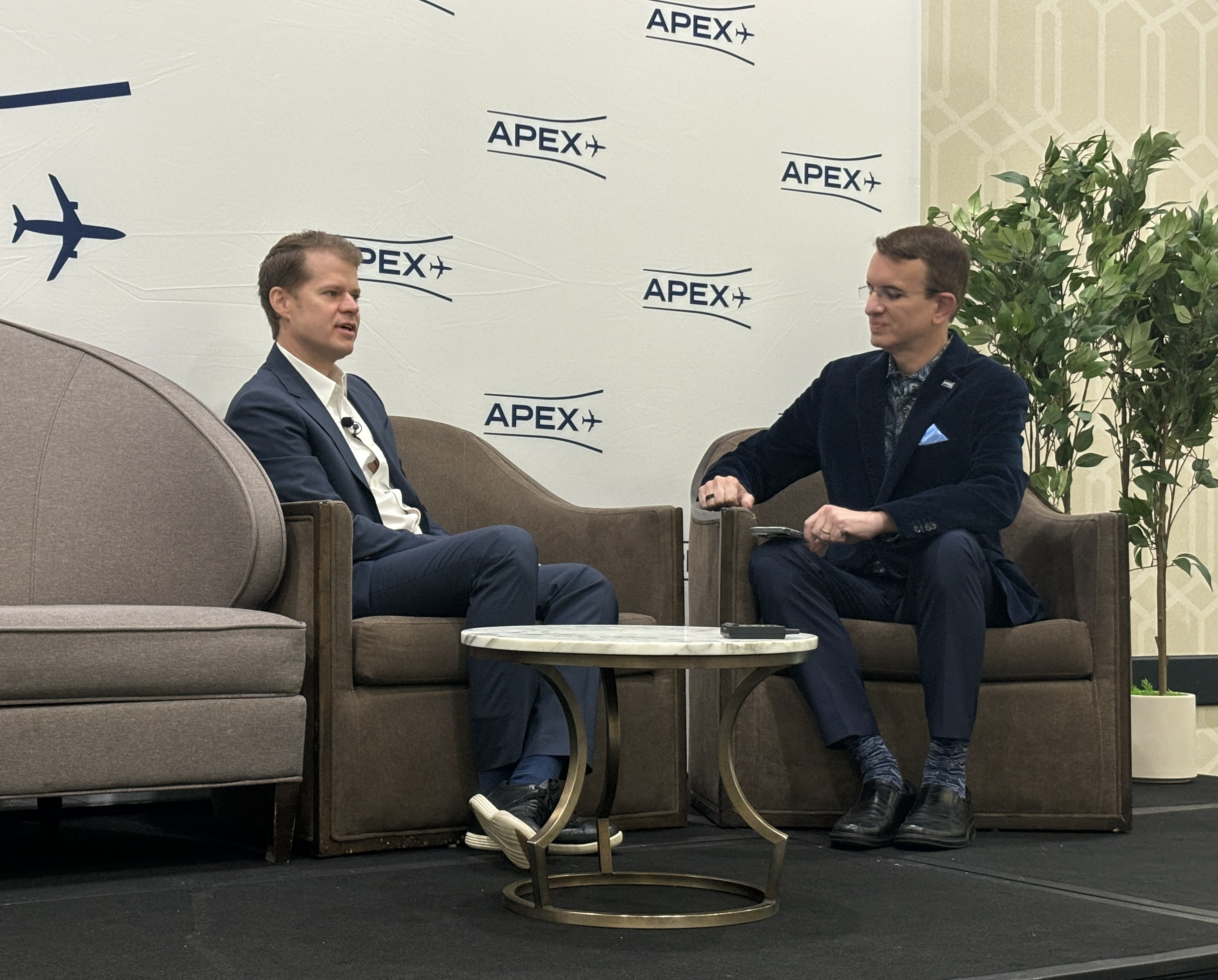
Andrés Castañeda Ochoa, Chief Digital and Customer Experience Officer, Aeroméxico in conversation with APEX CEO Dr. Joe Leader, at APEX TECH 2026
Following the keynote, Dr. Joe Leader, APEX CEO joined Castañeda Ochoa on stage for a discussion.
In response to Leader asking about the airline's achievements in on-time performance, Castañeda Ochoa said, "We met nine years ago and look at where we were and where we are. I will say that probably the number one ingredient in this success is the infrastructure. After COVID, being able to structure the company ourselves, that was the most stressful and more successful process we have been through [in my time with Aeromexico]."
He adds that for the airline operating out of MEX, a congested airport, on-time performance is no small feat. "Mexico has a very strong work culture. The warmth of our people in our country is amazing, and that is a big differentiator."
Leader pointed out that Aeroméxico is the only airline in North America with 100 percent IFE screens on every aircraft and asked Castañeda Ochoa how the airline is staying ahead of the curve.
"The idea in our five-year plan is to keep investing," Castañeda Ochoa explains. "We are going to increase our premium product by 30 percent. We are investing to standardize our 787s with premier. We are doing unified entertainment. Our number one investment will come through technology. As we get better insight from our customers and we know better what they want when they want it, [the question is] how can we create 100 different experiences in one aircraft; in one flight? I think the airline [that] gets better at this will have a very big advantage in the coming years."
9:40 a.m. – Panel discussion: From Strategy to Seatback – How Airlines Are Shaping the Next Era of Connected Entertainment
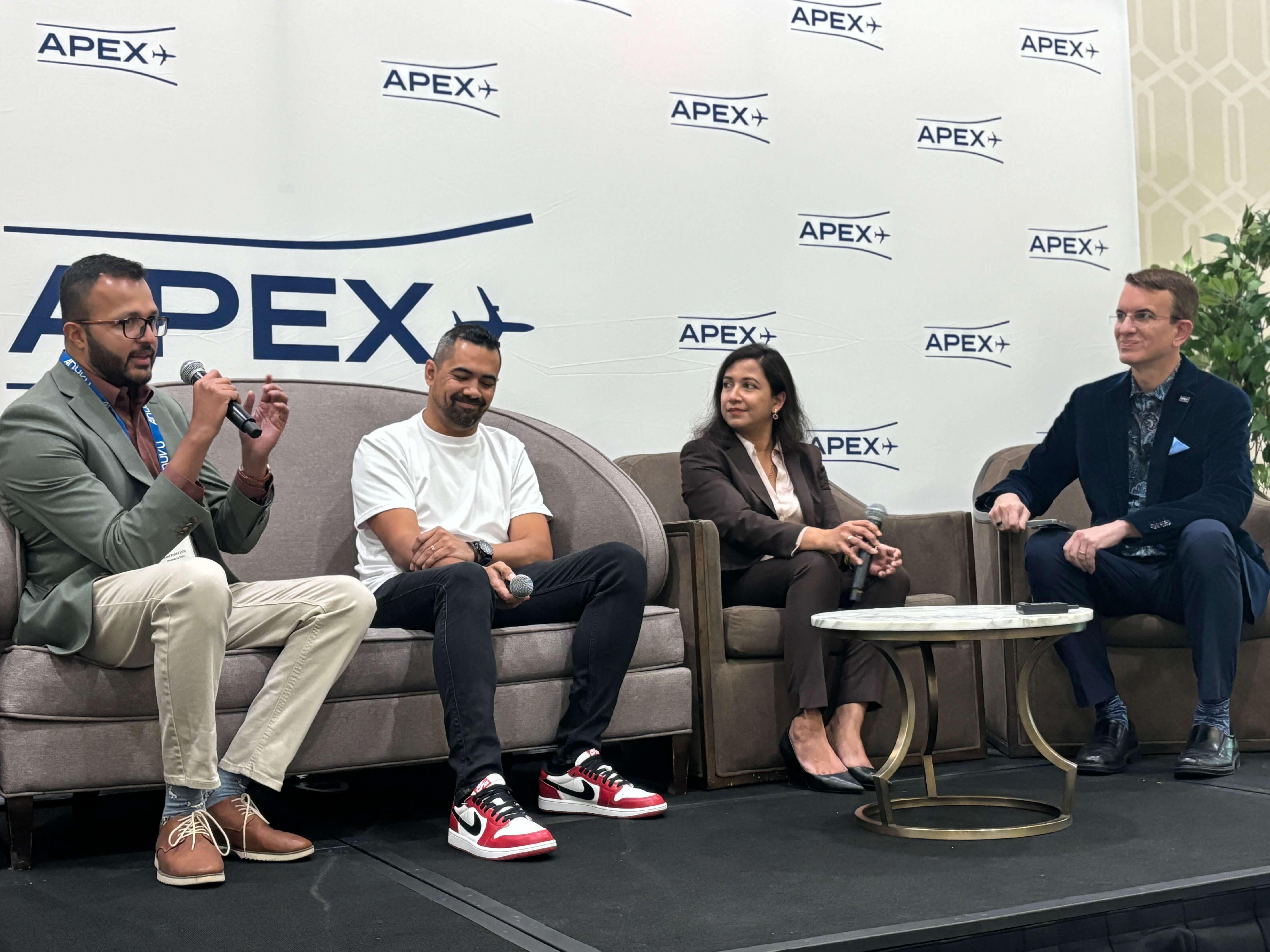
"From Strategy to Seatback – How Airlines Are Shaping the Next Era of Connected Entertainment"
The first panel of the event, entitled “From Strategy to Seatback: How Airlines Are Shaping the Next Era of Connected Entertainment,” brought together airline leaders to share how connectivity and content fit into their broader passenger experience, brand and revenue strategies.
Dr. Joe Leader, CEO, APEX, moderated the discussion with panelists Anjali Birla, Vice President – CX Strategy & Intelligence, Air India; Mark Cheyney, IFEC Strategy, Ops and Performance Manager, IAG; and Sheryl Prabha Shibu, Program Manager - Cabin Entertainment & Connectivity, WestJet.
Leader began by asking Birla about Air India's recent CX transformation.
"At the beginning of this transformation, what Air India did was make the customer experience the central focus of its transformation." She clarifies, this means understanding what passengers want and bringing it onboard. "We started with a mixed fleet, a legacy fleet, so it was very important for us to provide solutions that are available for passengers. We brought in interim solutions for our widebody fleet in terms of streaming."
Birla cites customer outcomes as the airline's number one measure. "That forms a very rich source of understanding as to how customers feel about our inflight entertainment and connectivity strategy."
WestJet's Prabha Shibu speaks to the need for an ecosystem that integrates IFE with the IFC experience via the analogy of his four-year-old daughter hugging a stuffed animal every day for comfort. IFE is that source of comfort. On the other hand, he compares IFC to his daughter's excitement when receiving a new toy. She is excited to use the IFC during the day, but at night, when she goes to bed, it is the IFE, that source of comfort, that she always returns to.
"So the challenge is, how do we take IFE and make that leap to IFEC in its truest form?" Prabha Shibu asks. "This is one of the biggest challenges WestJet has as a group and it is something we are invested in."
In response to Leader asking if IFE will have a resurgence, Prabha Shibu said. "It is not a resurgence, IFE is always there. It is a transformation."
On LEO connectivity, once credibility is established, Leader says the introduction of high-speed connectivity onboard is making on the ground connectivity look slow, by comparison. Noting that it is hard for passengers to go back once they have these expectations.
Birla says that airplane mode on your phone does not exist anymore in the traditional sense. Life inflight is just an extension of on the ground, so passengers expect to be connected and entertained.
IAG's Cheyney says that setting passenger expectations effectively is one way to manage this.
"To set realistic expectations, you need to be realistic about the challenges that are in front of you. As airlines, we are core businesses flying passengers from point A to point B. There are going to be times when the operation takes precedence. From a more IFEC-centric view, there are going to be situations where passengers are hoping they are getting on a Starlink-connected aircraft and it is not [highspeed LEO connectivity]."
He says the airline must communicate and be transparent with passengers to set the appropriate expectations before travel to avoid disappointment inflight.
"When there is a problem, how do we let the customer know that the aircraft has changed and there will not be Wi-Fi onboard?" He says that this communication can help build trust with the customer and loyalty to the brand.
Leader asked what airlines are seeking from suppliers in terms of IFC going forward.
"At the end of the day what we are looking to do is create a digital ecosystem," says Prabha Shibu, noting that the ecosystem is what is currently missing. He compares Apple iOS to the kind of ecosystem that the airline would like access to, so the underlying architecture is taken care of and the airline can choose the apps it wants to bring onboard.
Birla adds with a laugh, "From an airline's perspective, please just do it faster." She clarifies that the evolution of technology is outpaced by passenger expectations. "We have built a mindset that we will not have our partners work for us but work with us in terms of the transformation plans that we have."
Leader asked what airlines should consider as the baseline for what airlines can provide while maintaining brand credibility.
Birla says the baseline expectation now is having IFE and connectivity on the aircraft. So the challenge becomes, integrating the airline's brand and culture.
Leader asked Cheyney how airlines can know where to invest in meaningful integration for IFE, rather than anything just to make headlines, to which Cheyney says, "Starlink for example, is not the differentiator. If you hail that as the differentiator, for IAG group you have got five airlines fit with Starlink, then there is no differentiator."
He says instead, airlines should embrace that and use the technology as an enabler to drive the service and better serve passengers in times of disruption, improving the overall passenger experience and improve loyalty.
Prabha Shibu says, looking ahead, WestJet will stop thinking of IFC and IFE as two separate universes. He also notes that IFEC should not be pigeon-holed into an onboard experience.
"The travel experience started when the passenger booked the ticket. So how does the airline expand out of onboard and offer meaningful value to the passenger outside of the onboard space using the technology they have access to today?"
He concludes that the airline is looking for technology they can quickly integrate and bring onboard, based on passenger feedback.
10:35 a.m. – Coffee and speed networking break
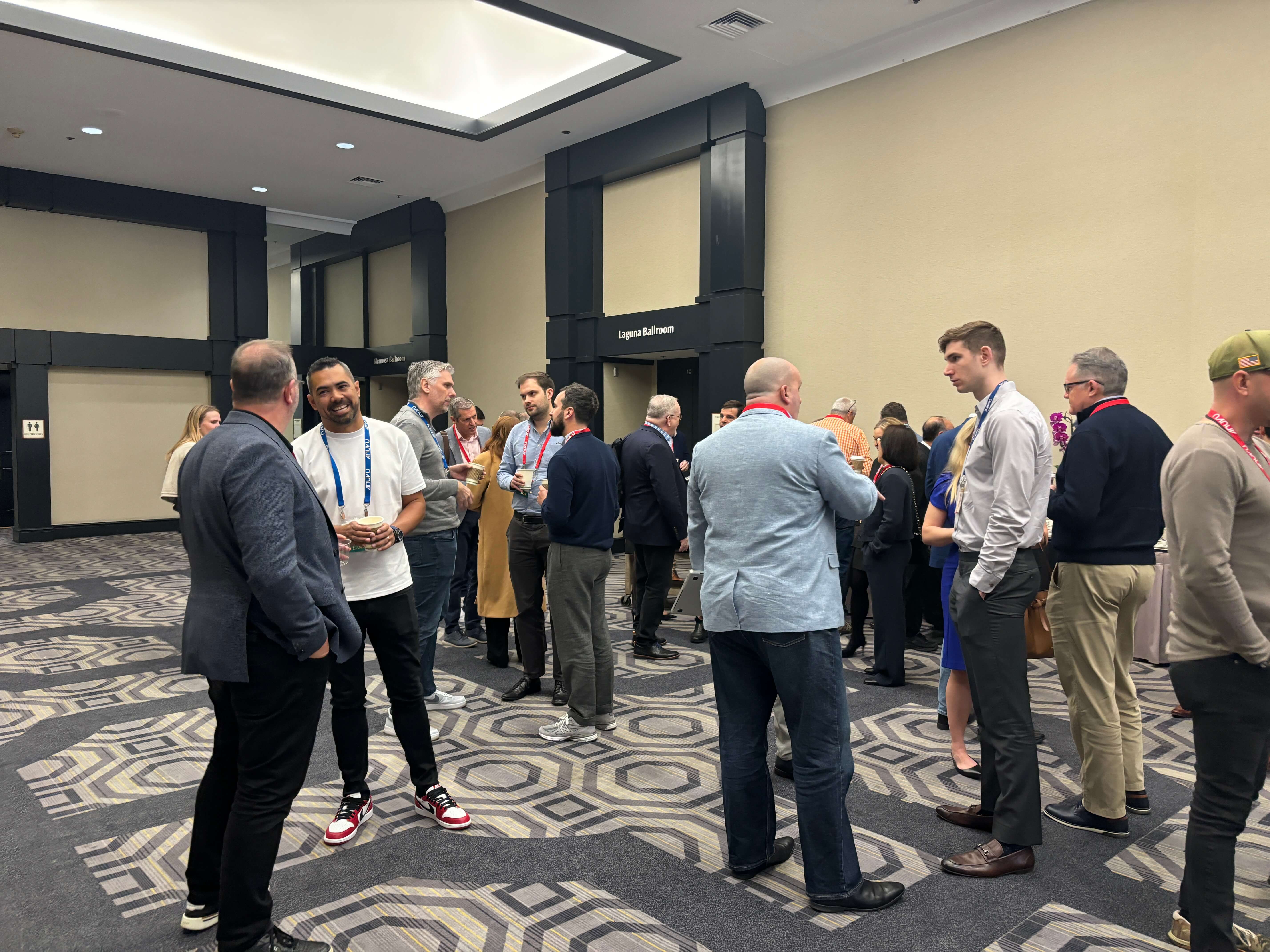
Speed networking at APEX TECH 2026
Delegates enjoyed a mid-morning coffee break, sponsored by West Entertainment, before lining up for speed networking. For this quick connection opportunity, attendees were separated into two lines based on their "Boarding Group" for brief face-to-face greetings and information exchange via LinkedIn or business card.
11:20 a.m. – “The Latest in IFC: Is LEO Going to Eat Everyone's Lunch”
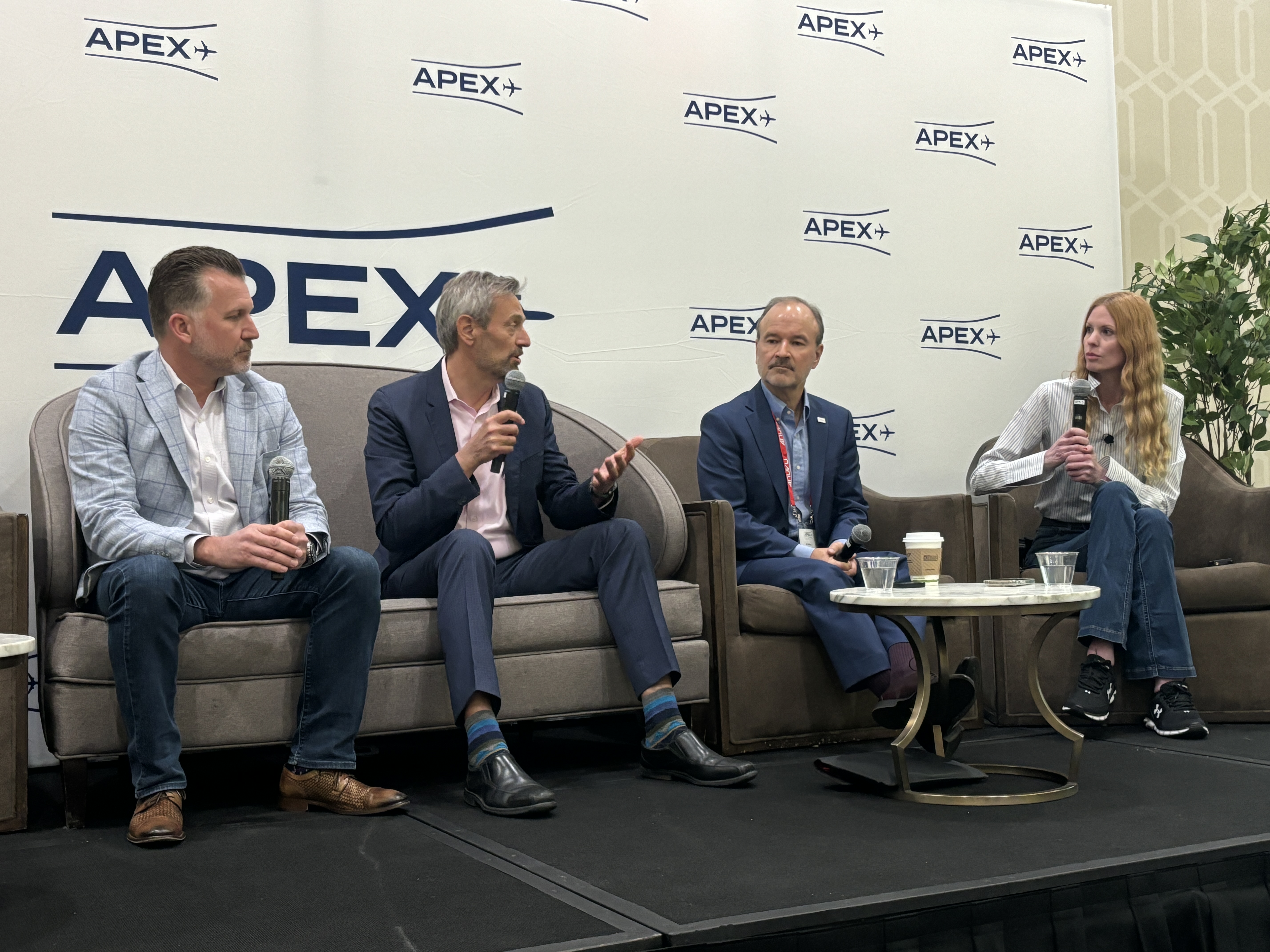
"The Latest in IFC: Is LEO Going to Eat Everyone's Lunch" panel discussion at APEX TECH
The next panel of the morning examines the rapid advances in Low Earth Orbit satellite connectivity, spotlighting real-world airline deployments that redefine inflight internet performance. Panelists include Brian Simone, Vice President, Global Aviation Partners and Service Delivery, Viasat; Philippe Schleret, Vice President, Aviation, Telesat; and Bill Milroy, Chairman and CTO, ThinKom, with moderator Mary Kirby of Runwaygirl Network.
As panelists discussed LEO versus GEO versus MEO solutions, Viasat’s Simone said, “We want to deliver a really really good customer experience. Different behaviors drive things. Some people get onboard and run a speed test. That may not be the best measure, but it is a data point. Having the combination of a GEO asset and a LEO asset gives you the ability to have that performance.”
He also notes this provides an immense amount of resiliency.
ThinKom’s Milroy echoes the sentiment: “We at Thinkom are trying to give airlines the power to control multi-orbit connectivity solutions to enhance resilience and flexibility with inflight [connectivity] services.”
He says GEO is still relevant, though acknowledges that not everyone will agree with that. He points out that not all LEOs are in the same package, just as not all airlines are in the same package, so it is important to differentiate when speaking about LEO services.
“Multi-orbit satellite connectivity solutions enhance inflight entertainment by leveraging the unique strength of GEO, LEO and MEO systems to optimize capacity and service quality. Customizing satellite capacity based on specific geographic and temporal demand improves passenger experience while reducing operations costs for airlines,” Milroy says.
Telesat’s Schleret adds, “Airlines that don’t have connectivity today feel more and more the pressure of their competitors offering connectivity.” He says we are at the point now where Wi-Fi is more commonly becoming free to the passenger, therefore it is their expectation.
“What we see is the opportunities for rip and replace, airlines that do not have inflight connectivity, or augmentation of an existing solution where you bring a LEO component [to expand IFC services],” he explains. “To go back to the question of the session, we still see a lot of traffic on GEO. That said, LEO is key for the user experience that airlines are longing for in terms of the home-like user experience.”
“We designed our network to bring that very superior, consistent customer experience throughout the flight,” Schleret adds of Telesat’s IFC solution.
When asked about the cost of GEO versus LEO today for airlines, Schleret says it depends entirely on the market.
“Every airline has a different journey. Some airlines may be on one journey today and headed somewhere else [in the future]."
12:15 p.m. – Keynote address: "Delta at Full Power: How Customer-Centric Technology and IFEC Help Drive the Best Margins in U.S. Aviation"
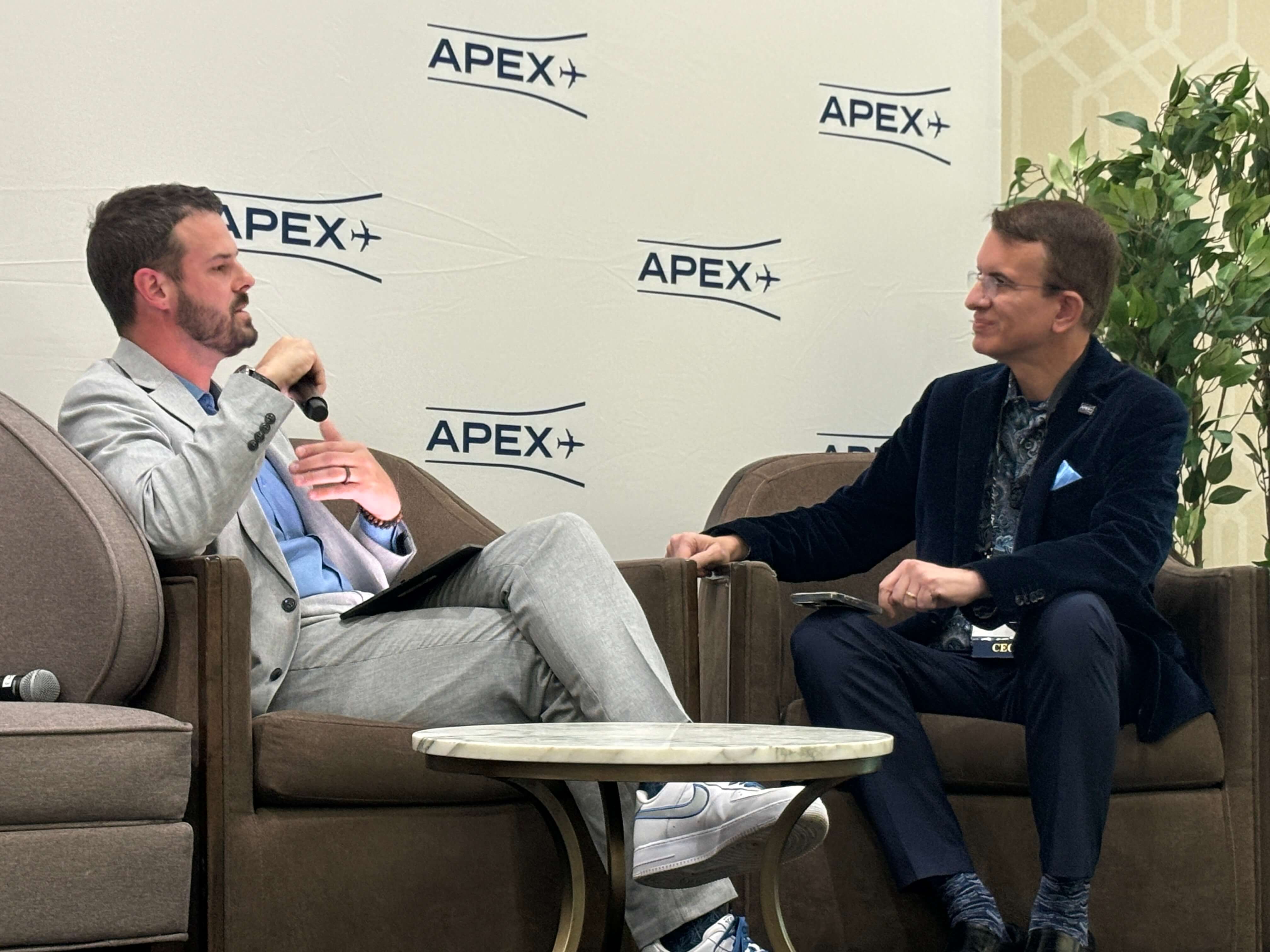
Joseph Eddy, Director, Cabin & IFEC Programs, Delta Air Lines with Dr. Joe Leader, CEO, APEX at APEX TECH 2026
Next, Joseph Eddy, Director, Cabin & IFEC Programs, Delta Air Lines, joins Leader on stage to discuss “Delta at Full Power” and what that looks in terms of a passenger-centric approach to inflight entertainment and connectivity.
“When we invest in our customers, they invest in our communities, which enables our partners and returns to our shareholders,” Eddy says. “We are so deliberate at positioning IFEC at the center of that, being able to connect all of your services. Being able to deliver one experience for the customer while using data to drive the human connection back.”
Leader says Delta has been “stealthy” in upgrading its Delta Sync in terms of personalization and asks for an update on the IFE system.
“We have always talked about how to maximize the engagement with these platforms,” says Eddy. “We really do believe these platforms are core to how we deliver an experience. A lot of this is about integrating back into our systems.”
Eddy says the Delta examined how it could take the existing data it has on passengers to streamline the IFE experience for them throughout the journey. This includes Delta Sync now wishing passengers a happy birthday on the seatback or marking loyalty milestones for the traveler.
“Those things make a big, extra touch,” he affirms.
In terms of IFC, Eddy says Delta is not opposed to LEO and looks forward to seeing how the technology in the constellation space evolves in the next few years. But he says free IFC is the future.
“We really do believe free IFC is the way to go for the airline industry, especially here in the United States.” He adds that Delta wants to reinforce how intentional it is about building a platform that empowers passengers to have a more meaningful experience onboard. “We are using connectivity to do all sorts of things that create value in different places.”
Eddy also said, “Delta has been exceptional at finding ways to advertise in an elegant, premium way. That all comes from that singular platform that transforms customer interactions and employee engagement.”
1:45 p.m. – "Workshop: Inflight Connectivity Disruption - From GEO to LEO and the Hybrid Horizon Group"
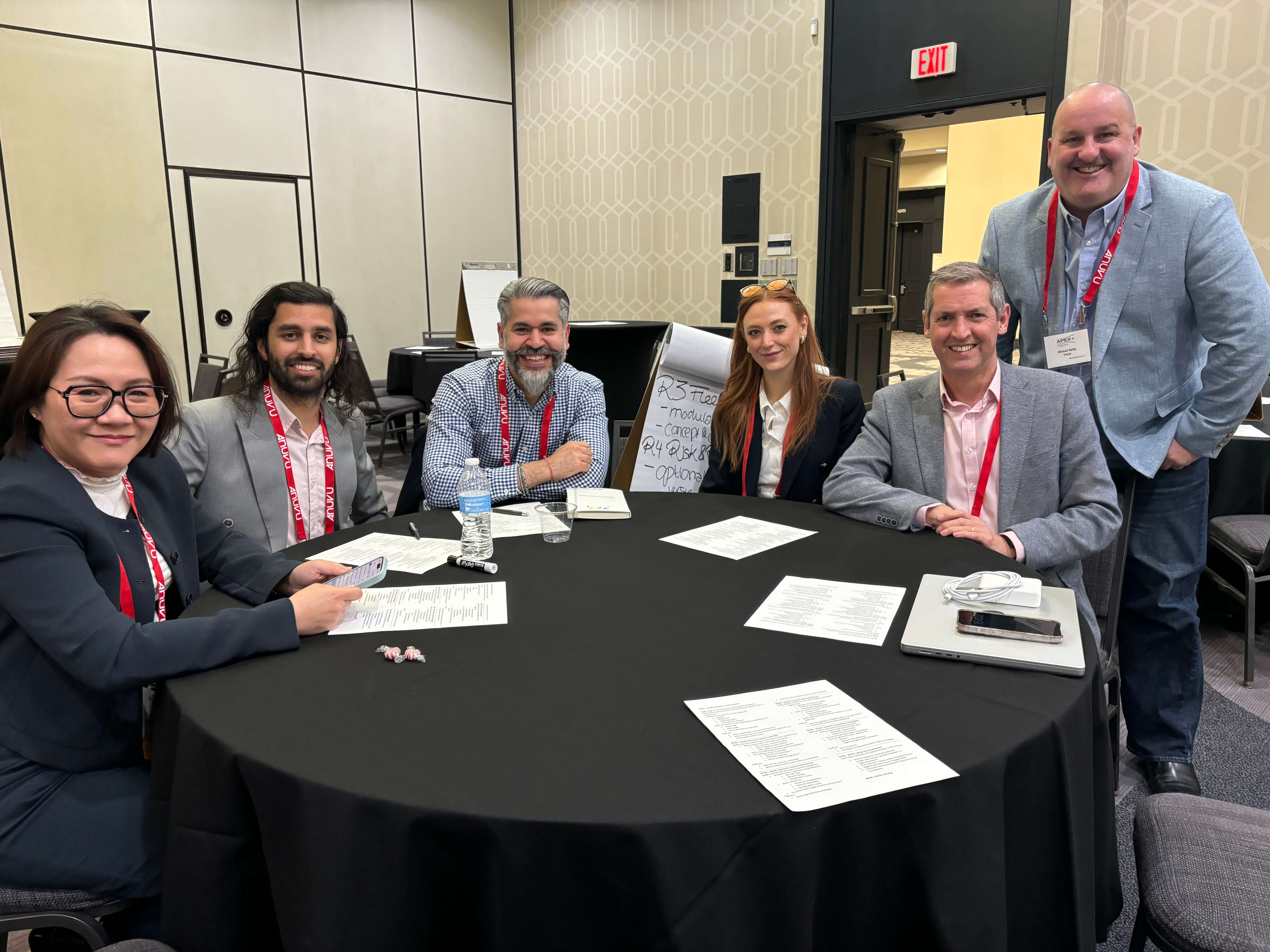
A breakout group at APEX TECH 2026 IFC workshop
Following a delicious buffet lunch break sponsored by West Entertainment, APEX TECH attendees gathered in the Laguna Room for the first workshop of the event. This session allowed delegates to break off into smaller groups where they were faced with a number of discussion questions and topics.
The workshop objective was to examine how LEO, MEO, GEO and hybrid approaches fit different fleet types, routes and business models and how to future-proof decisions amid rapidly changing satellite deployments and service offerings. Each group was asked to approach the challenge of an airline defining its IFC strategy for the next five to 10 years while managing performance expectations today, evolving satellite roadmaps, certification timelines and budget realities – without locking itself into an inflexible architecture.
Working through five rounds of questions to reach their conclusion, each group then presented a summary of their findings. This workshop provided a unique space for suppliers to discuss shared challenges and potential solutions.
3:45 p.m. - Panel discussion: “Inflight Touchpoints in the Digital Ecosystem: Advancing Integration and Intelligence”
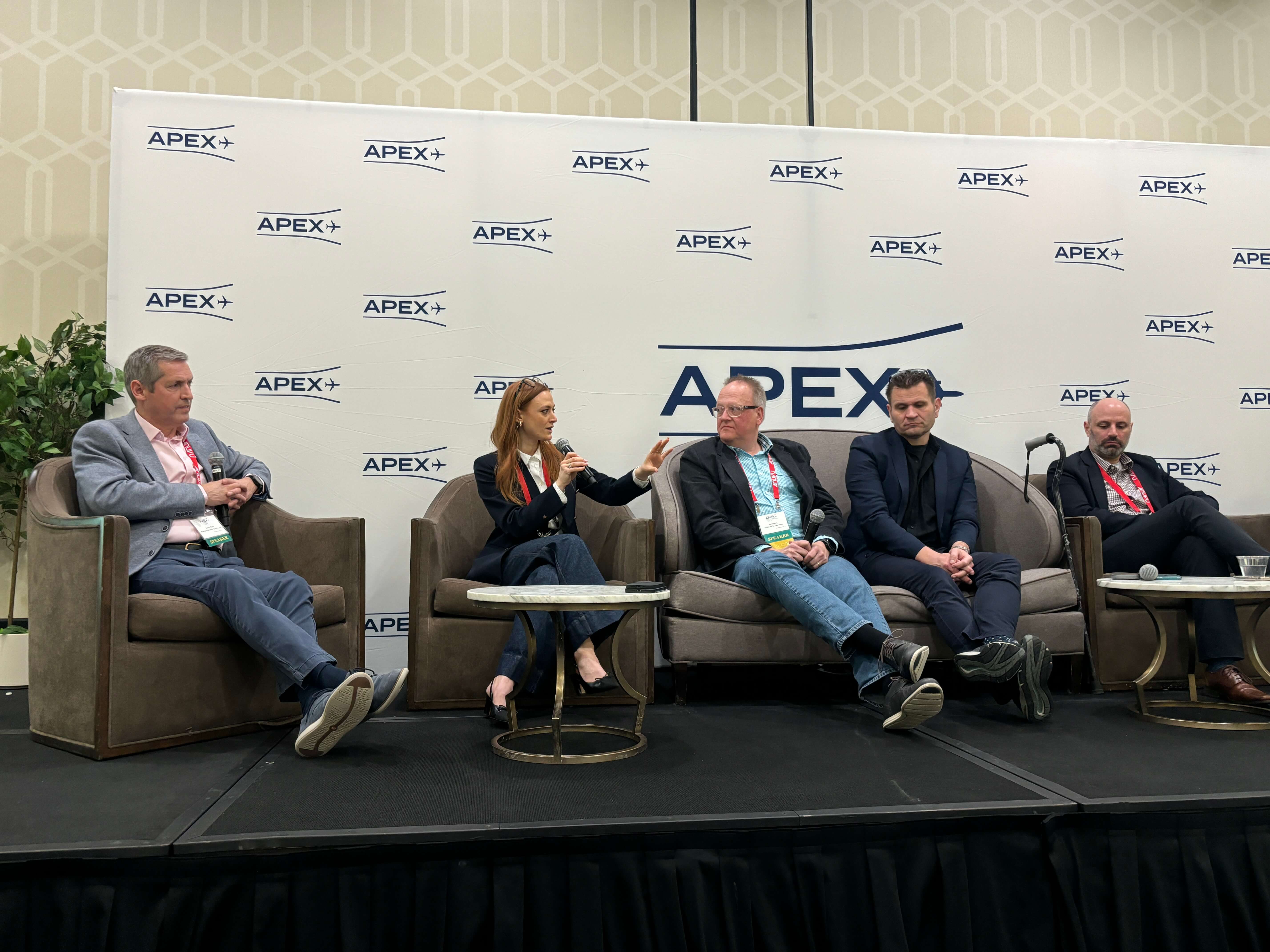
Panelists speak on “Inflight Touchpoints in the Digital Ecosystem: Advancing Integration and Intelligence”
Following a coffee break sponsored by Panasonic, industry experts gather for “Inflight Touchpoints in the Digital Ecosystem: Advancing Integration and Intelligence” to discuss the engineering priorities shaping next-generation inflight screens from system integration and digital architecture to content synchronization, software-driven personalization, and performance optimization. Explore how advancements in display control, power efficiency, and connectivity standards are enabling smarter, lighter and more adaptable inflight experiences that align with the broader digital cabin vision.
Panelists in this session sponsored by Thales include Ben Asmar, Vice President, Products and Strategy, Safran; Andy Masson, Senior Vice President, Product Management and Strategy, Panasonic; Kevin Clark, CEO, Bluebox; Jon Norris, Director of Marketing Operations, Thales; and Laura Roesges, CEO, AirFi.aero, with moderator Mary Kirby, Runwaygirl Network.
Thales’ Jon Norris starts off by speaking to the nuances of rights and licensing for inflight content and streaming. “From a rights point of view, even if there is an acquisition, you still have to maintain the rights and licensing. If you are flying today and you happen to see a streaming service where an airline is offering a branded service, that is a direct agreement between the airline and that service.”
He says what is not covered is passengers streaming via their own services in flight. These accounts are only designed for use in a person’s home, in their home territory.
Panasonic’s Andy Masson notes that future generations flying are going to want access to online content like YouTube and TikTok rather than traditional IFE movies and television, pointing to a need to license these content formats for inflight use.
Safran’s Ben Asmar points out that passengers feel like they should be able to access streaming services that they are already paying for anywhere, including on the aircraft–even if that is not supported by licensing onboard.
After asking people in the ballroom at APEX TECH to raise their hands if they are from a streaming service and seeing no hands present, Asmar says, “Technology is not the hard part here. The hard part is the framework – how do we get [streaming services] involved [in these discussions]?”
He adds that the industry must work together to show streaming services that the billions of people flying around the world are an untapped market with plenty of potential.
Bluebox’s Kevin Clark speaks to the timeliness of IFE content updates, explaining, “There is a hardware level and there is a software level. We see software evolving into a cloud environment as well.” He notes that this provides a mechanism for a transition as the world evolves, allowing airlines to match the demands of passengers with the IFE capabilities in place, without having to completely remove the system or change it.
Further to this, AirFi’s Laura Roeseges says airlines often need support in answering questions about what they actually want their passenger experience to look like, pointing to the supplier’s role in helping an airline determine what IFEC solution is best suited to meet its passengers’ demands.
Asmar says that a lot of airlines want to get to a hyper-personalized inflight experience that lends itself to higher revenue, because passengers are more incentivized to make purchases that are specifically targeted to them.
But Roeseges notes, “What a lot of airlines forget is that [they] are limited by what [they] can do, because of what AI can process.” AirFi handles this with a gamified approach through its low-latency, lower-cost service to airlines using the Iridium Certus solution.
Clark says of Bluebox’s approach to adapting IFEC solutions efficiently, “We can take a cabin that is still working but older, and you can take technology and drop it in – with boxes in the cabin, you create a digital network.”
From there, the airline can deliver IFE and IFC services on top of that network.
“Something that feels old and crusty, with the snap of a finger, can deliver services that are a match for [newer cabin solutions],” Clark explains.
Masson says Panasonic is pushing more seatback IFE than it ever has before, “It is in really high demand at the moment.”
He explains that for passengers on a wireless system, there is actually less of an opportunity to engage the traveler in the airline’s platform and services.
“I want to be in the airline’s environment, engaging with ancillary revenue and everything else,” Masson says.
Thales’ Norris shares the adage, “If you know one airline, you know one airline,” referring to the fact that all airlines have different expectations and demands. For this reason, he says there is still room for everyone in the industry.
“Seatback IFE is not going anywhere,” Norris says. “I think in this era of more personal devices and hyperconnectivity, the seatback is still the digital anchor for the airline if an airline wants to guarantee an experience or monetize.”
Asmar says that while hardware takes a long time, the industry can work on moving the digital platforms along faster. “What you’ll see in the future is the harmonization experience,” from seatback to app on a phone, so the passenger has a consistent experience across the journey from booking to flight to rideshare home.”
“Aircraft are getting smarter and smarter, but on the other hand, we are interested in commoditizing the technology and only focusing on the data, the experience and what we can offer [passengers] in a relevant fashion,” Roeseges affirms.
4:30 pm - “Edge Caching and Streaming: Focus on Supply Chain Technology, Standards, Market Dynamics, and Technical Implications of Different Business Models”
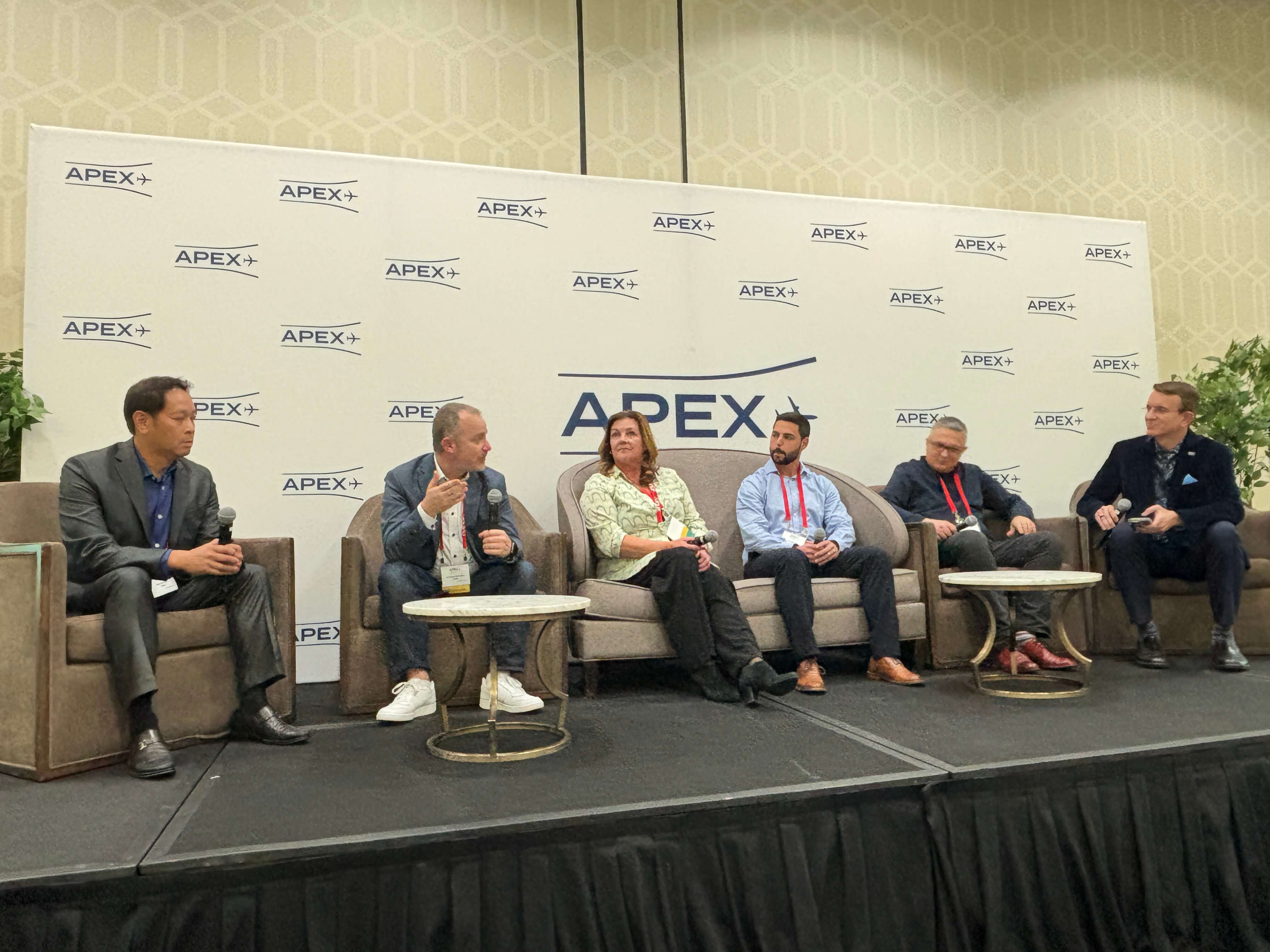
The final panel of the day, “Edge Caching and Streaming - Focus on Supply Chain Technology, Standards, Market Dynamics, and Technical Implications of Different Business Models”, sponsored by Safran
The final panel of the day, “Edge Caching and Streaming - Focus on Supply Chain Technology, Standards, Market Dynamics, and Technical Implications of Different Business Models” is sponsored by Safran. The session is moderated by Dr. Joe Leader, CEO, APEX; Glenn Gonzales, Head of Business Development and Partnerships, Safran; Clare Josey, Senior Director Passenger Services, Safran; Isaac Stasevich, Aviation Product Manager, Quvia; Dimitrios Tsirangelos, Vice President Business Development IFE Technology & Innovation, Spafax; and Ralph Wagner, CEO, Axinom.
Josey says Safran can get content to airlines in real-time, but this presents a rights challenge. “I see a lot of positive movement in that regard, but we have got a long way to go. And I think airlines underestimate that.”
She says that changing how content is presented to a passenger can help the passenger see more of the IFE library onboard, even for frequent flyers. Personalization can assist with this, as can AI.
“We are streaming from the cloud directly to passenger devices,” says Axinom’s Wagner of Axinom Stream. “Now from the ground, we are looking at running hybrid models and enhancing catalogs that are already onboard,” adding that there is a question of how airlines will build a relationship with their passengers without losing them to the internet through IFC.
Leader asks the panelists whether apps licensed to have content onboard pose an existential threat to the value of CSPs in terms of perceived value from airlines, to which Tsirgangelos says, “I see the orchestrating of licensing flight and recommendations and how we deliver recommendation engines and utilizing data, not only airline data but other audience data, as where the CSP’s future is now.”
Gonzales says being able to stream or cache an entire catalog isn not necessarily the right requirement. It is the intelligence, the ability to make informed choices about what content is being cached based on what is performing well and passenger demand.
“You want to focus on the intelligence of that content, whether it is from a cache on the cloud or on the plane,” he explains.
As for how airlines establish what is pre-loaded and what is available through edge caching and stays within the rights limitations, Safran’s Josey says, “I think the content that is high performance is what you want to cache in the traditional sense. It is using that intelligence to decide what we are going to edge cache, based on performance.”
She predicts increased fragmentation resulting in “micro assets” that are supremely interesting to a small subset of passengers.
Leader mentions that passengers have a lower attention span these days, which is now impacting IFE content demand.
Gonzales says that edge caching may apply to short-form content in the case of a viral video, where an airline can push that video to other passengers and edge cache it for use on other flights. But he adds that it is not necessarily the kind of content that needs to be cached because it uses only a small amount of data to view.
On future proofing as more future data becomes available about the passenger experience, Leader asks panelists how to decipher which data to utilize and what is noise.
Quvia’s Stasevich explains that, “Data is a drug,” leaving you wanting more of it. To combat this, he suggests auditing data on a regular basis to understand how that data is being used effectively for actionable insights.
As to whether more bandwidth for airlines enables more content, he points to the “concept of induced demand – the more you give, the more airlines are going to demand.” Stasevich says that increasing bandwidth onboard does not necessarily remove the need to cache content.
And, Safran’s Josey says content curation is such an important brand touchpoint for airlines that having more content is not always better.
The day wrapped up with attendees heading to the poolside patio for an evening networking reception sponsored by Spafax.
PAX Tech as your trusted source for news and event coverage
PAX Tech is proud to be a media partner for this event, providing live updates from Los Angeles and delivering exclusive post-show interview coverage. Follow PAX Tech Magazines on LinkedIn and Instagram to stay up to date.
