
Diehl Aviation advances inclusive cabin design with award-winning accessibility concepts
This is a special feature from the
October 2026 MRO
Europe issue of PAX Tech, on page 20.
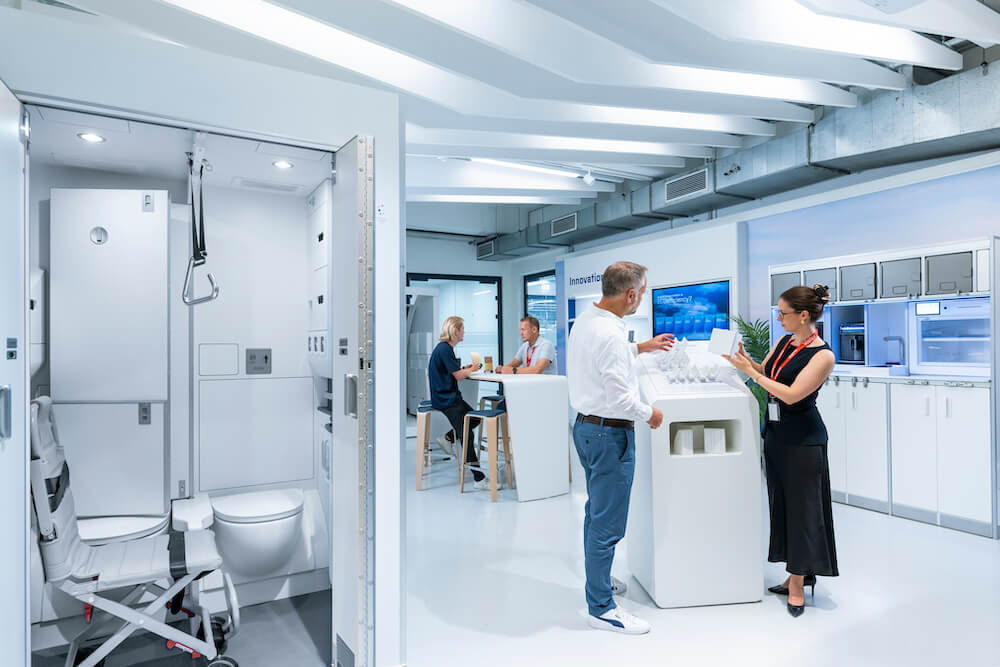
Both AURS and Space³ were shaped through direct input from people with relevant accessibility needs
For two consecutive years, Diehl Aviation has received the Crystal Cabin Award in the accessibility category. This year for its Adaptive User Routing System (AURS) concept, which extends the focus to passengers with visual or hearing accessibility needs and for its Space³ lavatory concept in 2025.
For Tammo Bahns, Customer Innovation Engineer at Diehl Aviation, these honors reflect a consistent development direction for the company.
“Both concepts were shaped through direct input from people with relevant accessibility needs. These users did not simply evaluate finished products. Their experience actively influenced the design,” he tells PAX Tech in a September interview.

Tammo Bahns, Customer Innovation Engineer at Diehl Aviation
This exemplifies Diehl Aviation’s philosophy for approaching accessibility onboard, considering sensory, cognitive and other less visible requirements from the beginning rather than as a feature to be added later.
Visibility for invisible requirements
For Diehl, accessibility is considered at the earliest stage of cabin definition, before layouts and product architectures have been fixed. Bahns says it must extend beyond visible mobility limitations to encompass layout, lighting, information, controls and the overall passenger interaction.
“Airlines should involve affected passenger groups in development and evaluation, and plan for both line-fit and retrofit applications,” he explains. “Requirements are diverse, so continuous testing and improvement are more effective than treating accessibility as a single feature or a compliance exercise.”
Bahns emphasizes that accessibility and operational efficiency are not competing priorities. Diehl Aviation’s Space³ concept combines two of three lavatory units into an enlarged, wheelchair-accessible space within a conventional two-lavatory arrangement, as an example.
“Thoughtful accessibility can support passenger independence, privacy, comfort and dignity while remaining practical and economically viable for airlines,” he affirms.
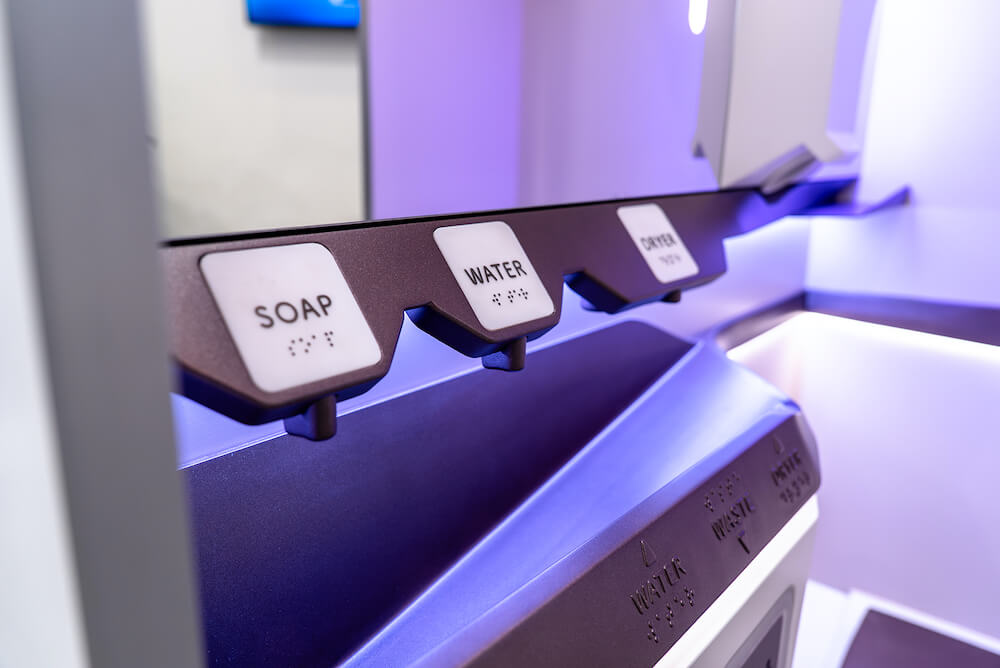
Accessible wayfinding should guide passengers through an intuitive sequence: where they are, what they can operate and what will happen next
Controls accessible for all
For a cabin to be truly accessible, controls should be intuitive for all passengers; easy to locate, clear in purpose and responsive, providing immediate feedback when activated. Using these controls should not require perfect vision, hearing or dexterity, knowledge of a particular language or familiarity with the aircraft interior.
Accessible design for invisible mobility limitations can range from using cabin lighting to create spatial awareness to using a visual hierarchy to communicate safety protocols.
For Diehl Aviation, lighting is both an atmospheric design element and a functional accessibility tool. In compact environments such as aircraft lavatories, carefully designed lighting can improve spatial perception, make controls and functional areas easier to recognize, and guide passengers toward relevant touchpoints. In the AURS solutions, adaptive lighting is part of the broader orientation system which includes high-contrast surfaces, tactile guidance, Braille, distinctively shaped controls, visual information and optional audio cues.
Similarly, color, contrast and visual hierarchy can help passengers identify important information and understand how to interact with the cabin environment. Strong contrast can distinguish controls and functional elements from surrounding surfaces, while a clear hierarchy ensures that key actions and safety information are recognized first.
“Our design approach seeks to reduce unnecessary visual complexity and apply a consistent logic across related functions,” says Bahns. “Color is never considered in isolation. It is supported by shape, positioning, symbols, labeling and tactile information.”
The design must also remain clear in different lighting conditions, regardless of vantage point and distance. For example, in Space³, tailored lighting and color schemes additionally help improve the perception of space within a compact lavatory environment.
These elements, lighting, color and contrast, and visual hierarchy, are a core consideration when developing signage for accessible wayfinding. To better support passengers who have difficulty processing visual information or interpreting conventional signage, Bahns explains that accessible wayfinding should guide passengers through an intuitive sequence: where they are, what they can operate and what will happen next.
“Information should be concise, consistently positioned and available through more than one sensory channel,” he tells PAX Tech.
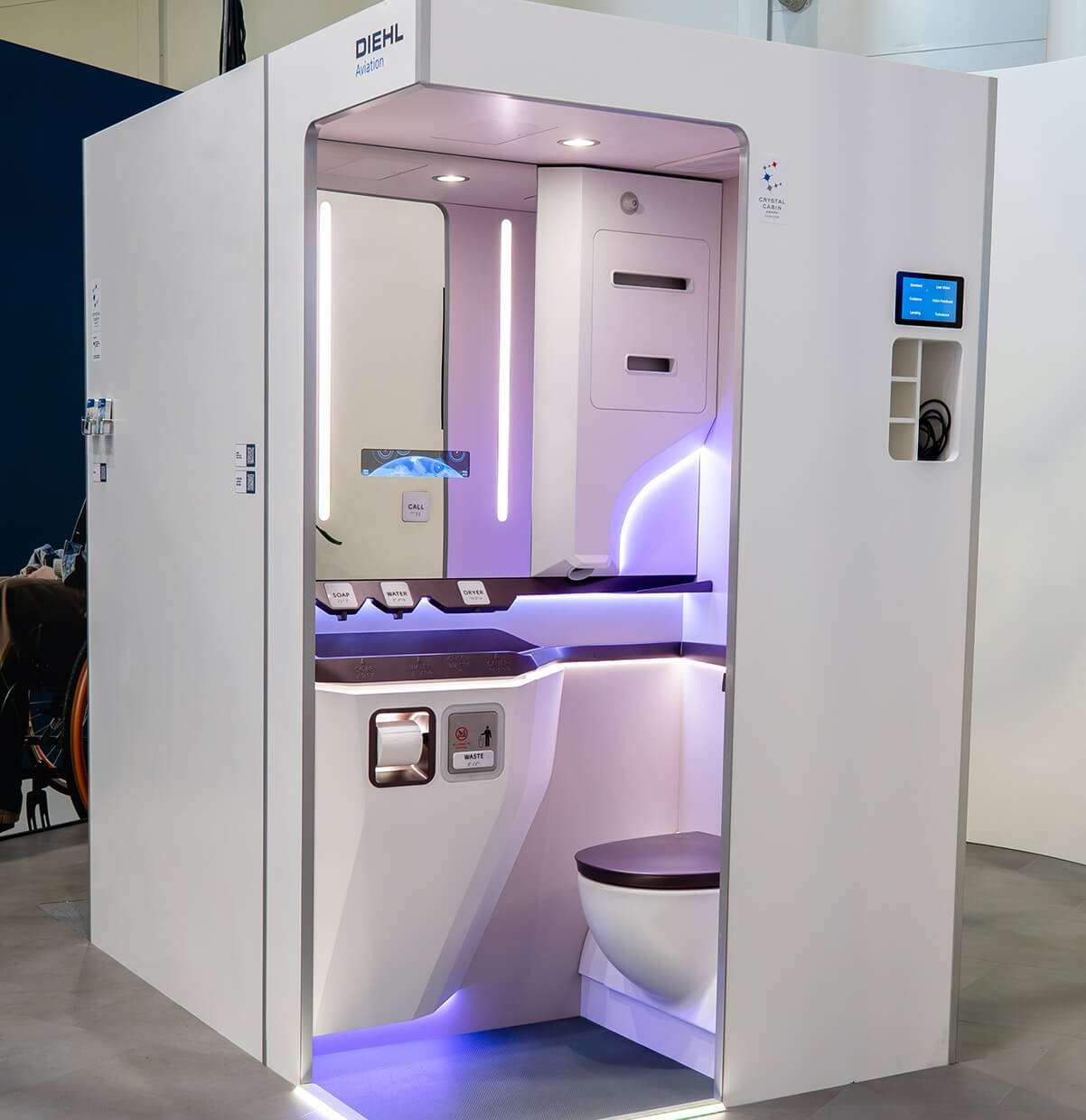
In AURS, tactile guidance, Braille and distinctively shaped controls are integrated into the overall lavatory architecture instead of being treated as separate additions
Diehl’s AURS concept achieves this by combining various symbols, tactile features and stimuli that are helpful for better orientation. For example, safety announcements can also be presented visually on an integrated mirror screen, helping critical information reach passengers who may not hear an announcement.
AURS uses high-contrast surfaces, tactile guidance, Braille and distinct control shapes to make orientation intuitive and reduce unnecessary contact. Safety announcements appear visually on an integrated mirror display, ensuring critical information is never audio-only. Adaptive lighting and optional audio cues highlight essential elements and support passengers with low vision.
“The concept’s adaptive digital layer provides a basis for presenting information in different ways according to passenger requirements. The goal is not to add more information, but to make the right information easier to find, understand and act upon,” Bahns says.
Tactile elements are another valuable way for passengers to orient themselves, locate a control or confirm a function without relying solely on vision. In AURS, tactile guidance, Braille and distinctively shaped controls are integrated into the overall lavatory architecture instead of being treated as separate additions.
“When accessibility is considered from the outset, these elements can become a coherent part of the interior design rather than a visual or functional compromise,” he says.
AURS onboard
AURS is being trialed with accessibility groups, with Diehl’s connected-cabin platform technically mature but requiring aircraft-specific implementation and certification.
“We want to apply the lessons learned to additional cabin elements and address accessibility more systematically across the future product portfolio,” says Bahns of what is next for Diehl Aviation.
Potential development areas for the company include adaptive systems, touchless functions, and broader connected-cabin applications.
