
Diehl Aviation designs for diversity with accessible lavatory concepts
This is a special feature from the June/July 2026 Seating & IFEC issue of PAX Tech, on page 44.
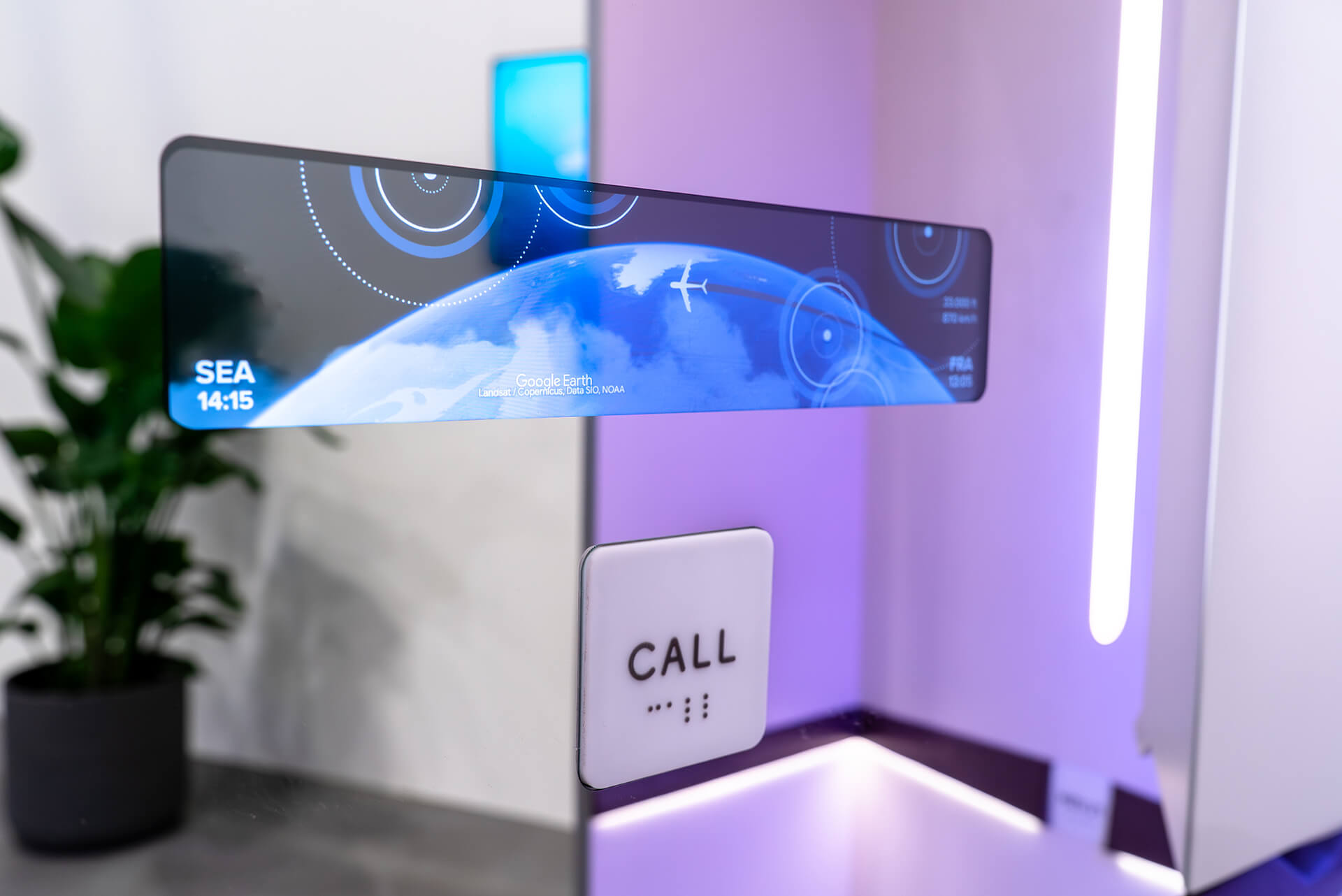
AURS features a mirror display with voice-to-text announcements for passengers in the lavatory
Diehl Aviation has long been a leader in accessibility in the aviation industry, proving its commitment the past two years with consecutive Crystal Cabin Award wins for its AURS and Space³ lavatory concepts in the “Accessibility” category.
The 2025 recognition was awarded to Diehl Aviation for Space³, a modular lavatory concept that combines two of the three lavatories onboard into one enlarged, flexible space and enables the installation of up to two additional seat rows onboard.

Mathies Gereke, Chief Project Lead Upgrade Solutions, Diehl Aviation
The 2026 award also went to Diehl Aviation, this time for the AURS (Adaptive User Routing System) which facilitates navigation in the lavatory through high-contrast surfaces, tactile guidance, Braille, clearly distinguishable controls and a mirror display with voice-to-text announcements.
As Mathies Gereke, Chief Project Lead Upgrade Solutions at Diehl Aviation, tells PAX Tech, these two accessibility innovations were designed to deliver a dignified onboard experience to all travelers.
Accessibility in the air
Both AURS and Space³ were developed, Gereke says, to address a clear gap between what passengers with specific accessibility needs experience today and what they reasonably expect from modern air travel.
“For passengers using onboard wheelchairs, conventional center lavatories simply do not provide enough maneuvering space to use the facilities independently, a situation that affects dignity and autonomy in a very direct way,” Gereke points out. “For passengers with access needs related to vision or hearing, the lavatory has historically been an environment full of unlabeled controls, poor contrast and safety announcements that are easy to miss.”
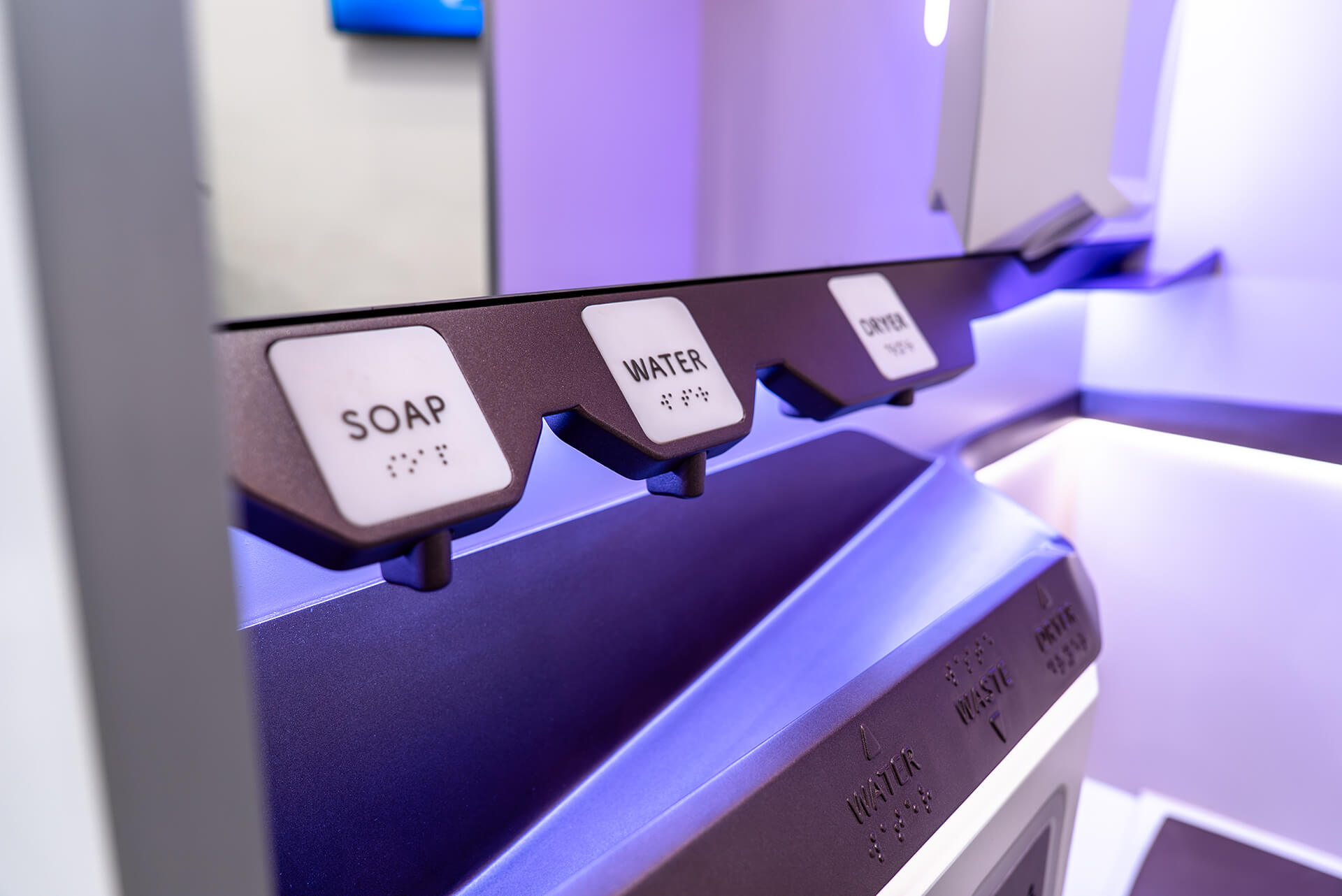
AURS facilitates navigation in the lavatory through high-contrast surfaces, tactile guidance, Braille and clearly distinguishable controls
He emphasizes that these experiences are not edge cases. According to the World Health Organization, an estimated 1.3 billion people worldwide live with a significant disability.
“This means that, given the current design of the cabin, a significant number of passengers have not been adequately considered in terms of comfort and passenger experience,” Gereke says.
Three foundational pillars
Dignity, independence and inclusivity are the three foundational principles guiding Diehl Aviation’s approach to accessible lavatory design. These core pillars derive more detailed design criteria, including optimizing the number and positioning of grab bars, minimizing operational steps, ensuring sufficient maneuverability space and designing intuitive interfaces.
“With Space³, the overarching goal was to achieve the highest possible level of accessibility, privacy and dignity for passengers with reduced mobility,” he explains. “To accomplish this, the core design criteria were deliberately defined in a simple and user-centric way: enabling independent use, ensuring full privacy behind closed doors and providing a dignified and comfortable lavatory experience throughout.”
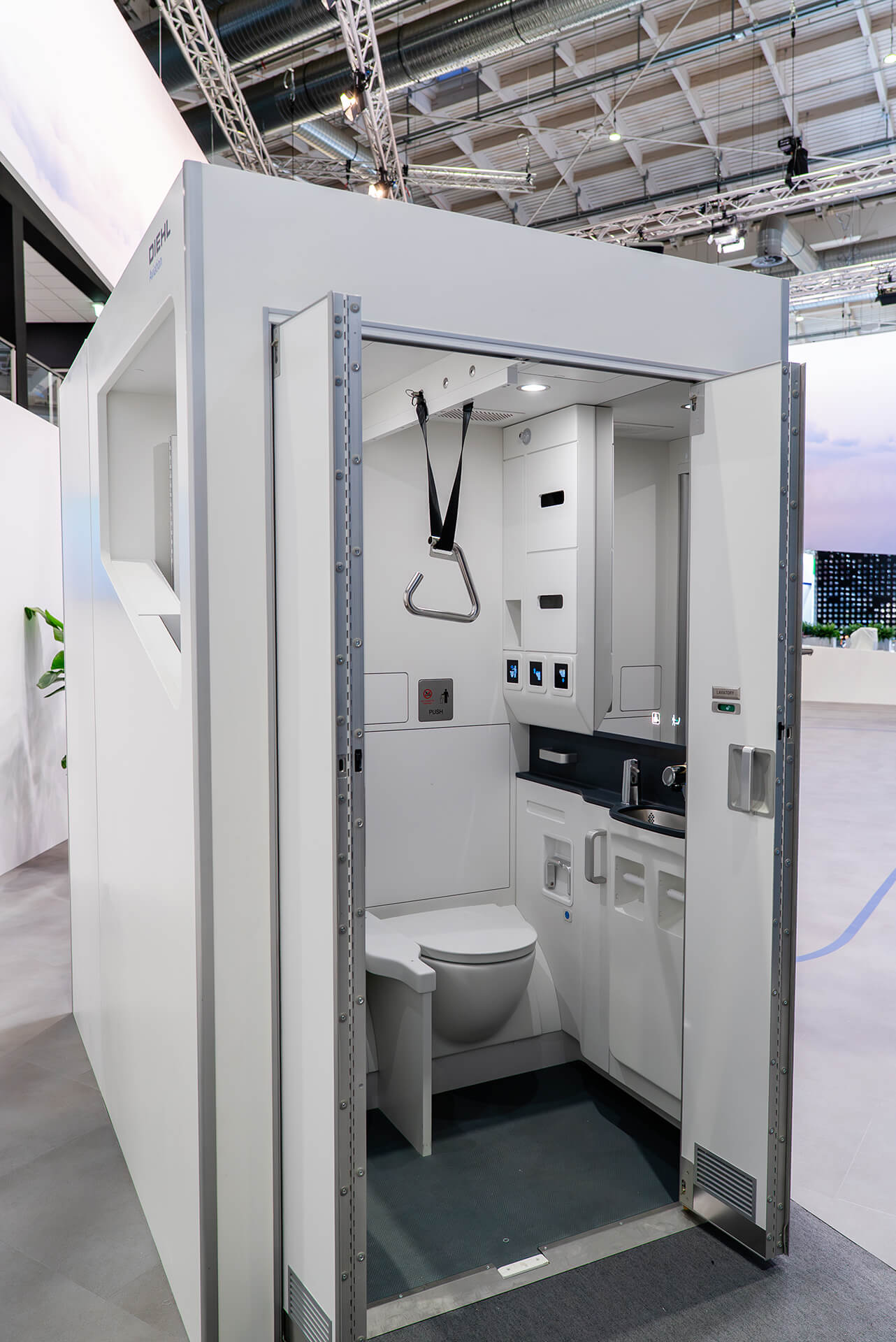
Space³ is a modular lavatory concept that combines two of the three lavatories onboard into one enlarged, flexible space
With AURS, the same principle applies to passengers with sensory impairments: high-contrast surfaces, tactile guidance, Braille labeling and visual safety announcements on the mirror screen.
Safety announcements are displayed visually on an integrated mirror screen in the lavatory to ensure critical information reaches passengers who are hard of hearing. Adaptive lighting and optional audio cues provide an additional layer of support for passengers with low vision. The result, Gereke says, is a lavatory environment where passengers with sensory support needs can operate with the same confidence and privacy as any other traveler.
Rethinking accessibility onboard
When designing the Space³ lavatory concept, Gereke tells PAX Tech that the primary challenge was fitting three functional lavatories into the space typically occupied by two, while allowing two to combine into a larger accessible lavatory when needed.
“That required a fundamental rethink rather than an incremental adjustment. The team used extensive 3D analysis to establish the minimum functional envelope for each component,” he explains.
Diehl Aviation then reinvested the space saved through engineering partly into accessibility features and partly into freeing up cabin space for additional seat rows, with attention to both weight and space optimization, contributing to potential fuel reductions.
“The result is a concept where accessibility, efficiency and commercial viability are not competing priorities but mutually aligned ones,” Gereke says.
Putting passengers first
Diehl Aviation designed both Space³ and AURS with end user involvement from the outset.
“Designing for accessibility means designing for diversity and Diehl Aviation built this recognition into the development process from the start,” Gereke explains.
As such, Space³ was tested with travelers with limited mobility at Hamburg Airport in September 2025 to collect user-centered feedback.
“The response was largely positive, with particular appreciation for the thoughts and consideration that went into grab handle placement and support surfaces,” Gereke reveals.
He says the tests confirmed there is no universal accessibility solution: passenger requirements vary depending on the nature and degree of mobility limitations.
“Space³ is therefore positioned not as a finished answer but as a foundation, which will be further developed driven by ongoing user feedback,” he explains.
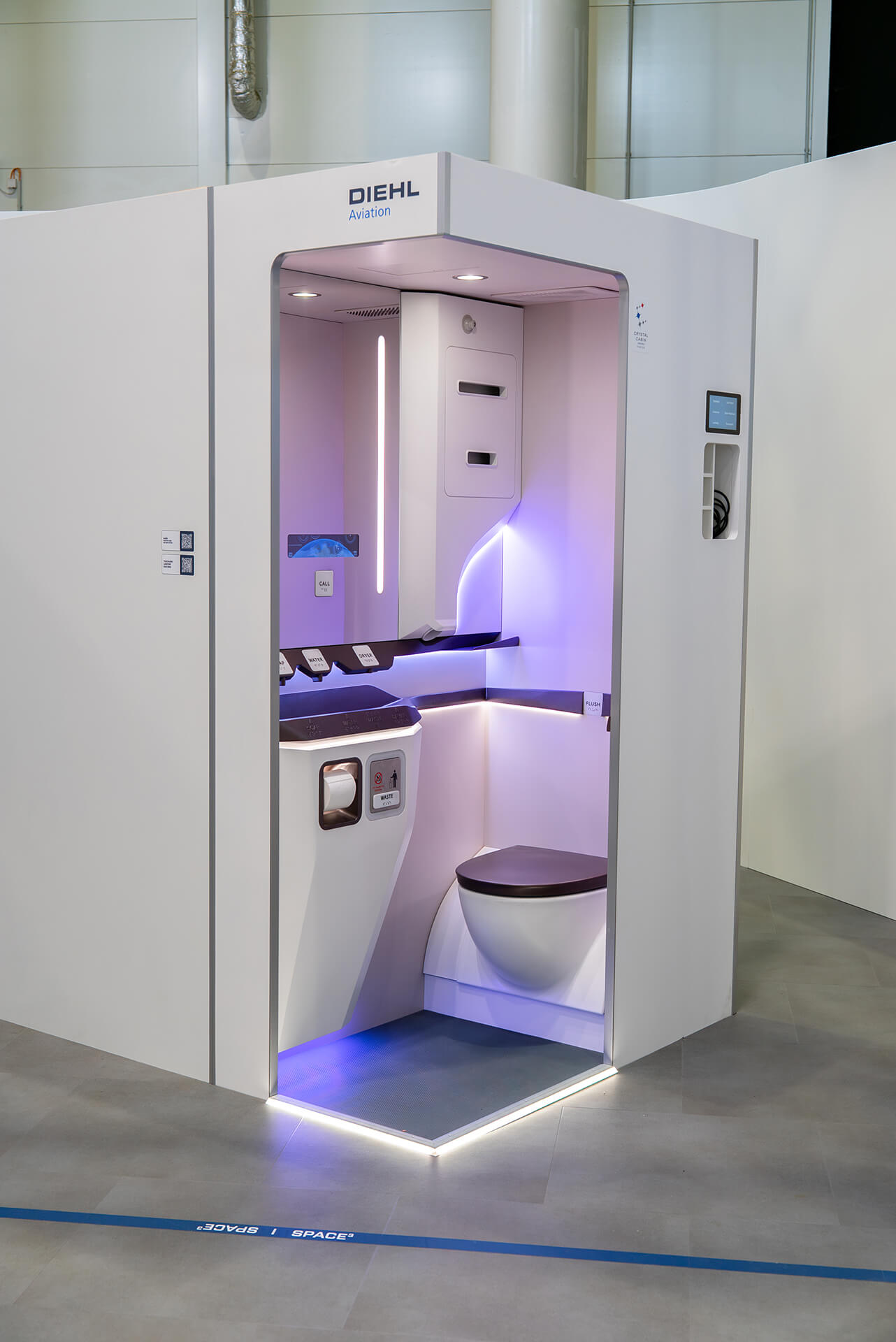
The AURS lavatory concept received the 2026 Crystal Cabin Award in the “Accessibility” category
For AURS, the co-creation approach went further, with the concept developed with direct input from advocacy groups for people who are blind or have low vision.
“AURS is currently deployed as a technology demonstrator in active trials with accessibility groups, continuing this dialogue into the next phase of refinement,” Gereke says. “Across both products, the underlying principle is the same: solutions designed for passengers with disabilities should be designed with them.”
