
Rosen Aviation puts UX and UI at the forefront
This is a special feature from the April 2026 AIX Hamburg issue of PAX Tech, on page 30.
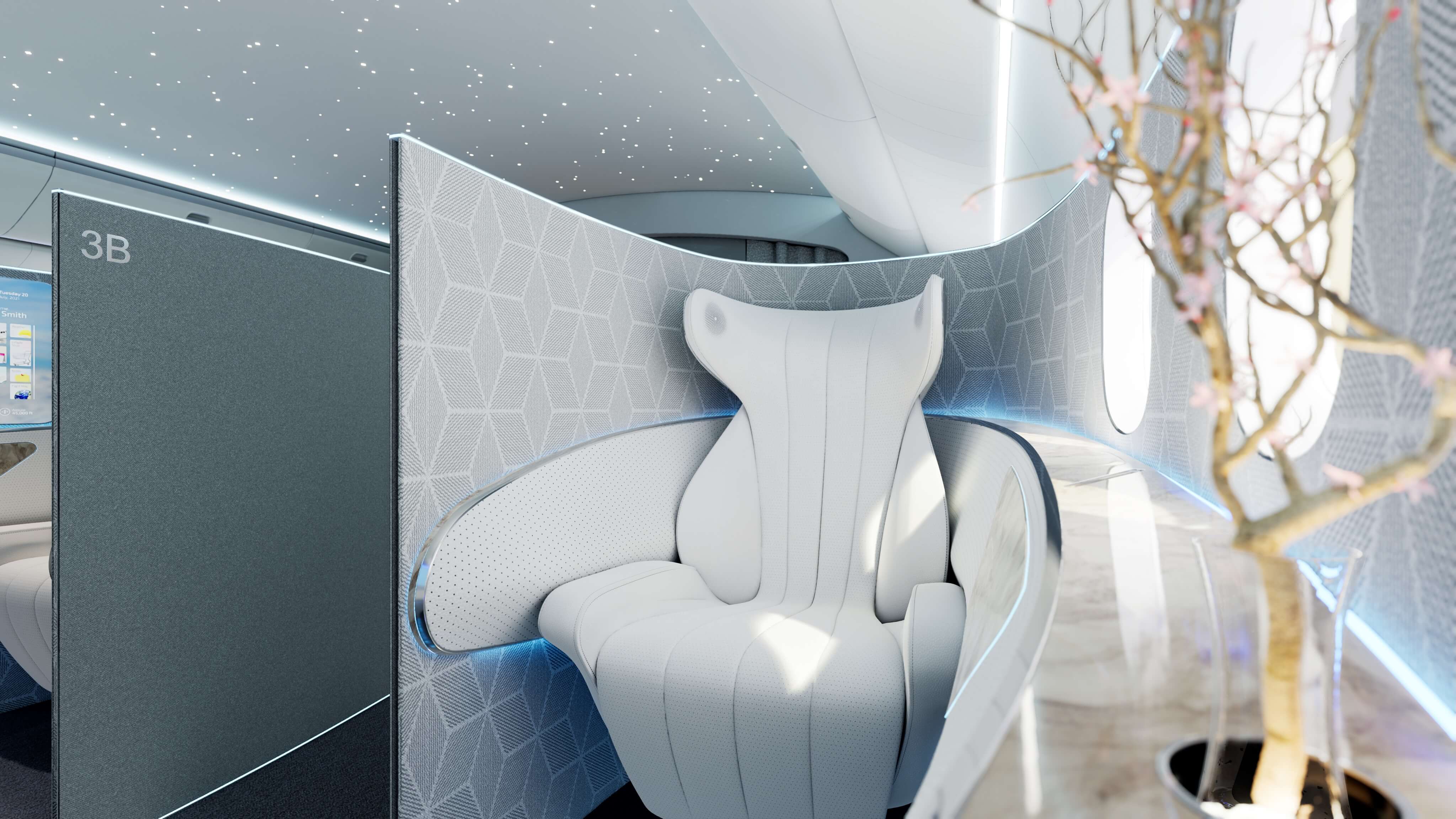
Rosen Aviation advocates for seamless integration and consistent personalization across the passenger journey, supported by open system architectures that give operators greater control
As airlines compete for the loyalty of high-value First and Business Class travelers, User Experience (UX) and User Interface (UI) are key to creating a seamless and intuitive premium cabin experience that meets the expectations of the discerning frequent flyer.
But as Lee Clark, Senior VP Strategy, Rosen Aviation, tells PAX Tech, “Premium suite design lands in a gray area in terms of innovation and evolution in that while there have been a variety of new designs, configurations and integrations, many of what is deemed ‘new’ is mostly a reshuffle of currently available technologies.”

Lee Clark, Senior VP Strategy, Rosen Aviation
However, he points to Emirates’ Game Changer suites and Etihad’s The Residence as examples of truly unique products on premium airlines, for which Rosen Aviation is positioned to offer a wider array of premium VIP focused technologies.
For Clark, UI/UX has been and always will be the most important factor when designing any technology solution that leverages touchscreens or visual controllers.He notes that essential functions like lighting and window shades must remain easily accessible, a challenge made simpler by today’s ultra-fast, intuitive UX/UI designs.
First Class demands
Clark explains that designing UI/UX for First Class passengers is a delicate balance between providing more with less.
“Where Economy passengers are limited to seat recline or stowing the tray table, the First Class seating environment, especially for premium airlines, should have a multitude of options and controls,” he says. “This then demands a UI specifically designed for each specialty environment.”
The challenge when introducing advanced UX/UI concepts into existing fleets lies in hardware limitations and component interoperability.
“We are changing that paradigm by designing open system architectures that are more easily upgraded and futureproofed,” Clark explains.
Personal and private
Rosen Aviation advocates for seamless integration and consistent personalization across the passenger journey, supported by open system architectures that give operators greater control. Clark notes that open systems built on modern, common communication protocols enable a virtually unlimited range of cabin customization options.
This vision for the future is outlined in MOSAIC (Modular Open System Architecture In Cabin), and will open the door for OEMs, operators and suppliers to more easily collaborate in curating a distinct brand identity.
Clark frames the design as a tier-one IFE/CMS system, customized to the OEM’s specifications, with third-party hardware and applications fully integrated.
“Global leaders in the UI/UX industry can create really amazing effects with menu continuity, navigation, particle effects and an almost endless list of other contemporary features and benefits, all of which are ‘must-haves’ in the First Class Passenger Experience,” he says.
Clark also points to privacy as a major challenge in today’s connected cabin, noting that Li-Fi connectivity can enhance privacy while adding redundancy—reshaping CMS and IFE system architectures.
“By incorporating Li-Fi connectivity, like that offered by our partners at Spectrum Networks, the ability for personal device connection is physically constrained by visible light,” he says, adding that this improves privacy and data concerns from outside the aircraft and, with intentionally placed, highly focused Li-Fi transmitters, creates local privacy within a First Class pod or suite.
IFE for long-term growth
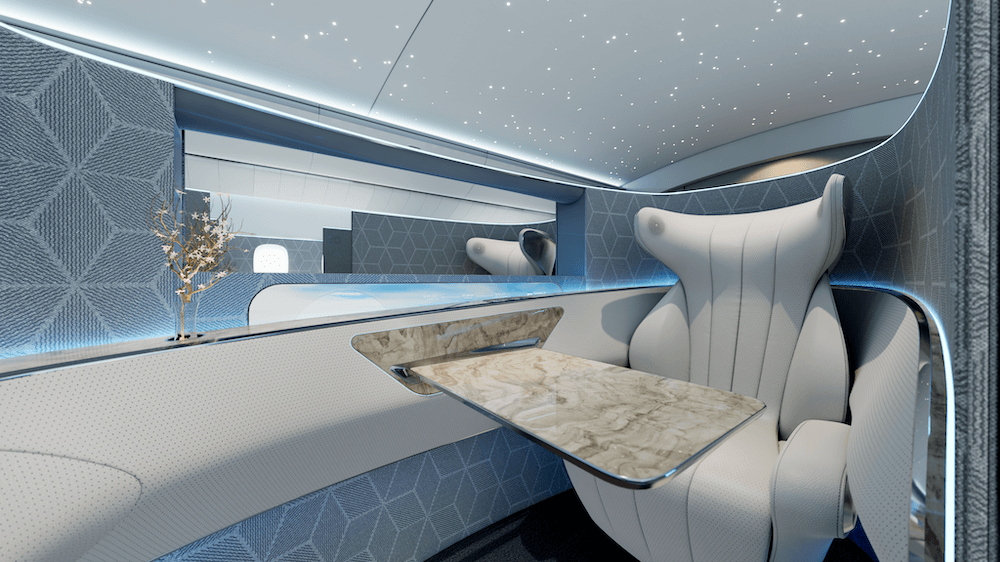
Rosen Aviation is positioned to offer a wider array of premium VIP focused technologies
In a saturated market, Clark points out that passenger purchasing decisions often come down to what features are not offered, as opposed to those that are offered inflight. Airlines lacking the latest in IFE, connectivity, personalization, audio and premium seating will struggle to compete against industry peers.
“The data is clear that even the presence of contemporary technology solutions in the cabin has a significant impact on brand perception. For any airline looking to attract new passengers and retain current ones, investments in premium IFE and cabin experience upgrades are a no-brainer,” he tells PAX Tech.
To be successful, airlines should also look at these investments through the lens of new revenue streams, says Clark. Creating an enhanced Passenger Experience continuum is not just about consistency through various phases of the journey; it is also about sponsorship opportunities, premium add-ons and loyalty rewards.The benefits of such investments are twofold, delivering a better passenger experience and more revenue opportunities for the airline.
As for what will shape the future of the next-gen premium suites, Clark says the elephant in every room is artificial intelligence (AI).
“Especially for VIP and premium passengers, there is a real opportunity to reimagine the UI/UX by almost eliminating it altogether with the help of AI assistants,” he suggests. “The ability for even today’s AI models to carry on completely normal conversations is nothing short of mind-blowing and will continue to rapidly improve at an exponential rate. Add to this multi-language support and the level of personal passenger care will reach a point that was previously unimaginable.”
