
Diehl Aviation continues evolution of eco-efficient cabin design
This is a special feature from the September 2025 APEX Global EXPO issue of PAX Tech, on page 44.
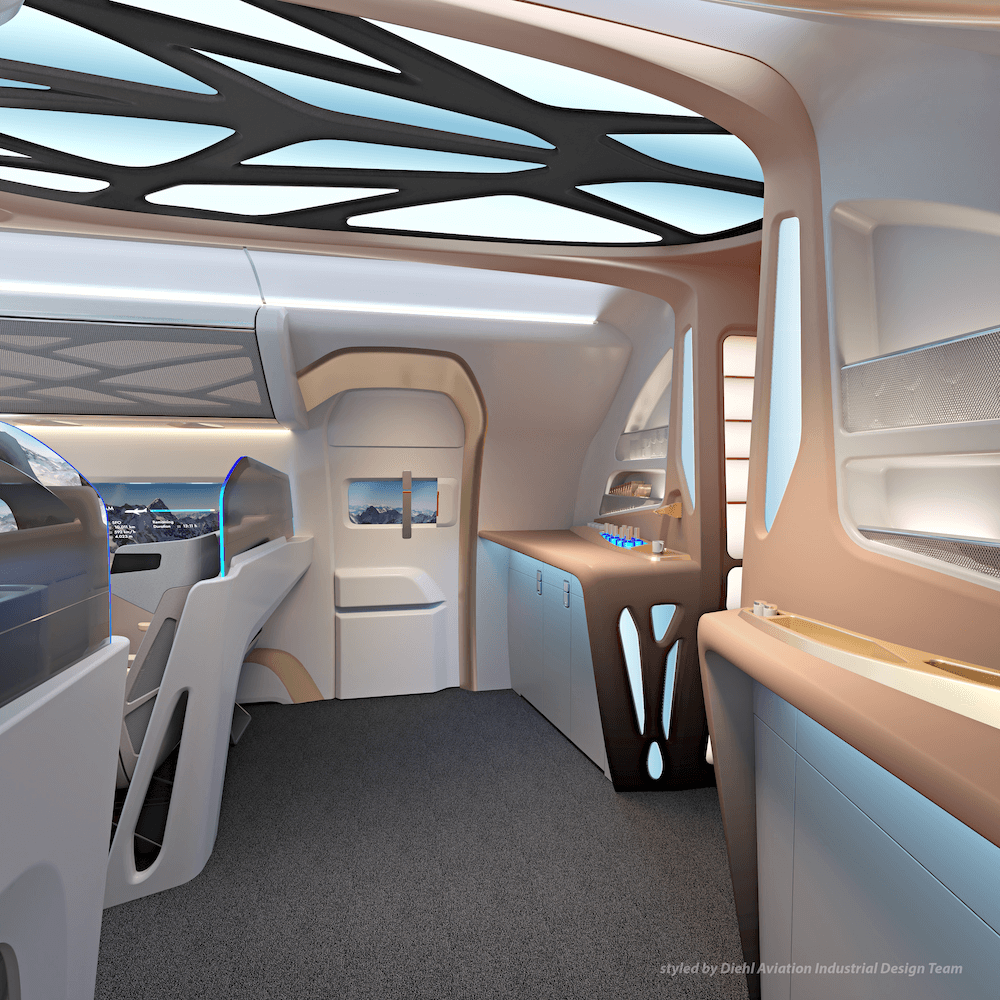
A rendering of Diehl Aviation’s Future Cabin concept
Airlines are placing greater emphasis on material transparency, recyclability and lifecycle emissions. As a result, companies such as Diehl Aviation are seeing increased demand for cabin components with verified environmental data, including life-cycle assessment (LCA) results and carbon footprint reporting.
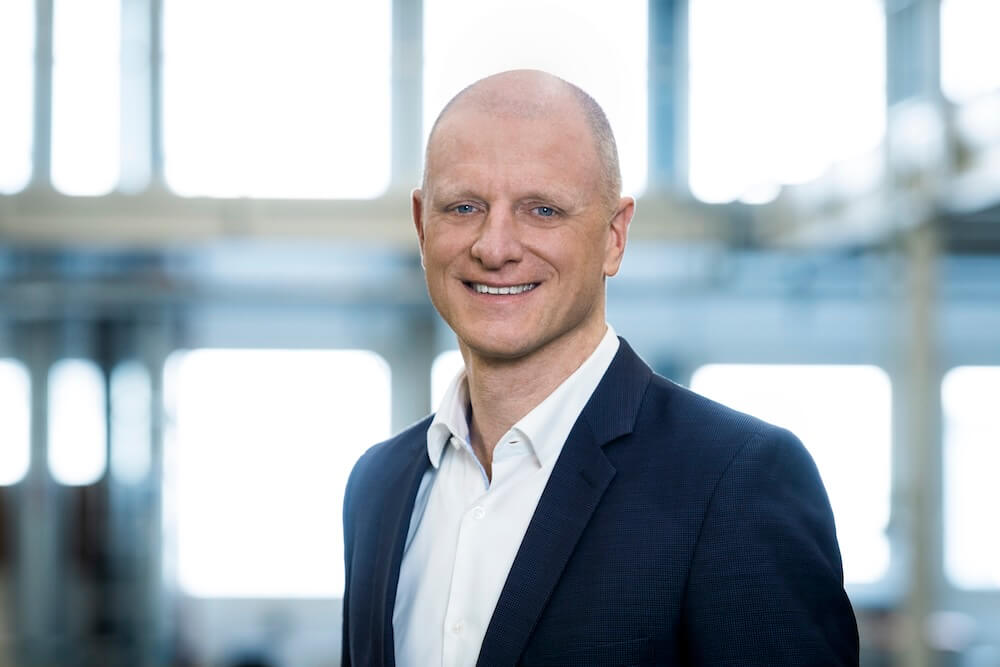
Carsten Laufs, SVP Product Innovation and Digitalization, Diehl Aviation
According to Carsten Laufs, Diehl Aviation’s SVP Product Innovation and Digitalization, whenever new products with an improved CO2 footprint are introduced, there is a need to create a tangible experience for the passenger. Therefore, there is a shift toward materials that visually reflect sustainability–such as bio-based textures or recycled finishes–without compromising safety, comfort standards or cabin branding.
Such changes are driving the company’s eco-efficiency initiative–the momentum behind the development of lightweight, low-emission components across both line-fit and retrofit applications.
The balancing act
In conversation with PAX Tech, Laufs explains that the company’s engineering approach considers weight, comfort and durability as equally critical performance factors.
“We use materials that are not only lightweight but also compliant with stringent fire, smoke and toxicity (FST) requirements. Surface treatments and structural reinforcements are carefully selected to ensure long-term wear resistance and aesthetic quality. Every design undergoes rigorous physical and simulation-based testing to validate structural integrity over extended service periods,” he says.
In parallel, the company has applied topology optimized principles to enhance strength-to-weight ratios across multiple cabin components and introduce innovative materials with improved weight characteristics.
Recent innovations include the ECO Sidewall, which Laufs says achieves approximately 10 percent weight reduction compared to conventional sidewall structures and up to 19 percent lower CO2 emissions during manufacturing due to the use of advanced composite materials and optimized production techniques.
Another is the ECO Bracket, developed in collaboration with Swiss-based technology provider, 9T Labs. This component uses continuous fiber-reinforced thermoplastics and additive manufacturing technologies to achieve claimed weight savings of up to 50 percent versus traditional aluminum brackets.
Projects like the ECO Bracket also explore the sourcing and use of virgin material during production. As Laufs reveals, such concepts are looking into the use of reused production cut-off materials in combination with additive manufacturing technologies, which offer long-term potential for circular material use and more energy-efficient production.
Cradle to grave and afterlife
By Laufs’ admission, Diehl Aviation increasingly considers end-of-life (EOL) aspects as part of its evolving product development approach. The company, he says, is aligning its design philosophy to better accommodate disassembly, recyclability and material recovery in future cabin solutions.
“Where possible, efforts are being made to implement mono-material concepts, reduce the use of adhesives and integrate components that are easier to dismantle in preparation for reuse and recycling opportunities,” he says. “For instance, the ECO Bin is a step in this direction: it consists of just two recyclable materials and allows for tool-free disassembly, supporting easier handling at the end of its service life.”
The incorporation of modularity into cabin design is also an important facet for Diehl Aviation. As Laufs observes, these concepts also offer efficient reconfiguration or updates of the cabin interior during the operational phase of the aircraft. He believes that by doing so, the use of new materials and components will be reduced, thus supporting reuse initiatives and lifetime extension scenarios. Selected systems and interior components can already be replaced with next-generation products, including more sustainable or environmentally friendly materials. In addition, modular systems and interior architecture will further enhance these opportunities.
“These developments are part of Diehl Aviation’s broader eco-efficiency initiative, through which the company aims to align more closely with circular design principles and environmental targets,” Laufs states, adding that, “While still evolving, these efforts reflect a growing awareness of EOL impacts and the role they may play in next generation cabin solutions.”
