
Diehl Aviation envisions future of inclusive travel with Space³ cabin concept
This is a special feature from the June/July 2025 Seating & IFEC issue of PAX Tech on page 33.
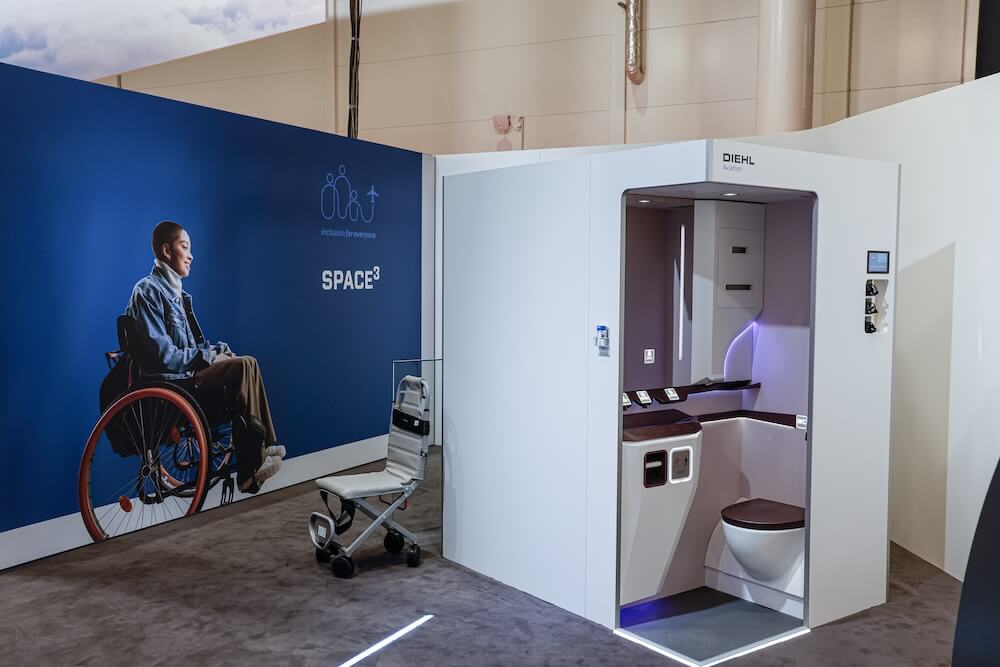
Space³ on display at AIX 2025
Diehl Aviation has long been at the forefront of championing inclusive design and making the aircraft cabin a more accessible space. This year, the Laupheim-based supplier presented the Space³ cabin concept at the Aircraft Interiors Expo in Hamburg, with the innovation also winning a prestigious 2025 Crystal Cabin Award for accessibility. Space³ ensures access to onboard lavatories without compromising on space or efficiency, redefining inclusivity in aircraft cabins.
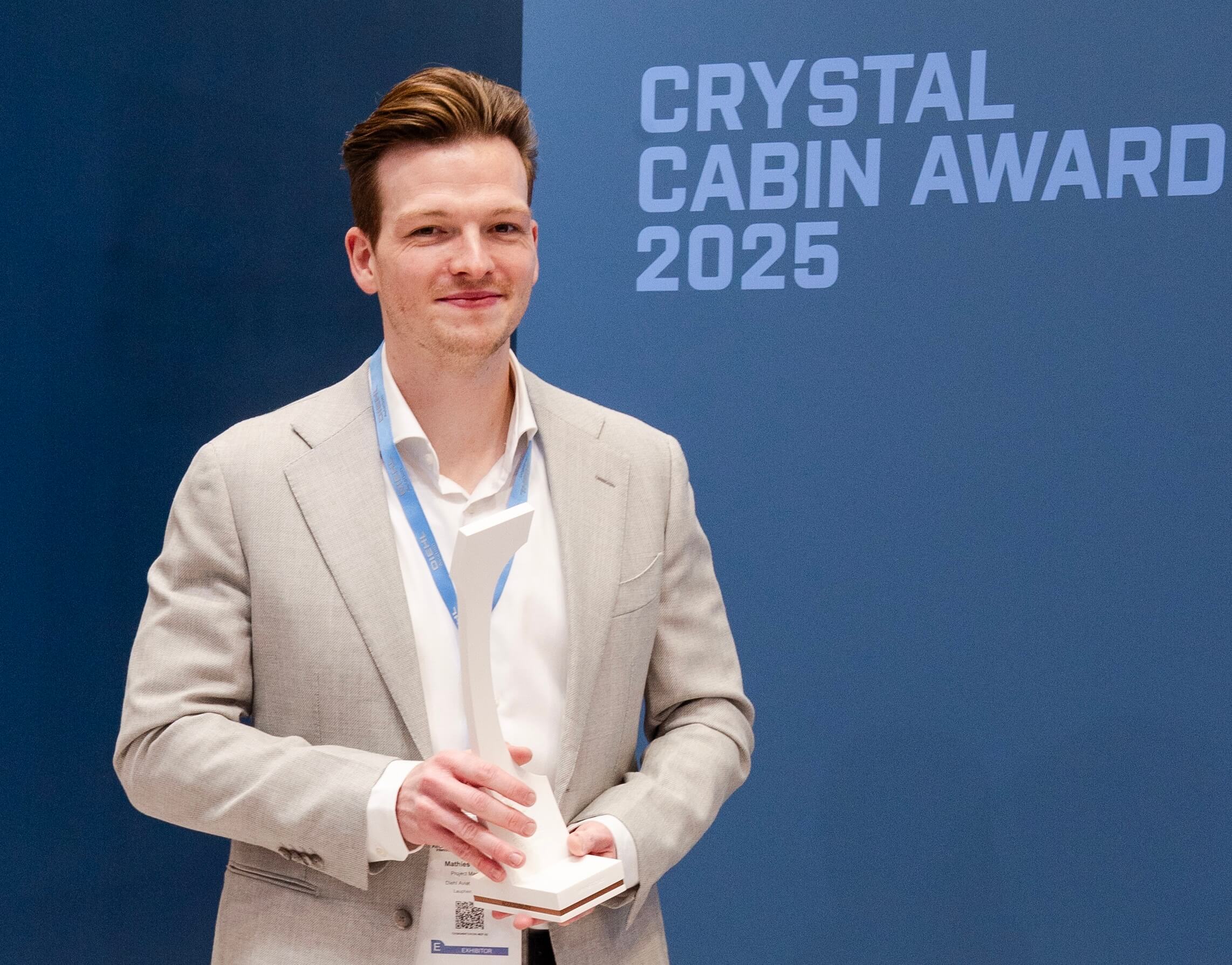
Mathies Gereke, Senior Project Lead, Diehl Aviation
The concept is set to take flight in 2026, with a launch customer already on board. As Mathies Gereke, Senior Project Lead, Diehl Aviation tells PAX Tech, “Space³ demonstrates that when accessibility is treated not as a constraint but as a catalyst for innovation, it can lead to smarter, more inclusive and commercially viable cabin solutions.”
Comfort without compromise
Space³ is a fully wheelchair-accessible lavatory that merges two individual units into one to maximize space efficiency without sacrificing comfort.
Gereke explains that Space³ builds on the foundation of Diehl’s earlier AirPax concept (among the first wheelchair-accessible lavatories for the A320 family) while retaining a large-size galley. He notes that the key challenge in designing Space³ was the trade-off between accessibility and economic viability.
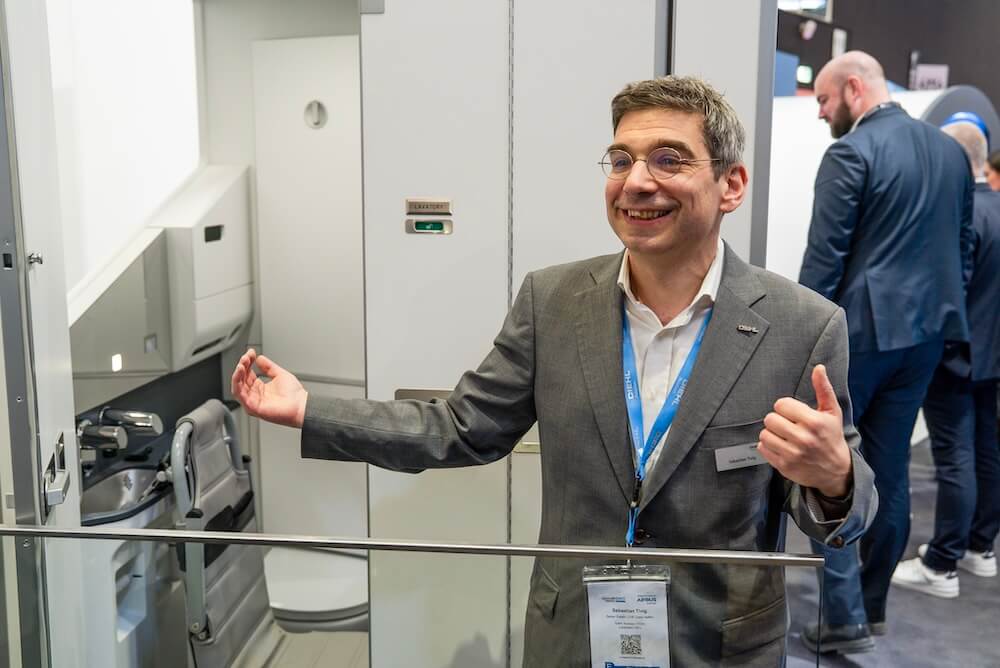
Sebastian Tivig, Senior Expert / CVE Cabin Safety at Diehl Aviation
“Space3 transforms accessibility from a space-intensive obligation into a value-adding solution without compromising space within the cabin, even creating additional seating capacity,” Sebastian Tivig, Senior Expert / CVE Cabin Safety at Diehl Aviation Tivig tells PAX Tech. “It makes the previously needed tradeoff between revenue space and inclusivity, as well as accessibility, obsolete.”
Reimagining the layout, Space³ combines three lavatory units on the footprint of two, creating a fully DOT-compliant, wheelchair-accessible lavatory while also enabling airlines to add up to two extra passenger seat rows, depending on the aircraft type.
“This unique configuration offers true value for operators, making accessibility not just a regulatory necessity but a commercially viable option,” Tivig explains.
Breaking down barriers
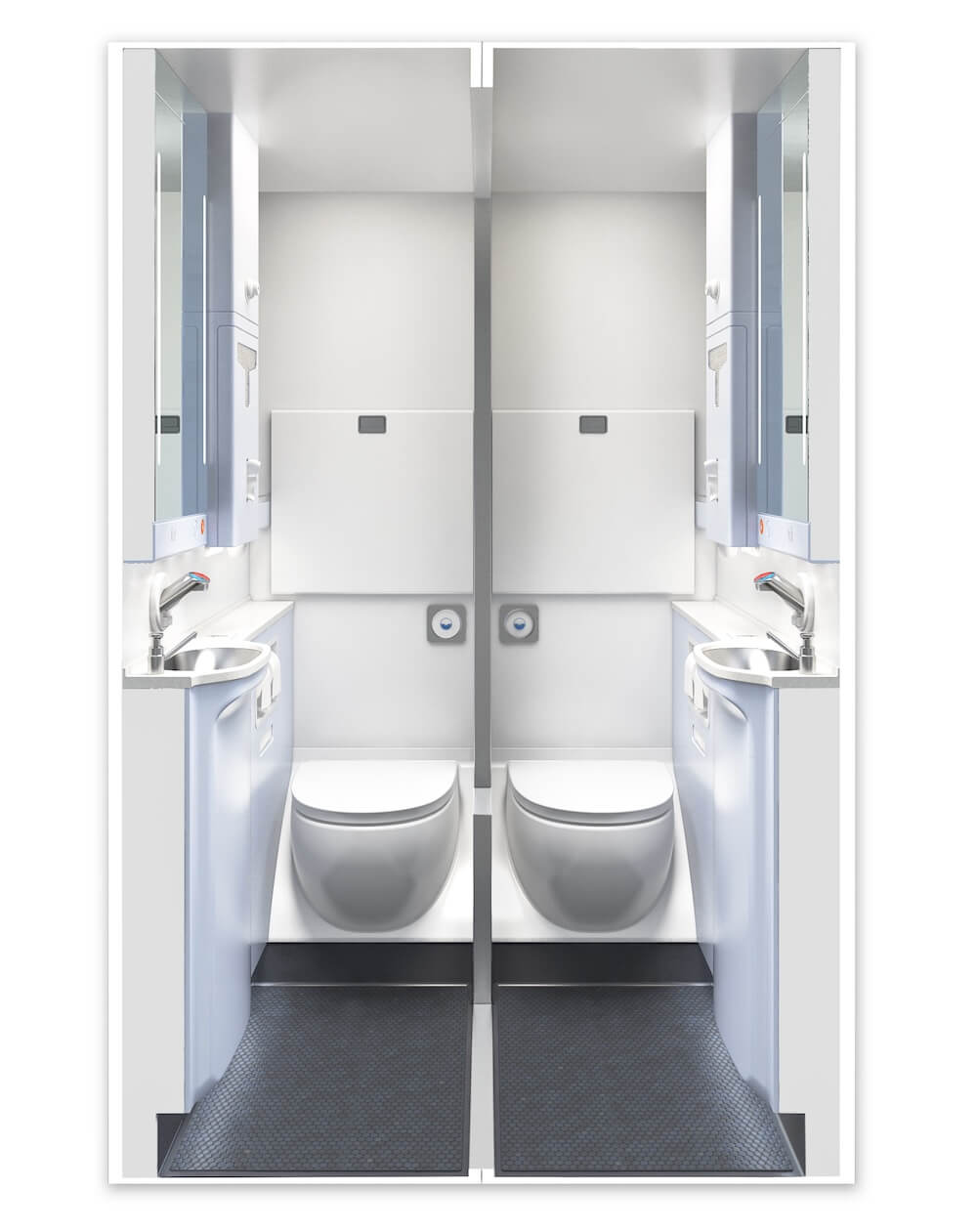
A look at the Space³ cabin concept
The Space³ features a patent-pending door mechanism, which is one of the primary ways this cabin concept is improving the ease of access for passengers in a wheelchair.
“Traditional lavatories, our earlier AirPax included, are typically limited by a door opening of around 20 inches, which severely restricts access for passengers using wheelchairs or mobility devices,” Gereke explains. He adds that fixed center door posts also impede the degree of mobility inside the lavatory, which can complicate transfers and assisted access.
Space³ introduces a door system that eliminates these barriers with a door post that pivots out of the way, expanding the entry width to approximately 36 inches.
“This creates a much wider, unobstructed opening that enables straightforward wheelchair access, including lateral entry,” Gereke says. “It also significantly improves the available space for an assisting person, ensuring a safer and more dignified experience for passengers who require support.”
Where accessibility meets efficiency
Space³ enables an optimized cabin layout that accommodates up to four extra seats, enhancing both accessibility and operational efficiency. The design also results in weight savings, contributing to lower fuel consumption and reduced CO2 emissions.
“At Diehl Aviation, we strongly believe that accessibility and efficiency are not mutually exclusive, but rather goals that can reinforce one another when supported by smart engineering and thoughtful design,” says Tivig.
He adds that Space³ was developed with a clear focus on the specific needs of passengers with reduced mobility and sensory impairments.
“Visually impaired passengers, for instance, require intuitive orientation, clear guidance, and hands-free functionality. That is why we are also working on integrated features like guide-by-light pathways and voice control,” Tivig explains. These features support independent and dignified use of the lavatory environment and could be implemented at a later stage of the product’s development.
These elements are being designed to enhance spatial awareness, reduce cognitive load and make essential functions accessible without physical contact.
With Space³ slated for takeoff in 2026, Gereke says the work does not stop at entry into service, with the supplier collecting feedback, monitoring performance and visiting the lavatories after an extended time in operation.
“Based on these insights, we decide where improvements are needed – whether through targeted upgrades, adjustments to the design, or by evolving the concept further. In our industry, building on proven, robust solutions is often the most effective path to take,” he concludes.
As Diehl continues to innovate and make other areas of the cabin more accessible, Gereke says that true inclusivity goes beyond large-scale accessibility solutions.
“We see great potential in addressing less visible impairments such as limited vision, hearing loss, or restricted mobility which affect a growing share of passengers,” he explains. “We are actively investigating and assessing tailored solutions that support comfort and independence for all travelers.”
