
Korean Air pairs Korean tradition with modern luxury in inflight experience
This is a special feature from the April 2026 WTCE Hamburg issue of PAX International on page 26.
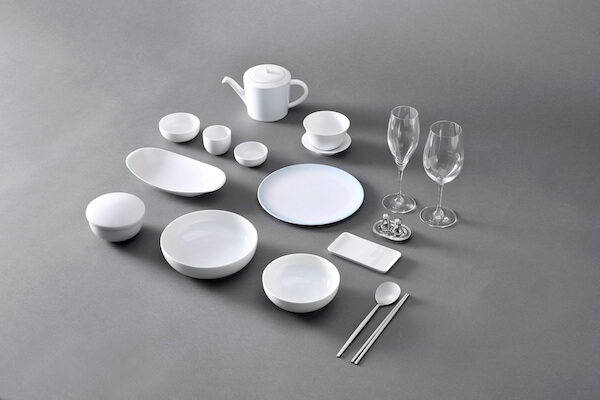
Korean Air’s Armani/Casa First Class tableware
In September 2025, Korean Air won Best Cabin Service at the APEX Best Awards 2026 and was named a Five-Star Global Airline for the ninth consecutive year. The honors reflect its updated corporate identity, unveiled March 2025, and a focus on refined inflight dining and elevated service offerings.
As David Pacey, Executive Vice President and Chief of In-flight Service and Lounges, explains to PAX International, “Whether a passenger is in our Seoul lounge or flying at 35,000 feet, the experience should feel like an invitation into a sophisticated Korean home.”
He notes that the through-line of the airline’s culinary strategy is "traditional roots, modern refinement."
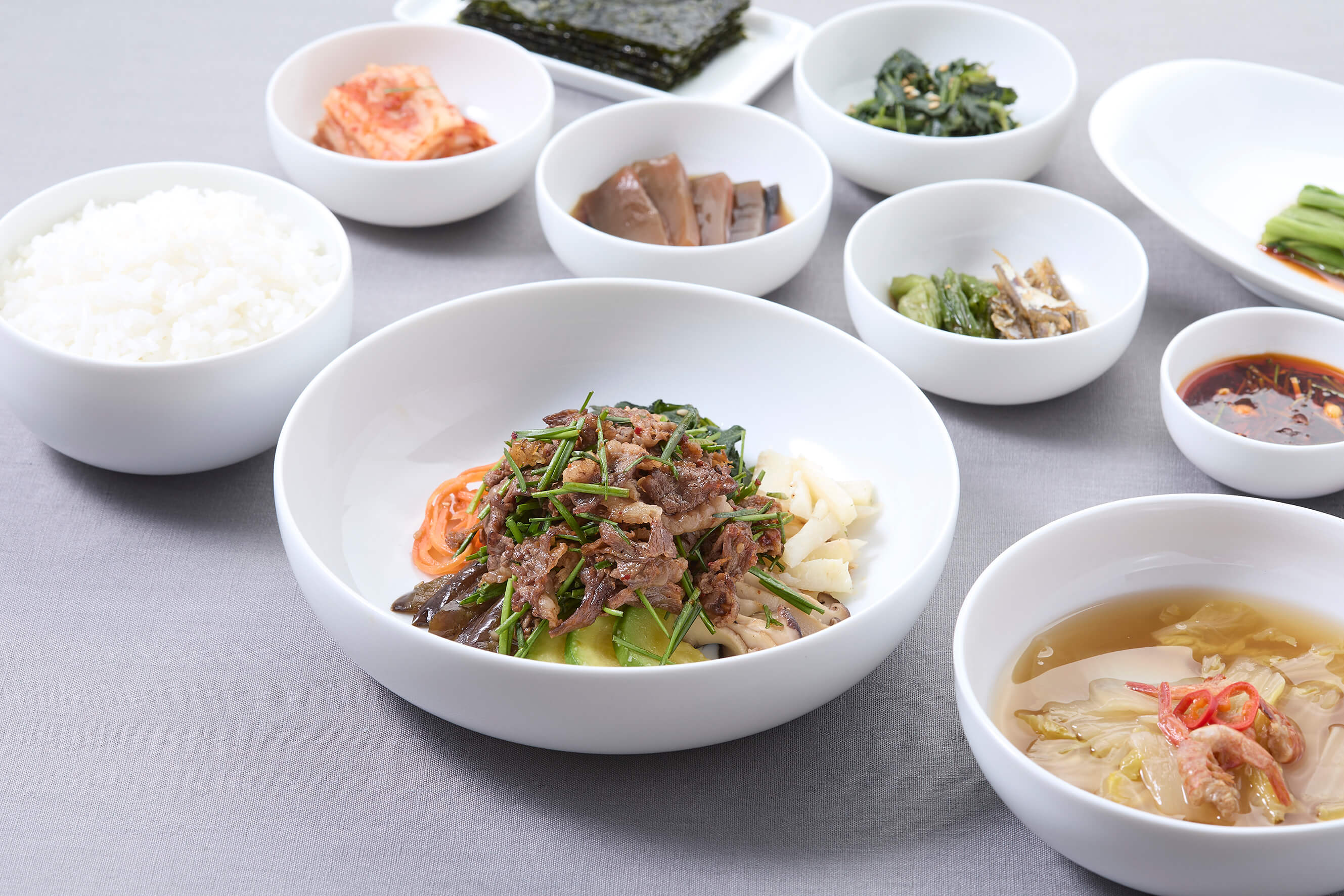
Bibimbap and Korean-style vegan meals bring seasonal flavors and the comforting spirit of Korean hospitality onboard
Authentic voice
What makes it unmistakably "Korean Air” is what Pacey says is a commitment to authentic flavors presented with contemporary elegance.
“From our iconic Bibimbap to our recently introduced Korean style vegan meals, we focus on seasonal ingredients and the ‘Jeong’ (warmth and affection) of Korean hospitality,” he says.
To support this, the airline looks for uncompromising quality and innovative agility when selecting catering partners. The airline works with partners that understand the technical demands of preserving flavor at altitude and share its commitment to quality, maintaining high standards through ongoing collaboration to deliver a consistently premium inflight dining experience.
This includes reflecting the latest health trends and passenger feedback. Last autumn, Korean Air renewed its selection of special inflight dietary meals on flights departing from Korea following a six-month development process.
“We believe a special dietary requirement should never feel like a compromise on taste. Our philosophy is to treat these not as ‘restricted meals,’ but as "curated wellness options,'” says Pacey.

David Pacey, Executive Vice President and Chief of In-flight Service and Lounges, Korean Air
To achieve this balance, the airline partnered with clinical experts from Inha University Hospital to ensure every meal meets strict nutritional and medical parameters.
At the same time, its in-house chefs use techniques such as low-temperature cooking and natural umami-rich ingredients to enhance flavors without excess salt or fat, ensuring health-conscious dining remains central to the journey.
Pacey says the airline’s brand partnerships—including Graff, Armani/Casa and Bernardaud—bring passengers’ lifestyle preferences into the cabin.
“They embody a timeless elegance that aligns with our new brand identity,” he explains. “When a passenger uses Bernardaud or Armani/Casa plates, the meal feels less like inflight catering and more like a true fine dining experience.”
He adds, “We partner with brands that prioritize craftsmanship and environmental responsibility. It is not about a famous logo—it is about a design language that reflects the elevated Korean aesthetic we strive to deliver.”
Scaling luxury
With Korean Air’s recent lounge expansions, Pacey says the challenge is preventing these massive spaces from feeling like crowded cafeterias. Maintaining a boutique, hotel-style atmosphere at scale requires meticulous spatial and operational design.
While food remains a key draw, Pacey says passengers increasingly seek lounge environments that support their physical and mental well-being before a flight. He notes that varied seating, acoustic zoning and biophilic elements can create distinct areas for families, solo travelers and diners while maintaining privacy.
Pacey also stresses that luxury is fragile.
“High-quality upholstery, custom millwork and premium carpets require aggressive, specialized upkeep. Operators maintain the illusion of effortless luxury by scheduling deep cleaning and maintenance during strict off-peak hours or overnight, ensuring the space always feels pristine,” he says.
Behind the scenes, Pacey acknowledges that data is doing the heavy lifting to ensure the luxury experience does not buckle under high passenger volume.
For Korean Air, this includes automated rules engines that instantly verify a passenger's eligibility (via airline status or corporate contract) in milliseconds. This eliminates front-desk bottlenecks, allowing staff to focus on hospitality rather than administrative checks.
By integrating with automated entry gates, operators can track real-time occupancy and display crowd levels on passenger apps. This empowers passengers to choose less congested wings or alternative lounges before they even arrive at the door.
Data enables digital waitlists for high-demand amenities.
“Passengers can reserve a shower suite or a premium dining table via their phone and receive an alert when it is ready, entirely removing the stress of physical lines,” Pacey says.
By analyzing incoming flight schedules, historical capacity trends and real-time transit data, lounge managers can predict exactly when a rush will hit. This allows them to dynamically adjust staffing levels, food preparation and cleaning cycles to match demand.
For Korean Air, modern comfort is defined as "intuitive and seamless serenity."
“It is no longer just about a plush seat or a quiet room; it is about an environment that anticipates a passenger’s needs before they ask,” Pacey says, describing a space defined by ergonomic precision, tactile comfort and a calm, uncluttered warmth.
By blending high-tech efficiency—such as smart lighting and noise reduction—with attentive Korean hospitality, the airline aims to create a sanctuary where passengers can truly recharge.

The Graff Prestige Class Amenity Kit
