
flyadeal expands with clear path to 2030
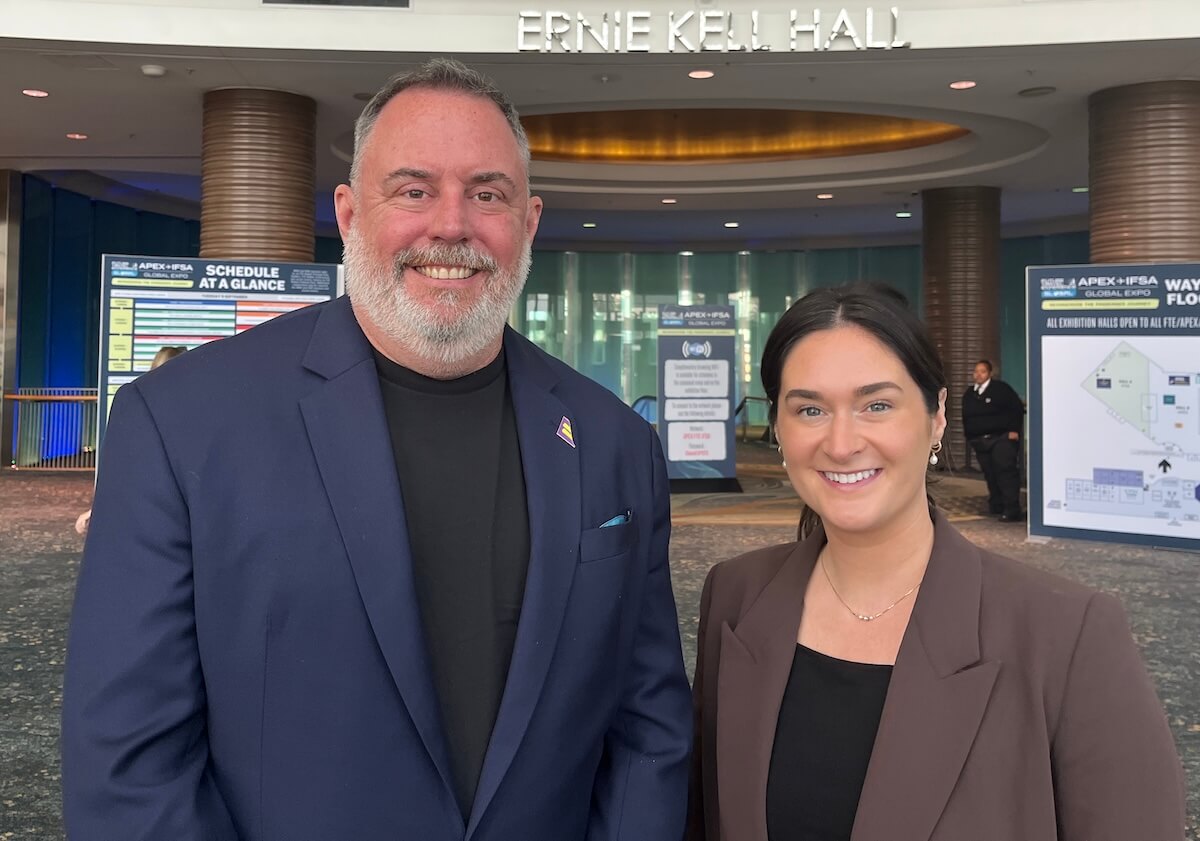
flyadeal CEO Steven Greenway (left) and PAX International Managing Editor Jane Hobson at IFSA Global EXPO in Long Beach, California in September 2025
Saudi Arabia’s low-cost carrier flyadeal is entering its eighth year in service this fall with a sharpened focus on growth, efficiency and alignment with the Kingdom’s Vision 2030. Under the leadership of Chief Executive Officer Steven Greenway, who took the helm in January 2024, the airline is scaling rapidly to meet the needs of mass-market travelers while positioning itself as a crucial pillar within the Saudia Group’s broader strategy.
A complement to Saudia’s premium positioning
flyadeal was established in 2017 as a subsidiary of the national carrier Saudia, with its first flight between Jeddah and Riyadh. In just eight years, the airline has grown its fleet to 40 A320s, serving 18 domestic destinations and 14 international seasonal and year-round destinations across eight countries. The airline’s primary base is Riyadh with additional key operations from Jeddah and Dammam.
Saudia, meanwhile, is pursuing an increasingly premium strategy with upgraded fleets and enhanced service offerings. That shift has created a market opening for flyadeal in the Middle East where LCC penetration is quite low, according to Greenway.
“We are really the mass market play for the group,” Greenway tells PAX International in a September interview. “We offer an opportunity for travelers that are looking for more of a cheap and cheerful option.”
This role is particularly important as Saudi Arabia pursues Vision 2030, the government’s transformation program that seeks to diversify the economy, expand tourism and increase connectivity. flyadeal’s low-cost proposition supports inbound travel, domestic mobility and religious pilgrimages at scale.
“It is not one or two customer segments,” Greenway emphasizes. “When you are looking at only one or two hours to get across the Kingdom, most people really do not want the bells and whistles at all. They just want to get from A to B. We have these cost-conscious consumers.”
A fleet built for growth
Central to flyadeal’s expansion is its ambitious fleet plan. The airline is receiving aircraft at a pace of nearly one per month through 2030. Its current orderbook for 51 A320 family aircraft comprises 12 A320neos and 39 A321neos narrow-bodies, the latter bringing additional range, capacity and efficiency, as well as 10 A330-900neo wide-bodies, which will open new long-haul markets. These aircraft will begin deliveries from 2027.
At the moment, flyadeal’s baseline is the standard LCC offering: A320, 186 seats, no recline, no IFE. But, Greenway highlights extra-large overhead bins as a “passenger-friendly investment” that massively benefits NPS.
The A321s, configured with 240 seats, will reduce unit costs by roughly 20 percent compared to the A320s and expand operational range to destinations in Southeast Asia, Western Europe and the Indian subcontinent.
The forthcoming A330neos will mark flyadeal’s entry into the long-haul, low-cost market. These aircraft will primarily operate with high-density Economy cabins but include a small premium section for passengers willing to pay for extra comfort on longer flights.
Greenway describes the introduction as both an exciting opportunity and a significant operational challenge.
“The A330 really opens up our network globally, which we are very excited about. It has a huge degree of utility,” he says. Greenway is not shy to point out the other side of the coin.
“Now, that said, what terrifies me is operating a wide-body in the context of an airline that has really only operated narrowbodies. No matter how you cut it, bringing in a wide-body operation complicates your operation and the propensity to lose money on these aircraft is huge.”
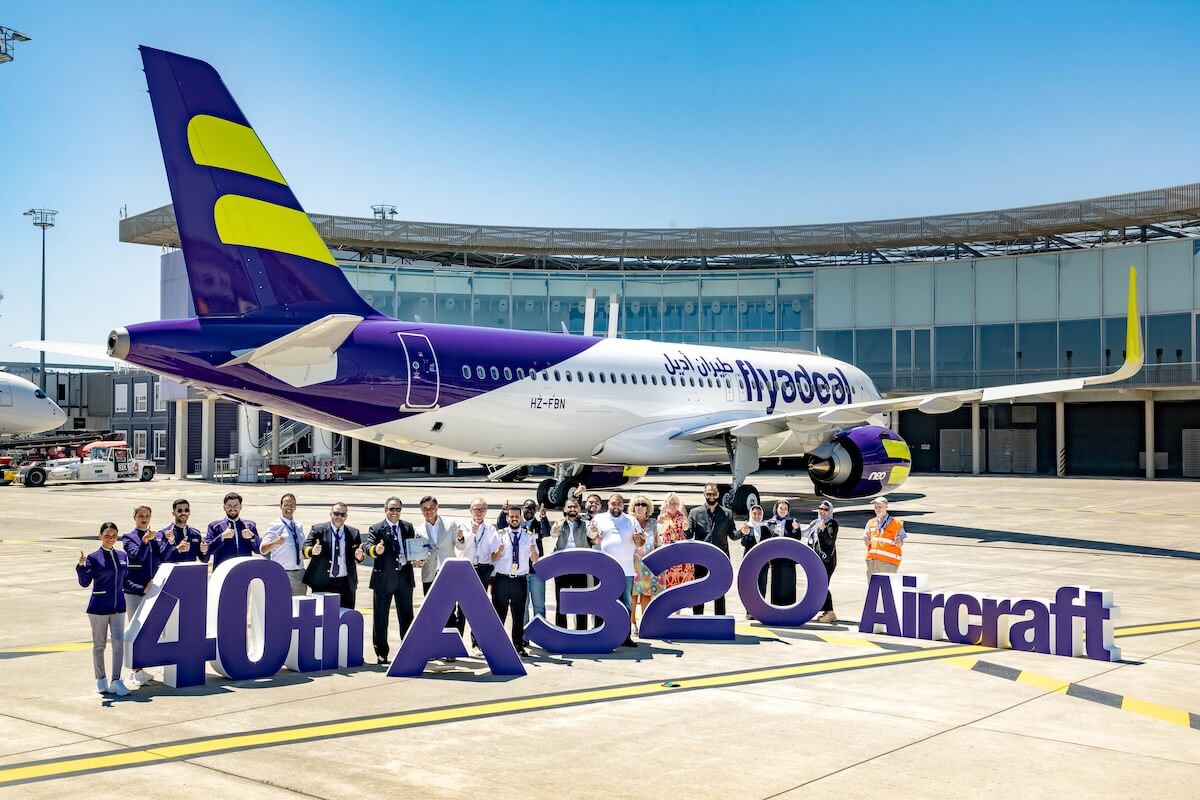
flyadeal staff join Airbus management for the airline's 40th aircraft delivery in Toulouse
Passenger proposition: Efficient and logical
As a true low-cost carrier, flyadeal keeps its onboard offering simple. Basic snacks and drinks, and other items available for purchase. USB-C charging ports are available at each seat.
For inflight connectivity (IFC), however, flyadeal is still weighing its options.
“Our margin is too thin to offer free IFC,” Greenway explains. “Our requirement is basically high speed, but at a reasonable and staged pricing.”
A decision on IFC is expected within six months.
As flyadeal prepares for flights lasting up to 13 hours with the A330neos, its food and beverage model is also under review. “What we have currently is simply not suitable for our ambition and our plans over the next couple of years,” Greenway says.
Supporting Saudi Arabia’s Vision 2030
flyadeal’s role in Vision 2030 extends beyond aviation economics. By enabling affordable, reliable connectivity, the airline supports the Kingdom’s goals to attract millions of international visitors, enhance domestic tourism and improve labor mobility.
The carrier’s growth to approximately 100 aircraft by 2030 aligns directly with these objectives. Religious tourism alone presents a vast market opportunity, while the expansion of hotels and other tourism infrastructure broadens the appeal for cost-conscious international travelers.
“Everything used to be five-star in Saudi, but that is broadening now and we are seeing two, three, four-star hotels and accommodations coming online—which is long overdue, Greenway says. “We have the pilgrims, which is a very mass market. There are two billion Muslims around the world, coming en masse either for Hajj or Umrah, or for their own personal trips.”
The airline’s expansion into long-haul markets will also connect Saudi Arabia more directly to Europe, Asia and South Asia, helping “bring the world to Saudi Arabia and bring Saudi Arabia to the world,” as envisioned by the Saudia Group.
Balancing ambition with discipline
For Greenway, the dual emotions of excitement and apprehension reflect the scale of flyadeal’s ambitions.
“Most people are excited about [the A330] because it gives us a real global reach now, and we can pretty well go anywhere we want. And that proposition is incredibly exciting for us,” he said.
As flyadeal accelerates toward its 2030 target, the airline’s strategy remains clear: keep costs low, expand capacity and support Saudi Arabia’s transformation with reliable, affordable air travel.
With nearly one new aircraft arriving each month and long-haul operations on the horizon, flyadeal’s next chapter promises to be both transformative and closely watched across the global aviation industry.
