
CEO Interview: Thai’s time to fly
This is a special feature from PAX International's July 2024 issue, on page 13.
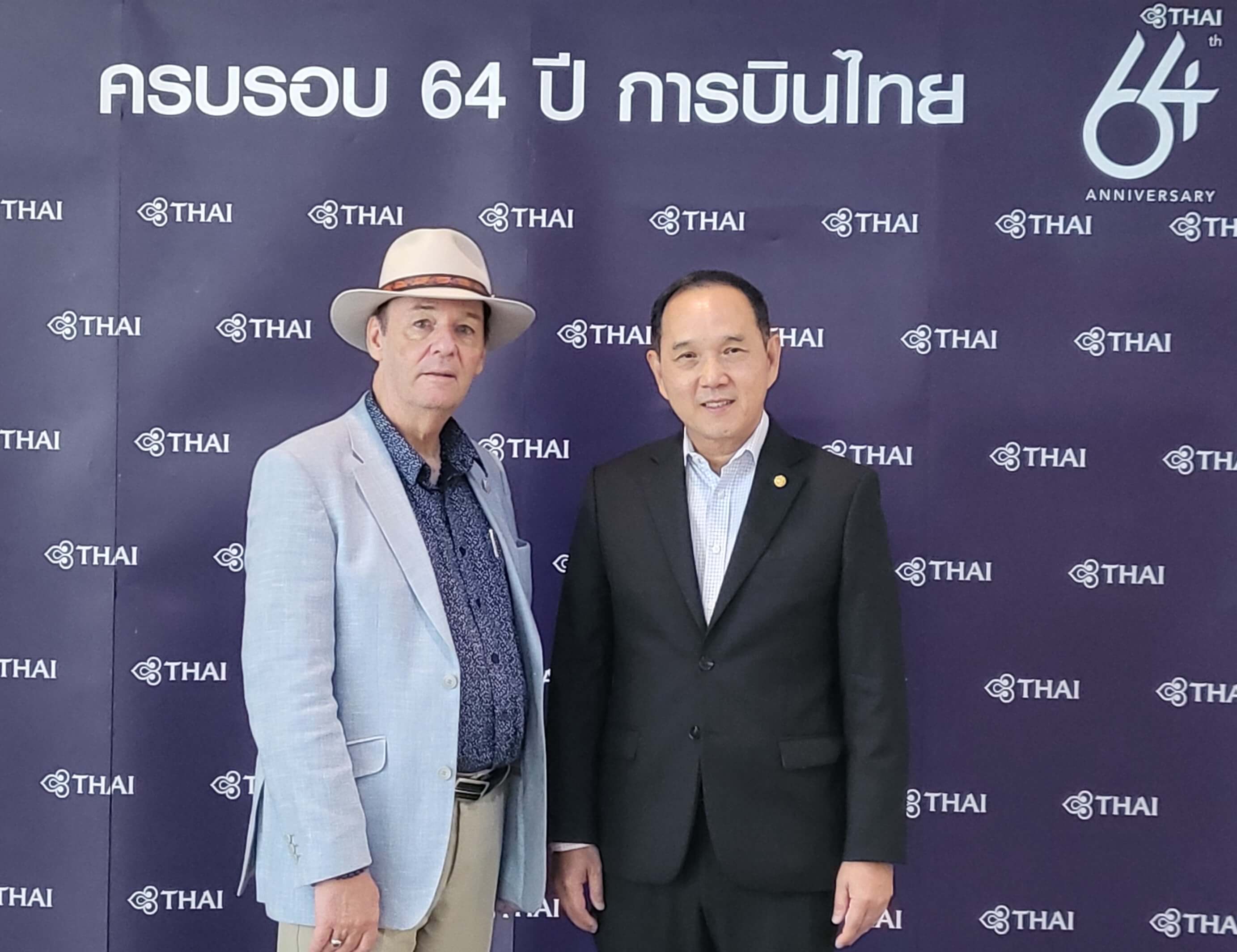
Jeremy Clark, PAX International Asia Correspondent (left) with Chai Eamsiri, CEO of Thai Airways
As good as the good ole days were, Thai Airways CEO Chai Eamsiri is quick to point out that the economics of modern airline operations does not lend itself to sustaining that model. But the airline is finding ways to regain that valuable heritage and reputation for excellence—with a focus on economic stability.
PAX International sat down with Eamsiri in the lead up to WTCE 2024 to learn how the airline will continue to invest in the passenger experience side of the business.
Eamsiri says Thai’s priorities are as follows, in no specific order: Being totally customer centric; commercial excellence; maintaining cost competitiveness; and the commitment to retaining a culture of continuous improvement.
“During the past year we have put a lot more effort into the cost competitiveness with a series of cost-cutting exercises across the business,” he explains.
The focus has clearly delivered. Efforts include better understanding of the core markets, fleet rationalization and leaner and more efficient processes within the operation.
Eamsiri reflects on a year ago when a tough survival instinct prevailed in the industry and thus, difficult decisions had to be made.
Not least the decision to take Thai’s A380s out of service and build up procurement and retrofits of existing 777-9s, 10s and A350s. These are expensive but necessary building blocks for the brand image Thai Airways wants to re-establish.
“Cost cutting has been necessary—but only that which is absolutely necessary and not affecting the other three of our priorities,” Eamsiri says.
This is manifestly true as significant improvements have been made across the service, which were recognized by the PAX Readership Awards win for Most Improved Airline (Asia) in Hamburg in May.
Economic sustainability in focus
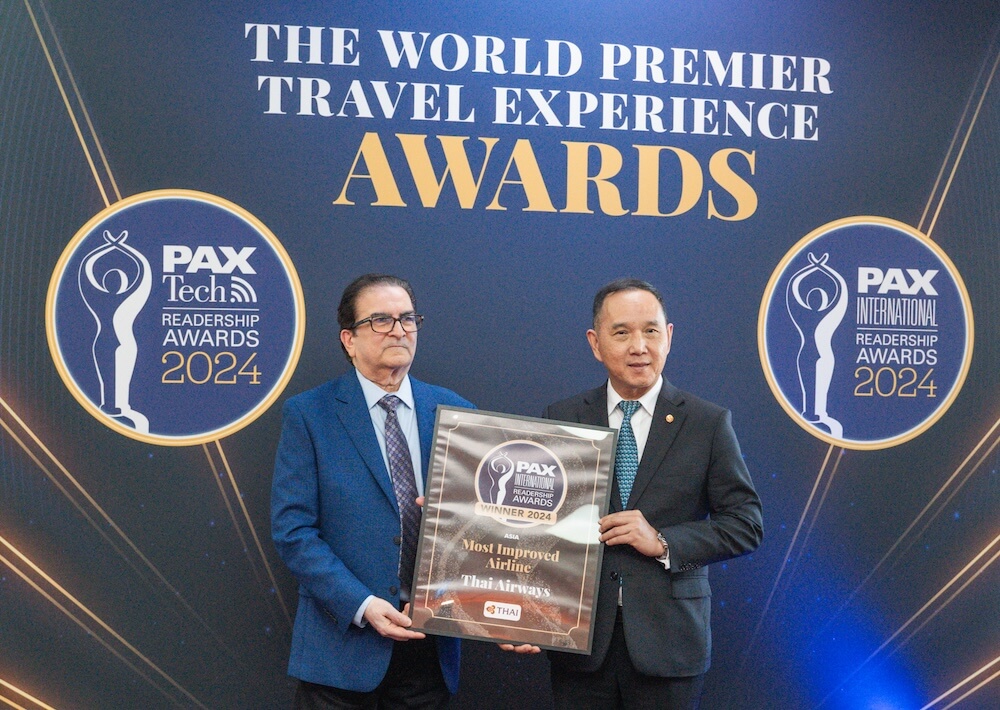
Aijaz Khan, PAX International Publisher (left) with Chai Eamsiri, CEO of Thai Airways, during the PAX Readership Awards in Hamburg, Germany
Referring to service once more, Eamsiri touched on the airline’s goal to regain its heritage.
“We are on track to regain up to 80 percent of what we used to be, in terms of the branding and service,” he says. “This time, we are achieving this affordably and with economic sustainability.”
Eamsiri was keen to point out the improvements to all aspects of the experience.
“Last year we improved a lot in product and service. This year we continue to put a lot of resources into every customer touchpoint with more trained people, better systems and our Thai Service with better food and drinks offerings, amenity kits, and the pre-boarding airport handling and airport facilities.”
This has been noticeably reinforced by significant investments in the lounges at Suvarnabhumi.
He adds, “We still need to improve further with hardware, this means investment in seating, equipment and refitting and upgrading of aircraft plus new aircraft, and there are various projects in hand. We need to take ourselves to the level we used to be. We also realize that if we stay where we are, our competitors will take the lead. We need to ensure we stay in this peer group where we belong.”
In the Economy cabin, Eamsiri is acutely aware of an important reality.
“Today’s Economy passenger is—if you treat them well—tomorrow’s Business Class passenger,” he says.
This has been reflected in a continuous streak of highly placed rankings for the Economy service for a number of years across several agencies. Thai Airways will not be neglecting Economy, with improved menus and IFE going forward.
When it comes to competing with the LCCs, Eamsiri has a very straightforward response. He is quick to declare that there is little to gain in attempting to compete.
“We are not the same,” he says. “We are a network airline. They are almost all regional and point-to-point and cannot offer the same level of seamless connectivity and convenience that Thai Airways can.”
This is often the problem with how passengers initially make comparisons with large heritage legacy carriers and the new breed of LCCs. Simply comparing a fare is not accurate. Once travel needs become more complex, and the desire for convenience and comfort increases, then the role of the full-service network airline is assured.
It seems Thai Airways’ heritage and its future as one of Asia’s most revered brands is safe in Eamsiri’s hands.
