
On location: Care in every course with Flying Food Group in Miami
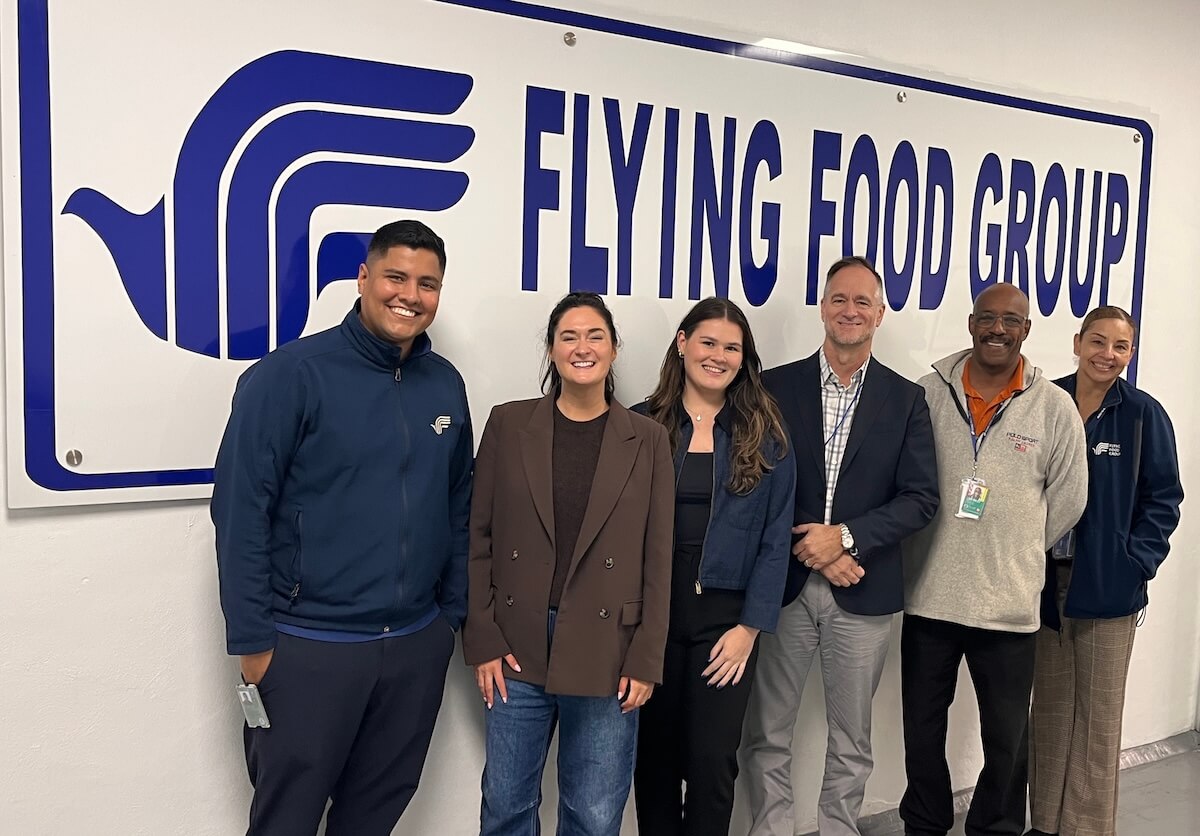
From left, Angelo Drouet, Operations Manager, FFG; Jane Hobson, Managing Editor, PAX International; Olivia Stoll, Director of Environmental Sustainability, FFG; Nicolas Rondeau, Executive Vice President of Sales & Marketing, FFG; Lawson Fortune, Acting General Manager, FFG and Francia Rayo, Customer Service Manager, FFG
Flying Food Group (FFG) recently hosted PAX International at its Miami operation. The 90,000-square-foot facility employs 260 people and brings airline catering and retail production together under one roof, a combination found at only a few locations in the company’s network of 19 kitchens spanning from Hawaii to New York.
Joining the visit were Lawson Fortune, Acting General Manager; Francia Rayo, Customer Service Manager, whose responsibilities span airline catering and railroad; Angelo Drouet, Operations Manager, who oversees both the retail side and Airline side; Olivia Stoll, Director of Environmental Sustainability; and Nicolas Rondeau, Executive Vice President of Sales & Marketing.
As we moved from airline meal preparation to retail assembly to food waste management, one theme kept returning: the people make the processes work.
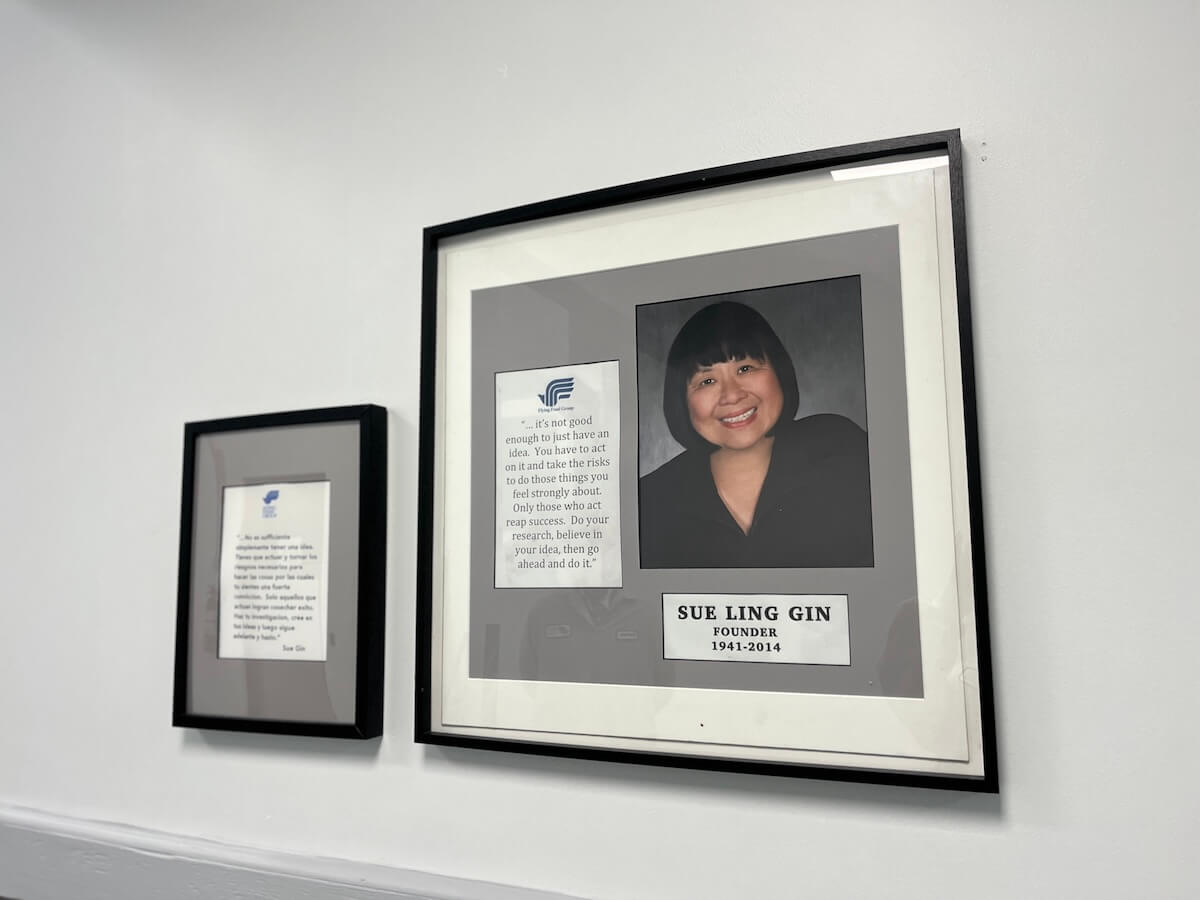
FFG celebrates its founder Sue Gin annually on Founder’s Day, keeping her influence present in a business that has grown far beyond its first Chicago kitchen
FFG in focus
FFG’s story began in Chicago in 1983, with Founder Sue Gin, a single kitchen and one airline customer. Today, FFG serves approximately 70 airline customers, alongside major retail and rail customers. Its capabilities range from meals for premium cabins and Economy to special meals, crew catering and VIP and VVIP customers. Fresh sandwiches, salads and other prepared products extend its reach beyond the aircraft cabin. The company reports annual revenue of approximately US$830 million.
“We are one of the only authentically U.S. caterers,” affirms Rondeau.
He sees the company’s ownership structure as an advantage in responding to customers.
“As a privately owned company, we can make decisions quickly and respond to our customers’ changing needs with flexibility and speed,” he says.
FFG recently opened its Kahului Airport facility on Maui, completing its presence across Hawaii’s four major islands. With Hawaiian Airlines as the launch customer, the operation supports 10 daily flights at startup.
In September, PAX reported the launch of Alaska Airlines catering at Newark, FFG’s fourth station for the carrier, and the addition of Honolulu as its fourth Air New Zealand station since the partnership began last year.
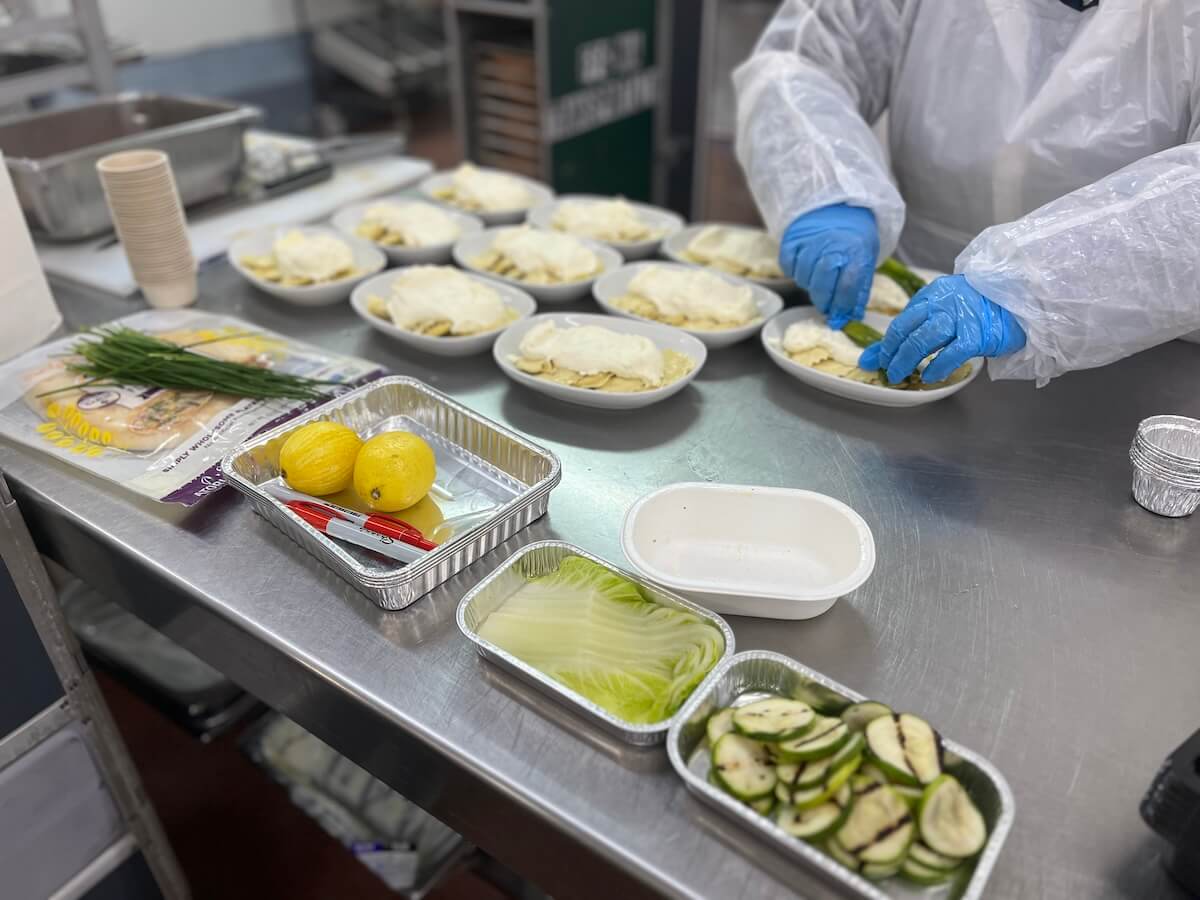
Today, Flying Food Group serves approximately 70 airline customers
Before meals reach the cabin
The tour begins on the airline catering side. There are hot and cold kitchens, meal components to prepare, portions to control and airline presentation standards to follow. Chefs begin production at approximately 5 a.m., typically finishing around 2 p.m., while the facility itself operates 24 hours a day.
Hot meals are prepared, portioned and rapidly chilled. Trays, beverages and serviceware must come together in the correct configurations before carts are ready for dispatch. Depending on the airline customer, the facility also handles bedding, pillows and blankets.
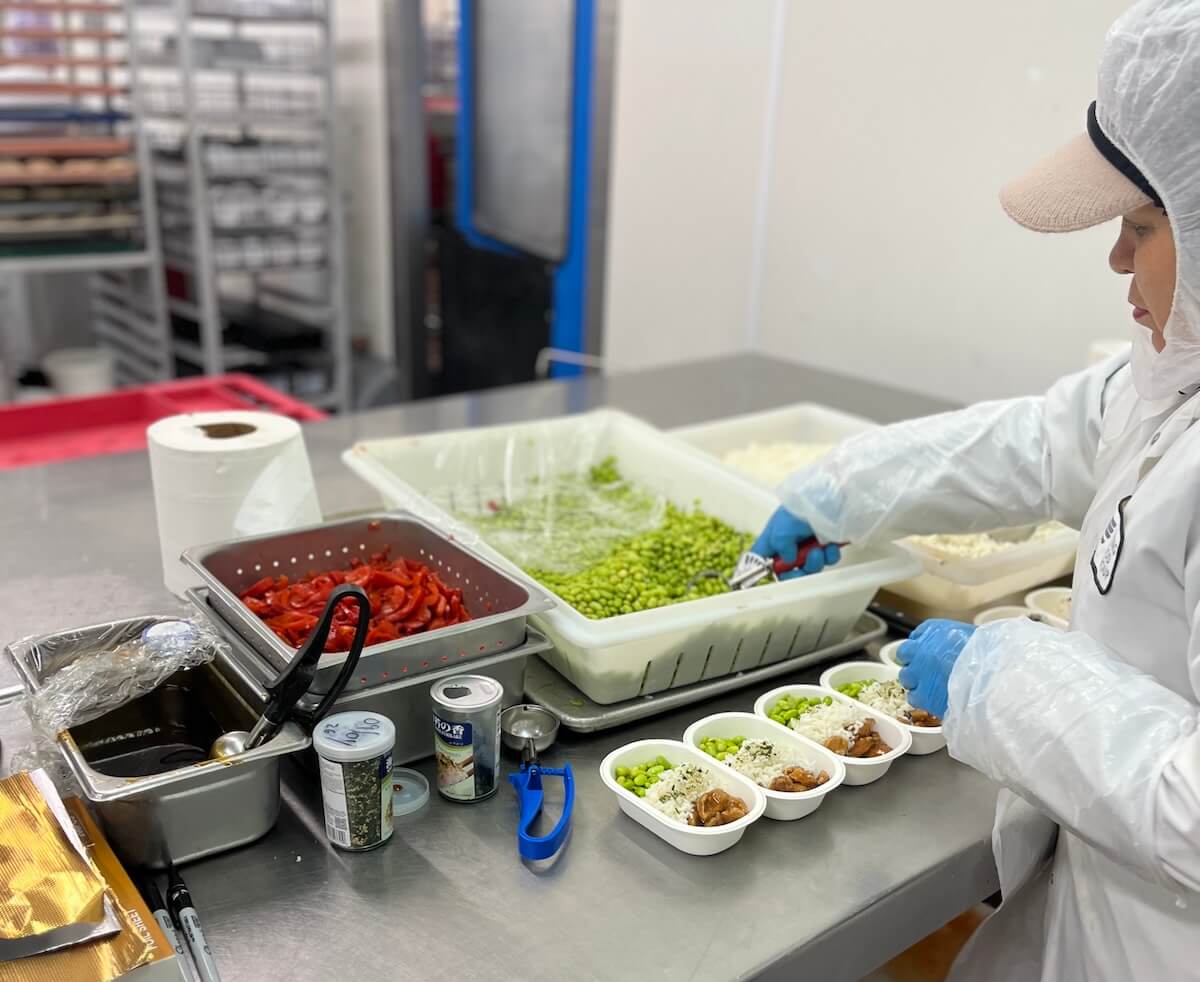
Meals are prepared on the airline catering side of FFG's Miami facility
Walking through, I think of an orchestra: individual tasks working toward a result the passenger experiences as one part of inflight service.
Rayo explains that every airline has its own meals, presentation guidelines, equipment requirements and safety and security expectations. Across First Class, Business Class, Economy and special meals, the details change continually.
Technology supports the work, but airline catering retains a substantial manual component here at FFG Miami. Its variety and complexity demand judgment, dexterity and familiarity with individual customers.
“Our teams are extremely adept at managing the on-the-fly changes that constantly happen in the process—that is the airline industry,” Rayo says. “Whether it is a gate change or a completely different aircraft inbound than it was supposed to be, we are prepared and able to pivot, and we communicate all of this with the inflight crew when loading the aircraft.”
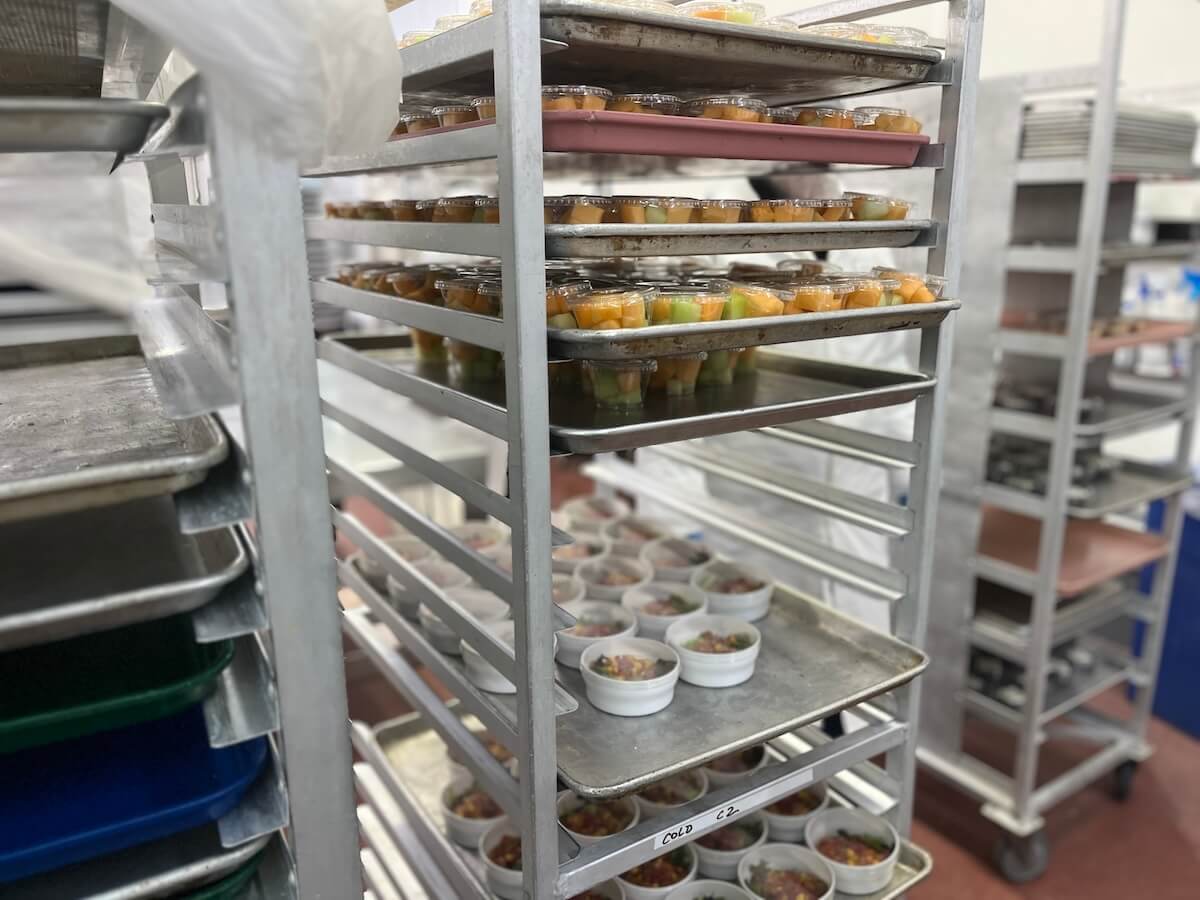
Hot meals are prepared, portioned and rapidly chilled before trays, beverages and serviceware are arranged in carts for dispatch
A different rhythm on the retail line
Moving into the retail production side of the facility, the rhythm changes.
It is slightly smaller, with a more repetitive flow and greater use of automation. FFG produces four SKUs for a major multinational coffeehouse chain, supplying the Miami and Orlando markets.
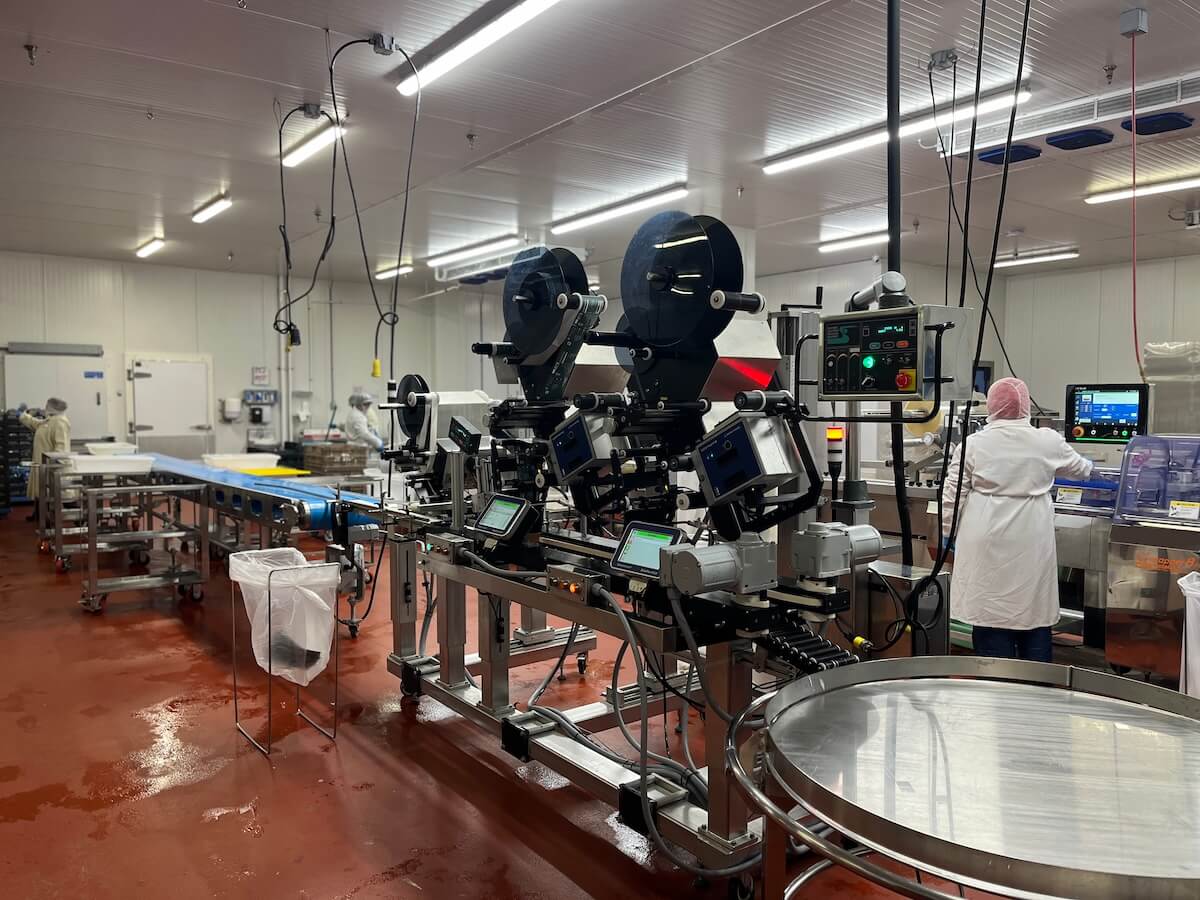
Automation allows the retail products to be assembled quickly
“The mission is to deliver prepared meal solutions to retail partners, from concept to industrialization,” Drouet explains.
A fast-moving slicing machine prepares deli meats while employees feed fresh loaves onto a conveyor. Workers apply a spread and add ingredients before the sandwiches pass through an automatic packaging and sealing machine. Finished products are labelled and placed on trays.
The trays are stacked in a chilled loading room for transport to the distribution center, where orders are allocated for onward delivery. Supervisors replenish supplies and support the team along the line.
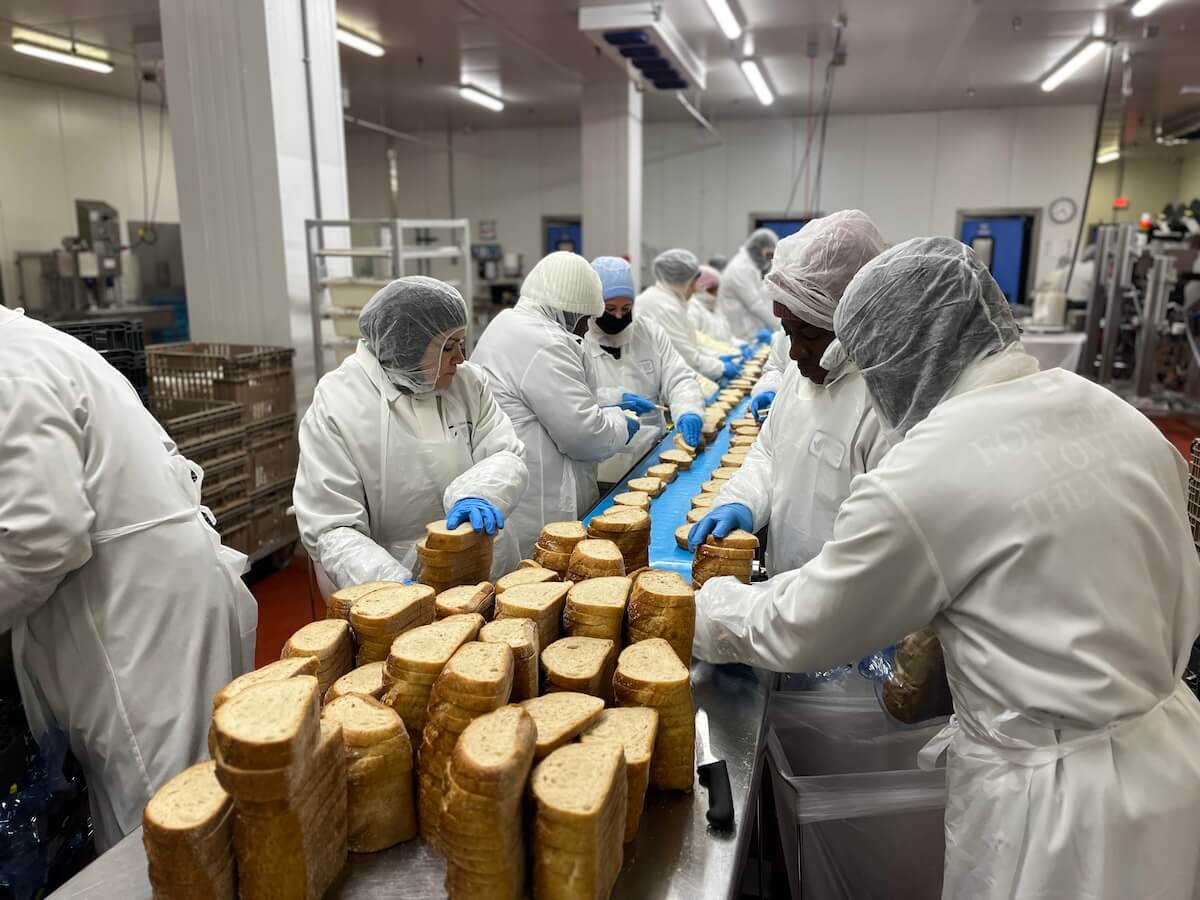
Products are prepared on the retail side of the facility
Following the food a little further
The production tour ends at the ORCA food waste digester, bringing a less visible part of the kitchen’s work into focus.
The system uses naturally occurring microorganisms in the presence of oxygen to break down food waste into grey water, typically within 24 hours. Built-in scales and the dashboard allow FFG to track the weight of food waste processed and monitor trends over time.
“It is impressive and takes little to no energy, does not require any additives and is a truly sustainable way to recycle grey water,” Stoll says. “We have not seen an increase in energy consumption in any of our facilities that feature the ORCA.”
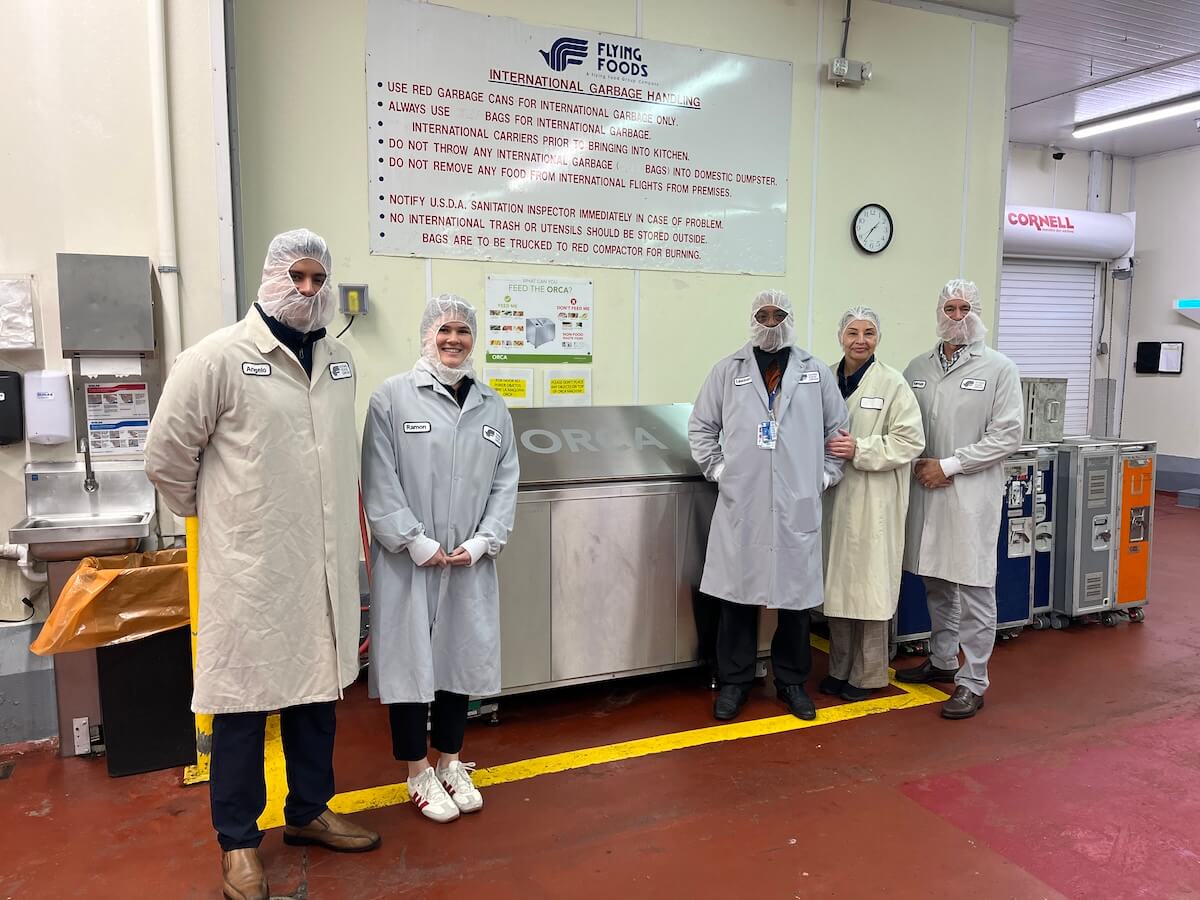
The Flying Food Group with the ORCA in Miami
For Stoll, external assessment is another part of making progress accountable. FFG began working with sustainability ratings platform EcoVadis in 2023. According to the company’s supplied sustainability information, improvements across its individual assessment scores in 2024 raised its overall score by 18 points and earned an EcoVadis Sustainability Commitment Badge.
“Receiving this recognition, being externally verified by a third-party validates all the actions that we are taking,” she says.
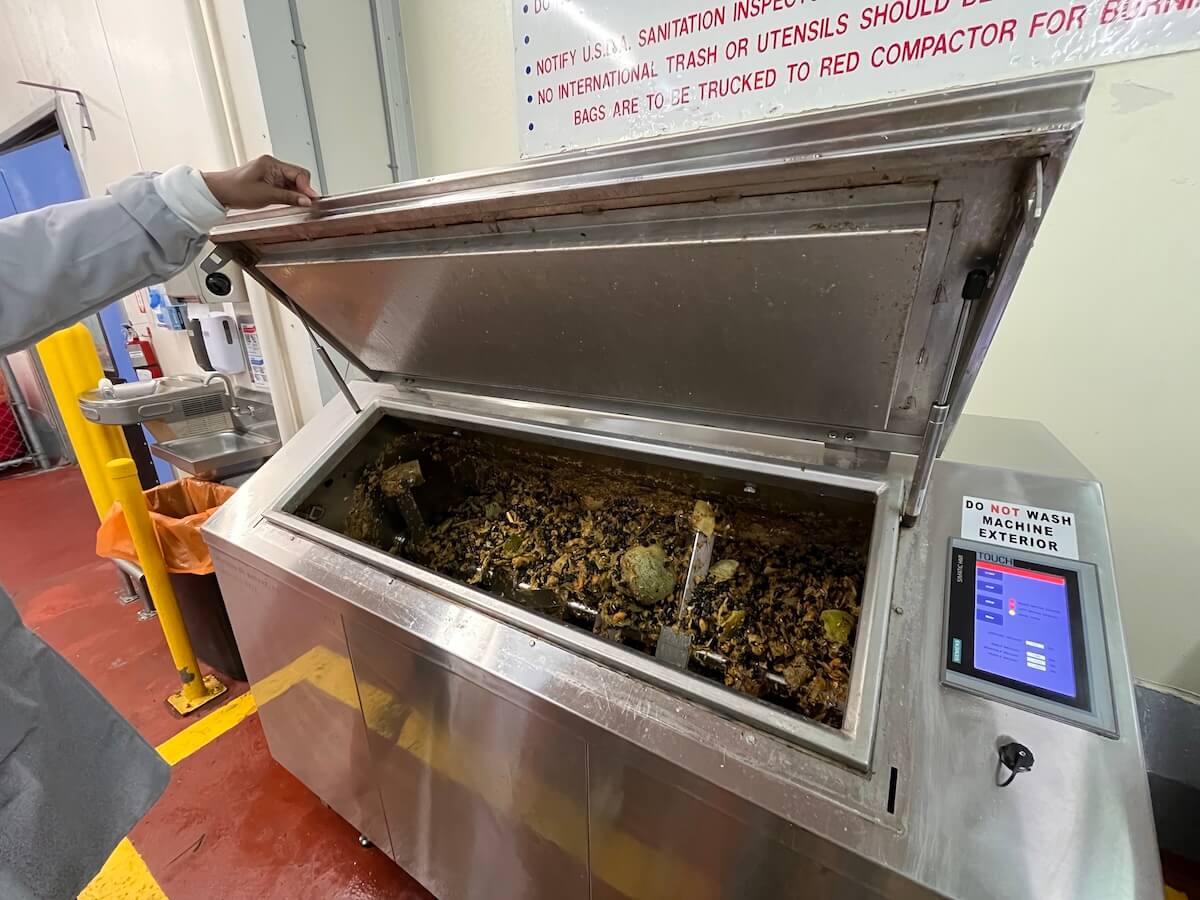
The ORCA food waste digester uses naturally occurring microorganisms and oxygen to break down food waste into grey water, typically within 24 hours
The people behind the meals
After following food through production, we turn to how FFG feeds its own workforce. Rondeau is direct about the relationship between employee wellbeing and the company’s performance.
“We believe that productive staff starts with healthy staff, well-fed staff, cared for staff who feel looked after, safe and respected,” he says.
FFG provides staff meals prepared in-house by its multicultural culinary teams, with breakfast, lunch and dinner available across shifts. The menus reflect the communities working in each location.
In Miami, Rayo explains, that mainly includes Cuban, Jamaican and Mexican dishes.
“Our airline customers expect authentic cuisine on their routes, so we hire chefs with expertise in those culinary traditions. That puts us in a strong position to offer the same authenticity and variety to our own teams,” Rondeau explains.
Creating an environment where people are excited to come to work each day empowers each person in their roles and responsibilities, he adds.
Employees receive regular training, testing and certifications relevant to their responsibilities. FFG describes its food safety culture as a shared commitment supported by leadership, continuing dialogue, staff development, risk assessments, audits and continuous improvement.
These values lead back to Sue Gin.
FFG celebrates its founder annually on Founder’s Day, keeping her influence present in a business that has grown far beyond its first Chicago kitchen. Her belief in belonging remains part of the company’s culture: a workplace where people from different backgrounds feel welcome and respected.
On the floor, people are focused at their stations and comfortable chatting away from production. That combination of concentration and friendliness leaves an impression, even on someone just passing through.
A lasting impression
Rondeau says FFG continues to grow annually, adding customers while maintaining relationships that have lasted for decades. More than half of its top 10 customers have worked with the company for more than 20 years.
For the passenger, it may be just one element of the flight. For the team in Miami, it is the result of many small acts of care, carried through together.
