
Guest Column: Significant seasons
By Melissa Adamski, APD BSC MND, Travel Dietitian and Director of Nutted Out Nutrition
This is a special feature from PAX International's July 2024 issue, on page 24.

Melissa Adamski, APD BSC MND, Travel Dietitian and Director of Nutted Out Nutrition
There is something about eating produce picked in season—the vibrant colours, the taste. Crisp, juicy autumn apples. Sweet summer berries. Fruits and vegetables grown and harvested during natural seasonal cycles are thought to offer peak taste and nutrition and are readily available locally. However, the need for seasonal eating has essentially been erased with advances in food technology and agriculture.
Is it time to take lessons from the past? Are there benefits for the airline industry to lean into?
Seasonal ingredients are often the inspiration for menus and seasonal eating is attracting more attention with growing research into environmental, health, economic and societal impacts. With this increasing interest, the concept of using seasonal produce more prominently to guide catering concepts is fast becoming a consideration for the airline industry.
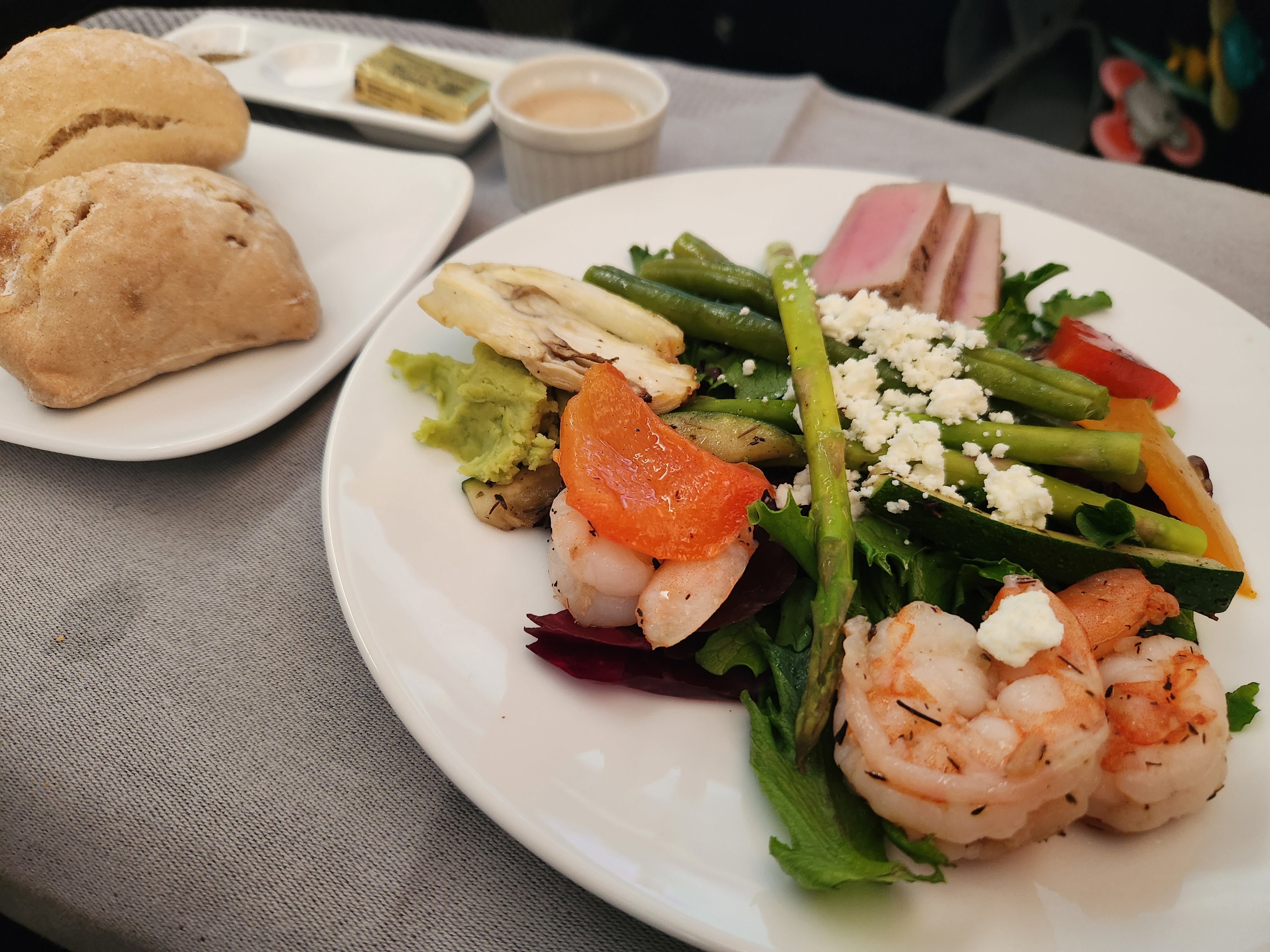
Business Class appetizer with vegetables onboard Japan Airlines flight from Boston to Narita. Image credit: Melissa Adamski
The terms "seasonal" and "local" are commonly referenced and contribute slightly differently to the seasonal eating discussion. "Globally seasonal" considers foods produced seasonally but shipped outside the local area to places where they may not be in season. This helps increase variety in the diet but also increases food miles. "Locally seasonal" considers seasonal food grown and consumed locally. While this reduces food miles, it limits foods in the diet to only what is in season in that location.
Seasonal eating leverages the natural growing cycles and harvesting occurs at peak quality. Growing outside these cycles can mean foods are picked before they are ripe and then transported or grown in climate conditions which are not ideal. Both these factors may affect nutrition and taste. A study reveals that broccoli grown in autumn has nearly twice the vitamin C than broccoli grown in spring.
Research also reveals that the longer fruits and vegetables are transported and stored, the less nutrients they offer. Processing of fruits and vegetables, such as snap freezing at time of harvest and some canning techniques, can help prevent nutrient loss.
Foods awaken the senses with sight, smell and taste all playing a complex role in the appeal of food. Using produce when it has maximum flavour presents an opportunity to address taste challenges and food appeal at altitude. Tapping into the seasonality of foods can also pack a nutritional punch onboard. Strategic use of seasonally grown foods can provide passengers with delicious and nutritious meals, while also leveraging economic and sustainable benefits.
