
IFPL Group drives the future of in-seat power with modular innovation
This is a special feature from the October 2026 MRO Europe issue of PAX Tech, on page 30.
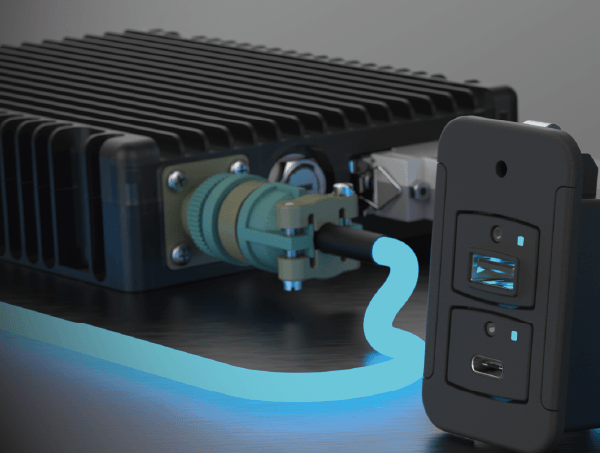
IFPL’s TRANSFORM system has been designed with modularity and upgradeability at its core
In its 30th anniversary year, IFPL Group has been looking back at its position as a leader in practical innovation in the aviation market. But at the same time, the U.K. and Isle of Wight-based company is educating its customers on the importance of future-proofing in-seat power systems for the rapidly evolving IFEC landscape, including the increasing demand for USB-C power outlets onboard.
As Neil McGregor, COO, IFPL Group, tells PAX Tech, “USB-C is an important step forward, but it should not be viewed as the final destination.”

Neil McGregor, COO, IFPL Group
Power ratings and charging protocols will continue to evolve as passengers bring an increasingly diverse range of devices onboard, creating opportunities through technologies like higher-power USB-C and Qi2, while placing new demands on aircraft power systems.
For McGregor, this means the industry focus must shift to adaptable architecture rather than power level.
“Airlines investing today need systems that can evolve through modular hardware and software updates, without repeatedly replacing the complete installation,” he explains.
Behind the outlet
Airlines are increasingly examining the level of capacity required to power passengers’ personal devices onboard. With USB-C, the available charging ranges from 15W to 100W. But more important than the visible outlet is the architecture behind it, responsible for distributing and managing power throughout the cabin.
When considering the power system, airlines must look beyond USB-C availability to whether it can reliably deliver sufficient power to every passenger. While typical PEDs such as laptops, tablets and smartphones can operate on 60W, consistent power delivery to all passengers is more important than maximum output at each seat.
To achieve this, McGregor explains in-seat power architecture needs to be capable of intelligent load management, suitable cabling and power conversion, effective thermal management and operating within the aircraft’s available electrical load capacity.
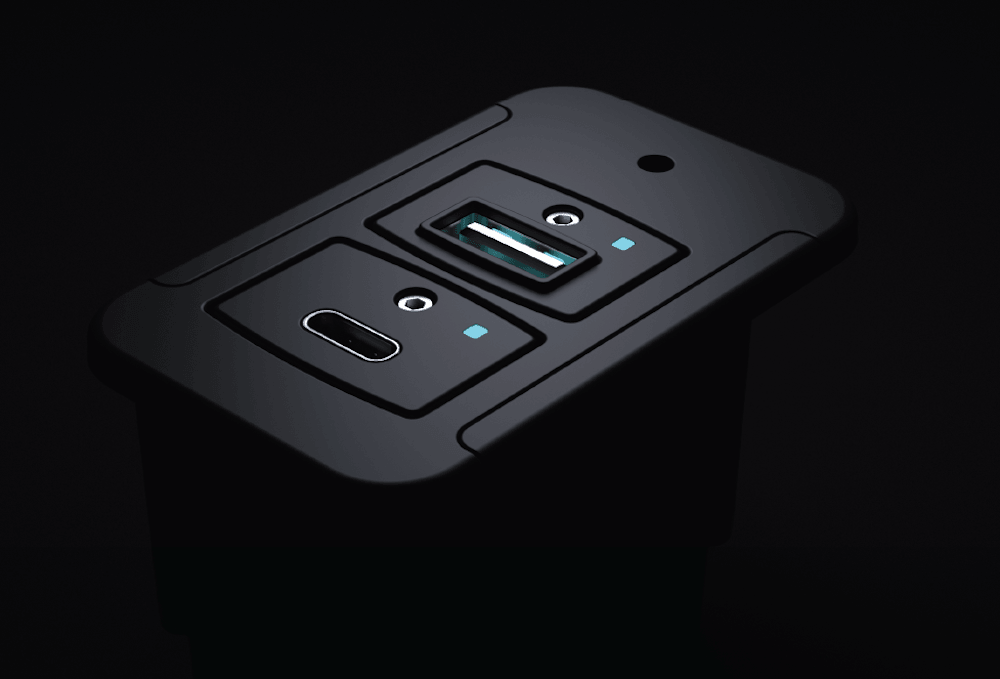
IFPL Group’s USB-A & C Combination 2030 combines flexible USB-A and USB-C power to cover every passenger charging need
Adaptability and maintainability of the system must also be key considerations.
“Charging standards and passenger devices will continue to change, so the most valuable architecture is one that allows individual components to be upgraded without removing or replacing the entire system,” McGregor says.
Retrofit or replace
As airlines race to accommodate more passenger devices requiring USB-C power onboard, it is worth noting that simply replacing a USB-A outlet with a higher rated USB-C unit does not automatically increase power available at the seat.
“The wider architecture must be able to deliver and manage that additional demand,” McGregor explains. “Airlines need to consider heat generation, circuit protection, certification requirements and the physical constraints of existing seats and cabin wiring.”
This is where a modular system, such as IFPL’s TRANSFORM, comes in. Rather than replacing the entire system, airlines can upgrade selected elements, re-use suitable existing infrastructure and introduce higher-power capabilities in stages. This approach reduces aircraft downtime, installation complexity and the overall cost for the carrier.
McGregor says the decision to retrofit or replace a power system depends largely on the aircraft’s existing infrastructure, often designed for little or no passenger power demand. Electrical capacity, wiring routes, seat construction, certification status and installation space all determine which upgrades are feasible.
Transforming passenger experiences
Modular and scalable systems allow airlines to take a more proportionate approach by selectively installing or upgrading components, while continuing to use suitable infrastructure already onboard. IFPL’s TRANSFORM system has been designed with modularity and upgradeability at its core.
“Our patented interchangeable cartridge outlets allow airlines to upgrade the passenger-facing configuration as their requirements evolve, selecting combinations of USB-A and USB-C without having to replace the whole power module,” McGregor says.
TRANSFORM eliminates the need for a Master Control unit by using peer-to-peer power management. Power is managed dynamically across the network, enabling airlines to efficiently distribute the aircraft’s available electrical capacity and maintain a consistent, reliable charging experience for passengers.
Further flexibility is provided via over-the-air software updates, allowing system functionality and power management specifications to be adjusted after installation. Systems that provide this flexibility empower airlines to accommodate evolving charging requirements while protecting the investment long into the future.
“Designing flexibility into the architecture today ensures airlines are better prepared to respond if passenger device requirements continue to increase,” McGregor notes.
Future-proofing power
As for what airlines should consider when future-proofing in-seat power systems, McGregor emphasizes that power management, weight, wiring and aircraft electrical infrastructure should be central to the evaluation process.
“A headline power rating is meaningful only if the aircraft can deliver that power reliably across the cabin under real operating conditions,” he explains.
Intelligent power management is key, enabling the system to balance passenger demand against available power to maintain a consistent service, while protecting the aircraft’s electrical infrastructure.
“Futureproofing does not mean predicting every device or standard that will emerge. It means creating an in-seat power architecture flexible enough to respond when they do,” McGregor concludes.
