
RECARO pursues circular seating with R Sphere concept
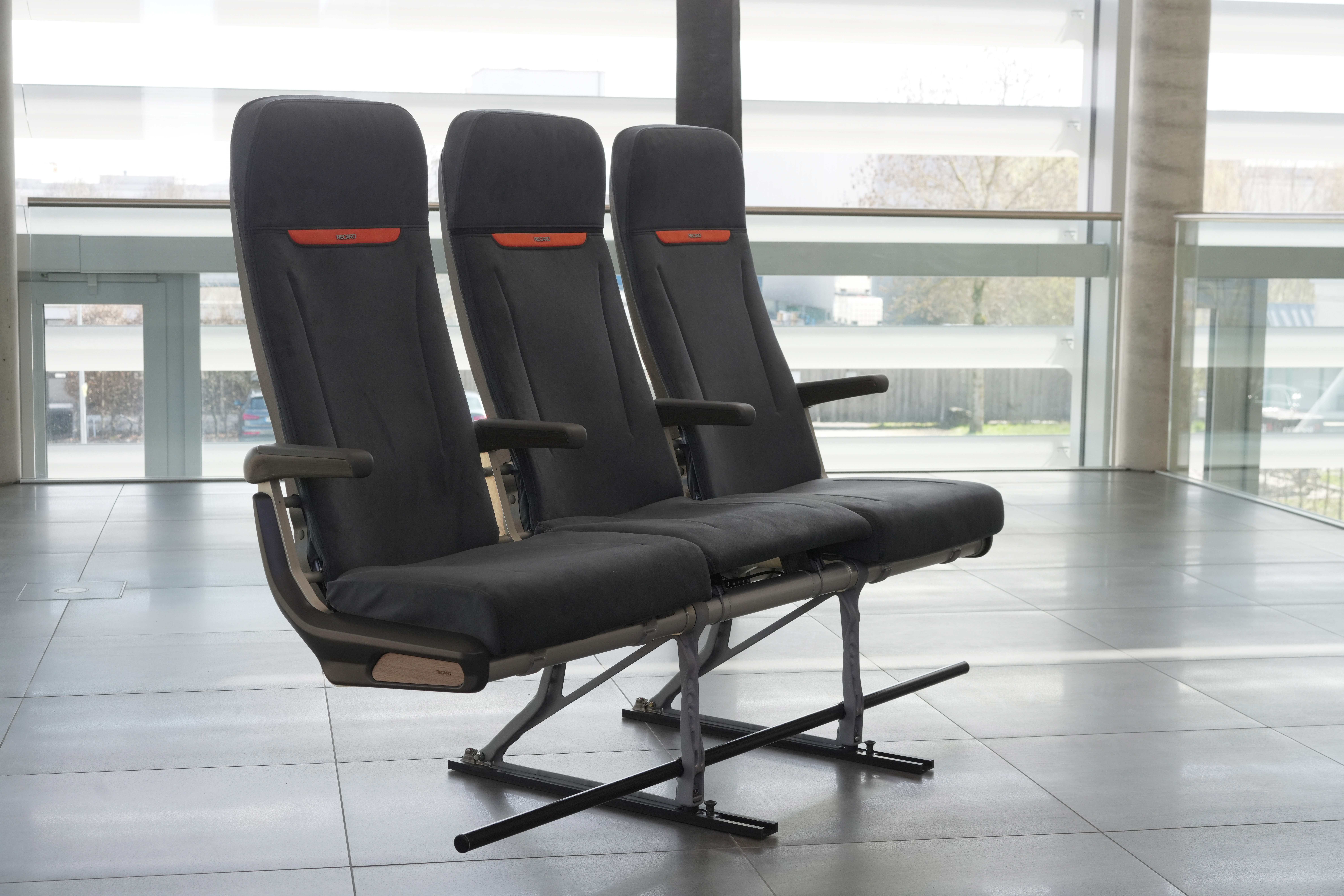
RECARO's R Sphere Economy Class sustainability demonstrator
RECARO is reframing the industry conversation around sustainable seating, turning it from the weight reduction per pax to the material sourcing, circularity and lifecycle impact of the product. The supplier’s R Sphere Economy Class sustainability demonstrator, which took home the Crystal Cabin Award in the Sustainable Cabin category in April, exemplifies how eco-friendly materials can be integrated into the cabin, leading passengers to view them as part of an airline’s brand.
As Bruno Oldenbürger, Head of Innovation at RECARO Aircraft Seating tells PAX Tech, “The R Sphere concept seat takes a look at the entirety of the seat. Not just weight but every material used in production.”

Bruno Oldenbürger, Head of Innovation, RECARO
The R Sphere was developed as a sustainability demonstrator to explore new approaches to environmentally responsible seating and combines innovative materials, lightweight design and circular thinking to reduce environmental impact. The Economy Class seating concept achieves a weight reduction of 1.5 kilograms per passenger seat, contributing to lower fuel consumption and reduced CO₂ emissions across the entire aircraft.
While weight reduction is a feature of the demonstrator, the key focus of R Sphere is the use of materials, taking a holistic view of sustainability. The seat features recycled PVC introduced as standard for cable plates, literature pockets made from discarded fishing nets and real wood bumper inlays. These features are successfully certified with the fishing-net literature pocket and the wooden inlay already flying as a trial on Iberia’s A320neo. Oldenbürger says RECARO is setting new standards for seating capabilities with R Sphere.
“It is the blueprint for the future of seating at RECARO,” he explains.
A holistic view of sustainability
Sustainability as a requirement is the new standard in seating compliance, and Oldenbürger believes that while environmental responsibility should go beyond reducing fuel burn, it must come with a clear advantage.
“Weight-savings remain the strongest contribution to sustainability in the cabin. The implementation of sustainable seat features and materials is welcome, however a clear operational benefit shall be evident or those have to be visible for the passenger, giving them the good feeling of flying on a more sustainable product,” he explains.
RECARO is demonstrating that sustainability goes beyond weight through the use of innovative materials throughout the seat, such as upcycled fishing nets, sugar cane, real wood or recycled PVC. Each year, the company spends 10 percent on R&D to continue leading the way in seating solutions, Oldenbürger says. Part of this is ensuring passengers can see the strides that are being made.
“Many times, sustainable seating features go unnoticed by the passengers. But at RECARO, we believe some sustainable features and materials should be highly visible within the cabin, especially in areas passengers frequently touch and experience, to inspire and demonstrate the value of sustainable innovation in flight,” Oldenbürger explains.
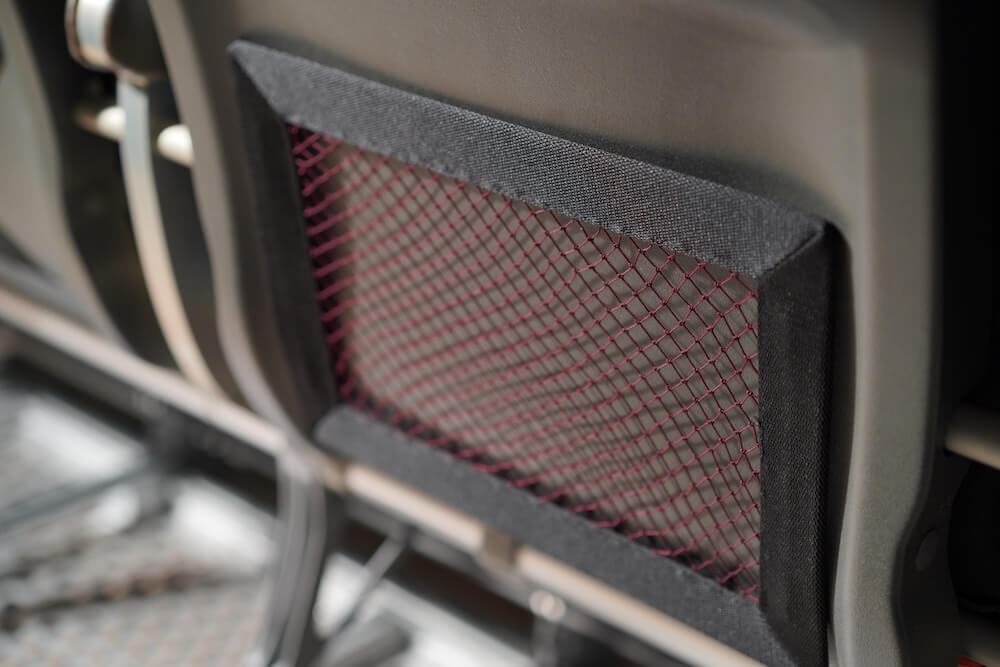
The R Sphere’s literature pocket is made with upcycled fishing nets
He points to the R Sphere’s literature pocket, made with upcycled fishing nets, as an example of a tangible feature that passengers can see. This innovation was recently implemented by Iberia on one of its A320neo cabins for RECARO’s R1 and R2 seats. Iberia also integrated a real wood inlay which utilizes a natural material into the seat’s bumper, also highly visible to passengers.
“Aircraft seats are complex systems and transforming them sustainably is something that takes time,” Oldenbürger says. “The challenge is creating a structured, repeatable way to bring sustainable materials and lightweight solutions into the seat.”
From concept and material scouting to testing and qualifications, he explains that the process towards sustainability at RECARO is a holistic one.
A circular approach
Beyond weight reduction aimed at lowering carbon emissions, resource conservation through circularity is at the core of RECARO’s sustainability approach. The supplier pursues this objective via two main strategies: expanding the use of recycled materials and improving the recyclability of its seats.
“Maintaining and further improving recyclability can be achieved, amongst other things, by ensuring that product components can be dismantled for material recovery and reuse,” Oldenbürger tells PAX Tech.
He adds that it is crucial to provide airlines with information relevant to recycling to ensure products are properly managed throughout their lifecycle. RECARO is working to further expand these approaches to reduce resources and facilitate sustainable end-of-life treatment.
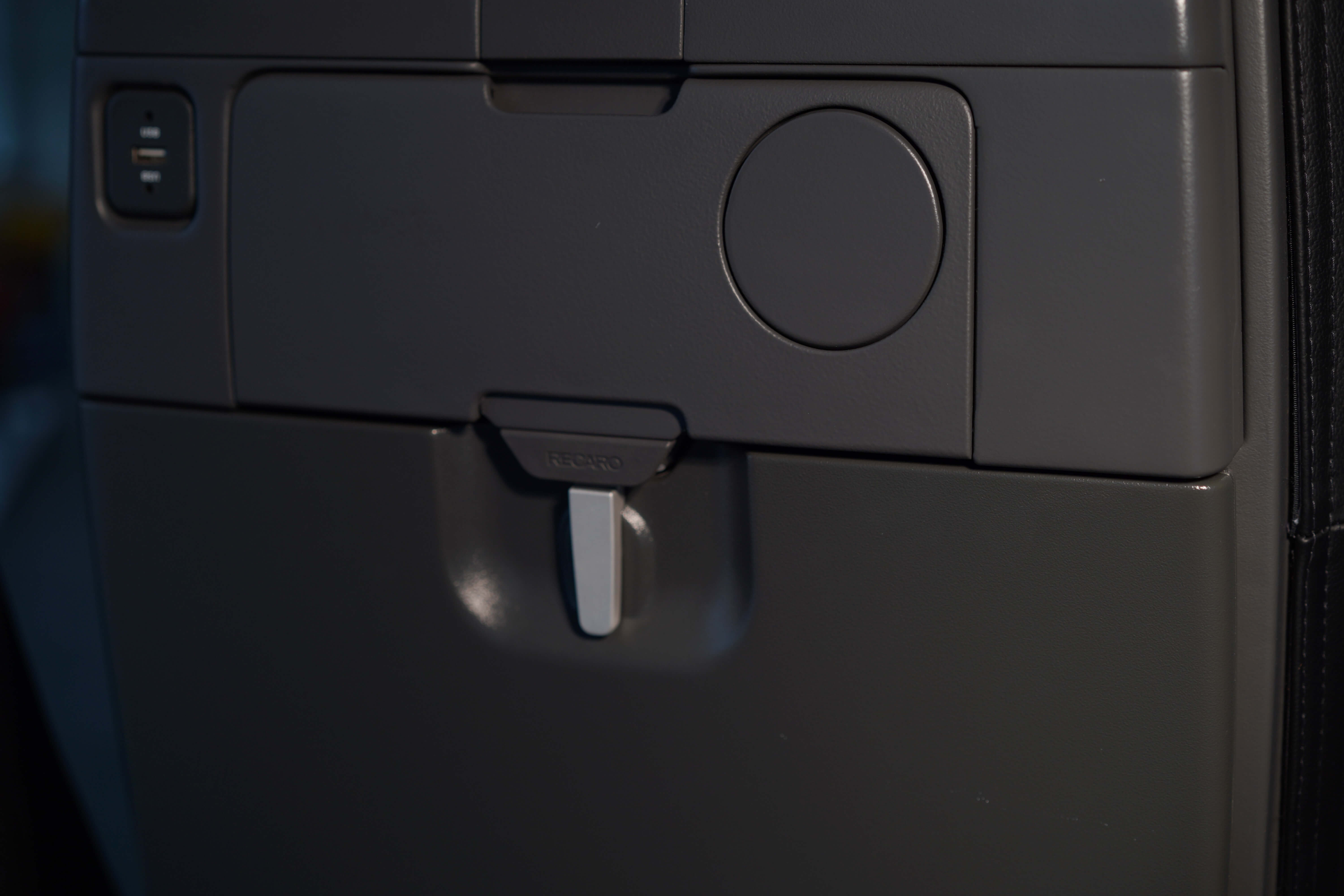
The R Sphere’s sustainable materials allow for better end-of-life recyclability
The R Sphere’s sustainable materials allow for better end-of-life recyclability as well as for a reduction of waste and the integration of renewable resources into RECARO’s seating solutions. For Oldenbürger, this supports the balance between environmental responsibility, performance and visual appeal.
“At RECARO, we have a modular approach to seating which allows for modifications to be made to seats over time. This design for easier component separation, allows for individual components to be replaced rather than the entire seat, and are engineered to remain in service for many years,” he explains.
Once a seat has reached the end of its lifespan, RECARO offers services through its customer service teams to modify seats already in use. These updates and repairs aid in extending the life of RECARO’s seating solutions for airlines. Oldenbürger adds that aircraft seats are often transferred between airlines, further extending their operational lifetime.
Taking a long-life, modular approach to seat design also provides a strong foundation for end-of-life recycling. A foundation that RECARO plans to build upon in the coming years.
“Looking ahead, we aim to further improve the recyclability of our seats through design enhancements, making material recovery more efficient for specialized recycling companies with the technologies and expertise required to recover valuable materials and return them to value chains,” Oldenbürger affirms.
Evolving airline expectations
As passengers demand sustainability they can see, airlines are also shifting the expectation of what sustainable seating looks like. From a supplier perspective, Oldenbürger notes carriers increasingly value greater transparency on product sustainability.
“Beyond seat performance and lightweight, they are requesting reliable data and sustainability KPIs, particularly on Product Carbon Footprint, recycled content, recyclability and circularity,” he tells PAX Tech.
Compliance with evolving sustainability regulations is also becoming a standard requirement, which creates an opportunity for manufacturers to differentiate through more data-driven sustainable cabin solutions.
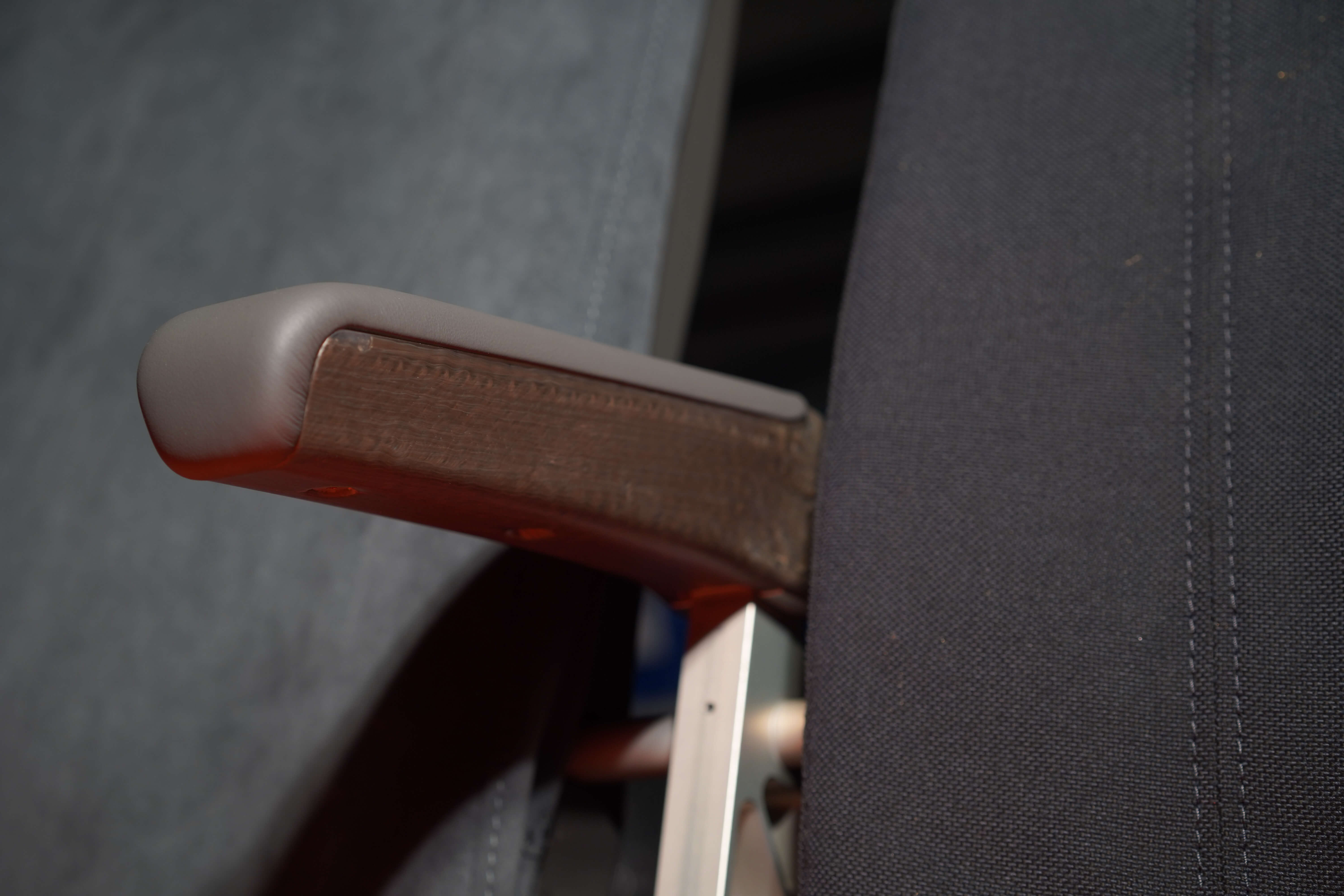
Once a seat has reaches the end of its lifespan, RECARO offers services through its customer service teams to modify seats already in use
Oldenbürger says attractive repair solutions that can prolong product life in service and requests for “take-back” programs for complete seats at end of life are also a trend suppliers are seeing from airline buyers at present.
“As a seat manufacturer, our focus is on designing seats for safety, durability and a long service life. The research placed behind the R Sphere has set the groundwork for future seating opportunities to encompass an overall sustainable seat,” Oldenbürger concludes.
