
Burrana introduces the new class of cabin power
This is a special feature from the June/July 2026 Seating & IFEC issue of PAX Tech, on page 46.
.jpg)
Burrana used its AIX 2026 campaign to position in-seat power as critical cabin infrastructure rather than a passenger amenity
Reliable access to power has become a foundational component of the passenger experience as airlines continue to invest in connectivity, wireless entertainment and personalized digital services.
As David Pook, VP Global Marketing and Sales, Burrana, explains, in-seat power has evolved from being a mere convenience to an expectation among travelers. For airlines with seatback entertainment, power supports the trend of increasingly integrated entertainment services between the personal device and the seatback screen.
“But for airlines operating a BYOD model, its role becomes even more critical,” he tells PAX Tech. “The passenger's phone, tablet or laptop is now the sole gateway to entertainment, connectivity, shopping and onboard services. Without in-seat power, access to these services is limited.”

David Pook, VP Global Marketing and Sales, Burrana
As a result, Burrana used its Aircraft Interiors Expo 2026 campaign to redefine both the role of in-seat power and the category itself, positioning it as critical cabin infrastructure rather than a passenger amenity. Under the banner of The New Class of Power, Burrana presented RISE Power as intelligent cabin infrastructure capable of enabling a growing ecosystem of digital services, operational insights, passenger engagement opportunities and future innovations delivered through personal devices.
“The message reflects a fundamental shift in how onboard power is viewed. It is no longer simply about charging devices; it is about enabling the connected cabin ecosystem that modern airlines are building around,” says Pook.
A foundational infrastructure
Passengers are relying on mobile devices, shifting their expectations of how that experience should be more personal.
“Many of the digital services airlines invest in depend on passengers having access to a charged device. Whether it is entertainment, connectivity, retail opportunities or food and beverage ordering or other personalized services, none of these experiences work effectively if passengers are concerned about battery life,” Pook explains.
While he acknowledges that in-seat power may not be the most visible part of the passenger experience, it is a key component to unlocking the full range of services airlines use to differentiate themselves, increase ancillary revenue and strengthen passenger engagement.
A flexible future
Just as the technology passengers bring onboard evolves rapidly, so must the solutions airlines provide to support these onboard experiences.
Pook cites the industry's transition from 110V to USB-A to USB-C as one example, driven by changing consumer devices and growing demand for faster charging, while reducing size, weight and total cost of ownership.
“Our focus is on providing flexible, future-ready solutions that support today's devices while remaining ready for what is next,” he explains. “We aim to make that transition as simple and cost-effective as possible, helping airlines modernize the passenger experience without unnecessary complexity or disruption.”
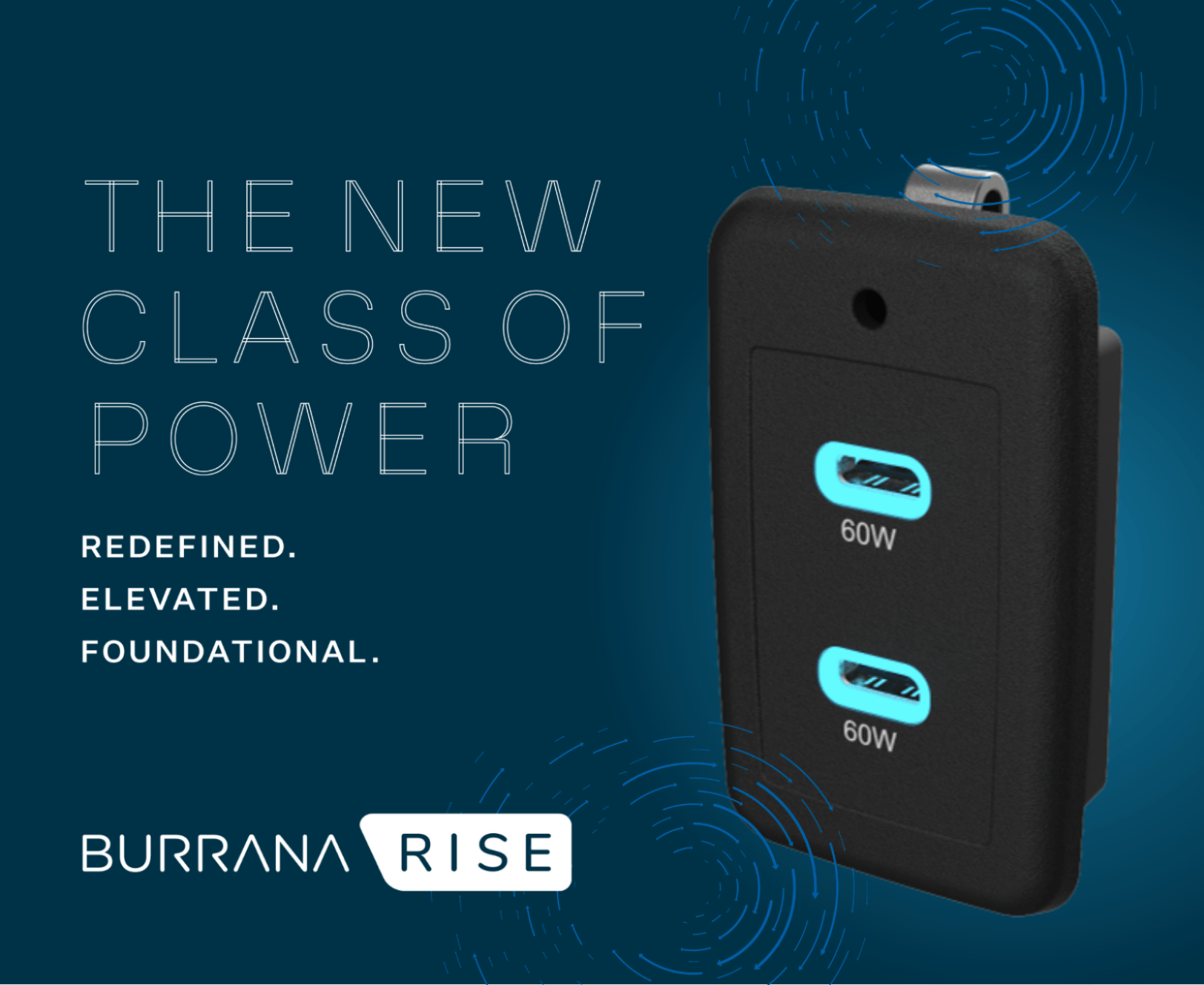
Burrana positions RISE Power as intelligent cabin infrastructure capable of enabling a growing ecosystem of digital services
Burrana is currently in the process of upgrading one of its customers from USB-A to USB-C 60W outlets and removing the AC outlets, without any new LRUs or cables. Pook expects this upgrade to be accomplished overnight, allowing aircraft to return to service the next day with minimal operational impact.
“At Burrana, we have challenged traditional approaches to in-seat power by rethinking how
power is distributed and managed throughout the aircraft. The result is a lighter, simpler and more intelligent architecture that helps airlines reduce complexity while maintaining a consistent passenger experience and adhering to OEM linefit requirements,” he explains.
Also key to in-seat power innovation is the ability to capture and analyze power usage data
across the cabin. Burrana’s RISE Power system delivers insights into charging demand, device usage trends and system performance for the airline, helping customers to optimize operations, provide proactive maintenance and make more informed decisions about future cabin investments.
Pook explains that these innovations transform cabin power from a utility to a smarter, more efficient platform, capable of doing more on a limited power budget. This is also how he envisions the next generation of cabin power: focused on delivering more capability with greater efficiency.
Defining the next generation
Passenger devices, charging standards and digital services are constantly evolving, often outpacing cabin refresh cycles. This reinforces the demand from airlines for flexible, scalable cabin power systems that can support future technologies, services and passenger behaviors.
For Pook, flexibility, intelligence and adaptability will define the future of in-seat power, allowing airlines to upgrade systems without entirely replacing them.
“We also believe data and analytics will become one of the defining characteristics of next generation cabin power. In the same way airlines use operational and connectivity data to improve performance, power systems will increasingly provide valuable intelligence about passenger behavior, device trends and cabin utilization. The ability to turn power infrastructure into a source of actionable insights creates opportunities far beyond charging,” Pook explains.
For airlines, he believes the most effective long-term strategy is to invest in a platform that is scalable, upgradeable and designed for change.
“That is the essence of ‘The New Class of Power,’” Pook explains. “Not just meeting today’s charging needs but creating a foundation for tomorrow's connected cabin.”
