
IFPL Group delivers adaptable in-seat power design with Transform
This is a special feature from the April 2026 AIX Hamburg issue of PAX Tech, on page 44.
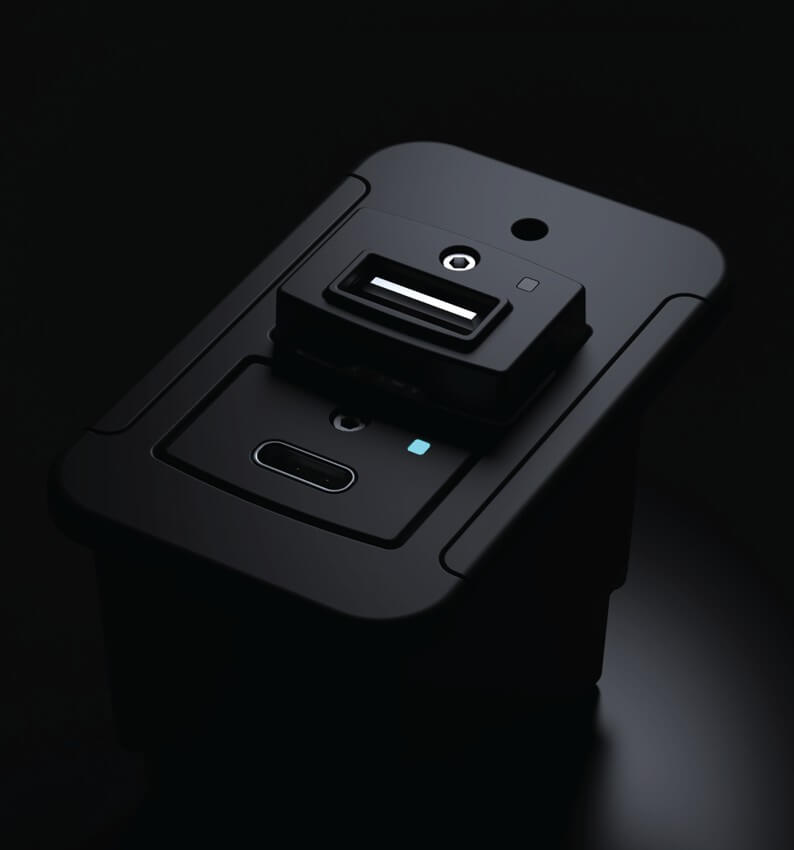
Passenger demand for powering PEDs is rising quickly, largely driven by the growing adoption of high-wattage USB-C power delivery
While operators have historically had to choose which seats receive power or limit output levels to stay within aircraft electrical constraints, IFPL Group’s wireless in-seat power architecture Transform eliminates the need to design around theoretical peak draw. Instead of assigning fixed wattage per seat, Transform operates as a coordinated, aircraft-wide power management network, monitoring real-time demand and ensuring total power consumption remains within the certified aircraft electrical scope.

Dan Rust, Head of Design, IFPL Group
“The industry is moving beyond simply installing outlets. The next stage of cabin development requires power systems that are intelligent, lightweight and adaptable by design,” Dan Rust, Head of Design, IFPL Group, tells PAX Tech.
Intelligent power allocation
IFPL’s Transform system allows every unit to communicate with the others onboard and intelligently manage load in real time. As a result, the system can provide full output under normal conditions and modulate when demand approaches available supply, managing power as a shared resource onboard. This means that no passenger is left without the necessary power for their devices.
“Aircraft electrical generation and distribution capacity is finite, so historically airlines have either limited power provision to selected classes of seats or imposed fixed output caps per outlet so they guarantee the aggregate load will never exceed the supply available,” explains Rust.
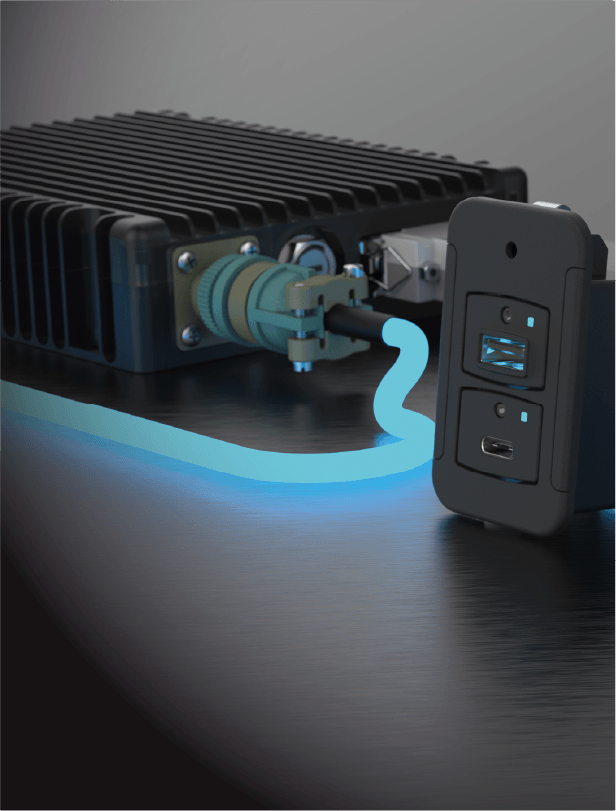
IFPL’s wireless in-seat power architecture eliminates the need to design around theoretical peak draw
This means that in-seat power systems have been designed to accommodate worst-case load assumptions – an approach that Rust says inevitably restricts what an airline can do with its in-seat power offering, limiting cabin flexibility and passenger access.
“Transform leverages distributed intelligence embedded within each power module, enabling every unit to operate as an autonomous sensing and decision‑making node,” Rust says. “Rather than functioning as isolated outlets with predetermined allocations, each unit contributes to a self-managed power pool.”
For airlines, the advantage of intelligent, real-time load management is full-seat power provision without electrical over-provisioning and reduced system weight through optimized power supply sizing. Rust also notes that Transform offers airlines greater installation flexibility across retrofit programs and simplified integration within existing certification frameworks.
“Combined with IFPL’s lightweight, modular cartridge-based design, and no requirement for a system MCU (Master Control Unit), this reduces installation time and complexity while maintaining compliance and serviceability,” he explains.
For passengers, the result is consistent, reliable access to power and high-performance charging regardless of where they are seated in the cabin. It introduces a future-proof platform that can adapt to the next generation of passenger power demands.
Extending life, protecting investment
Passenger demand for powering PEDs is rising quickly, largely driven by the growing adoption of high-wattage USB-C power delivery for laptops and other high-power electronics. Designing around fixed, seat-level allocations risks locking airlines into systems that become outdated within a single fleet cycle.
“Because intelligence is managed within each unit, Transform has no requirement for a centralized MCU. Removing the MCU eliminates a single point of failure, reduces wiring complexity, lowers installation weight and simplifies integration for retrofit programs,” he explains. “In engineering terms, it extends the useful life of the installation. In operational terms, it protects the airline’s investment.”
Transform extends beyond power delivery by integrating seamlessly into Cabin Management Systems (CMS) and other on-board platforms, enabling airlines to monitor, control and configure in-seat power as part of the connected cabin environment.
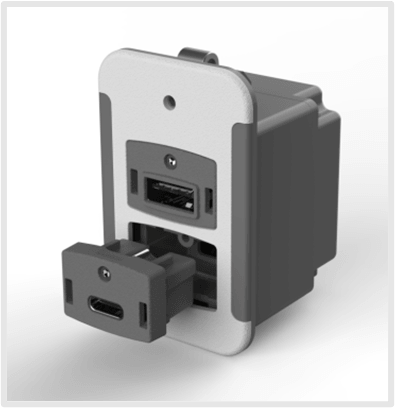
Transform can provide full output under normal conditions and modulate when demand approaches available supply
“By supporting ancillary revenue opportunities, including pay-for- power capability, it allows operators to introduce flexible access models, or premium charging services aligned with commercial strategies,” Rust notes.
In this way, in-seat power evolves from a standalone hardware feature into an intelligent, connected service that contributes operationally, commercially and digitally to the modern aircraft cabin.
For Rust, the future of in-seat power lies not in central control, but in distributed intelligence designed to scale with the connected cabin.
“The next generation of cabin power will not be defined by hardware limits, but by how intelligently those limits are managed,” he concludes.
