
Panasonic Technical Services sees global aftermarket growth
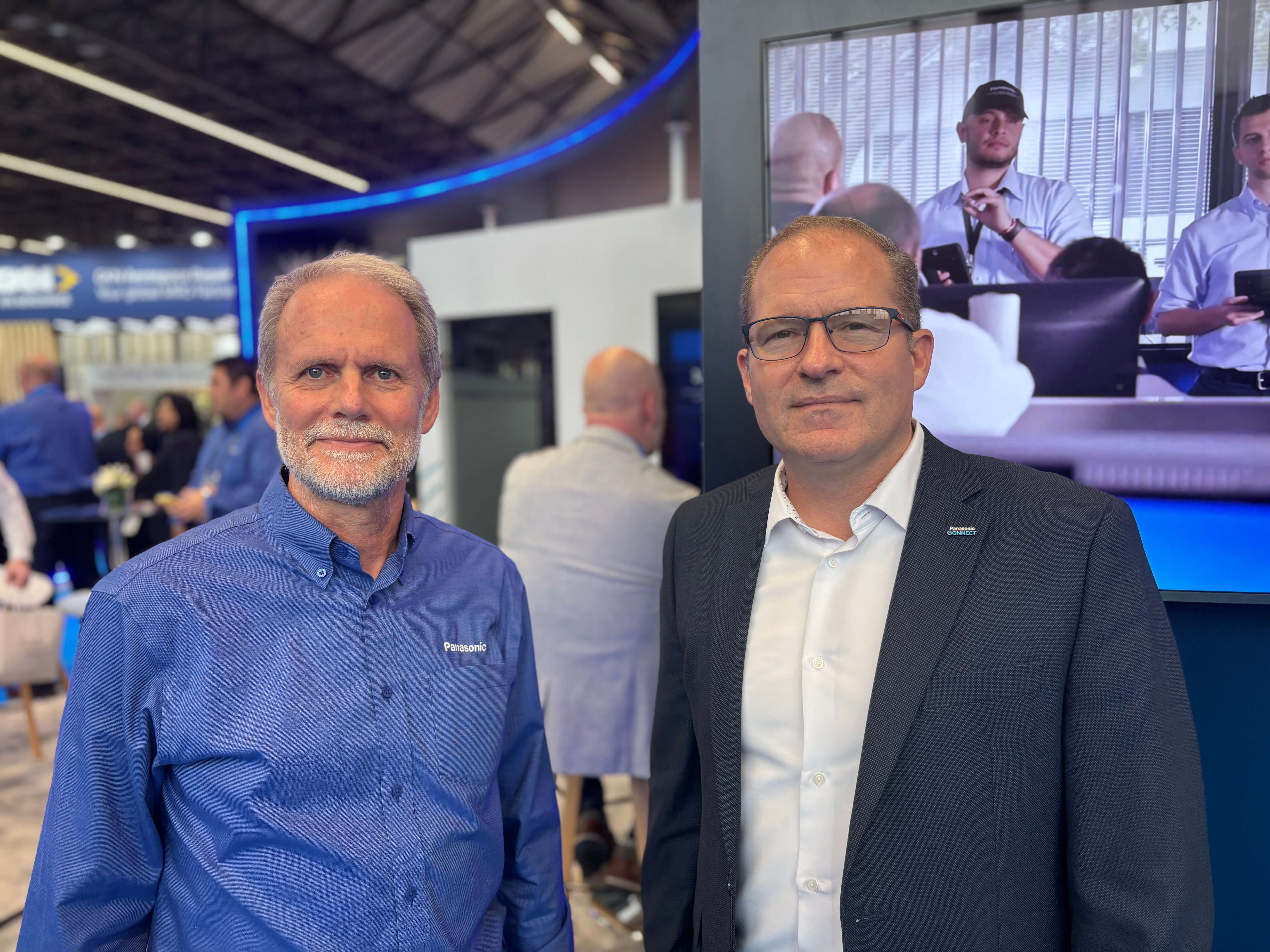
Emmanuel de Traversay, Senior Director, PTS Sales and Marketing at Panasonic Avionics Corporation (left) with PTS Business Unit Leader Tom Eskola at MRO Europe 2026 in Amsterdam
Panasonic Technical Services (PTS), the aftermarket services arm of Panasonic Avionics, marked its 30th anniversary last month. At Aviation Week’s MRO Europe last week, PAX Tech sat down with PTS Business Unit Leader Tom Eskola to discuss how the team supports airlines once inflight systems are in service.
“We are a longstanding company,” Eskola says. “We have the best products in the market and, I think, have the best service in the market.”
Beyond Panasonic Avionics’ core competency of seatback IFE, Eskola highlights three business lines. Connectivity provides the antennas and network infrastructure and manages signals worldwide. Digital Solutions covers seatback software and services, including a software-defined architecture that makes it easier to update features and keep onboard content current. PTS provides aftermarket support.
“Panasonic Technical Services manages the aftermarket for all of the systems we deploy,” Eskola explains, noting that aftermarket in this case specifically refers to maintenance, repair and overhaul.
He sums up Panasonic Technical Services’ role through the lens of passenger experience.
“We are the organization that is responsible for making sure that when these systems take off, that every seat works properly and the system has everything it needs to be successful and to give passengers everything they are hoping to receive onboard.”
PTS operates on different business models for airlines, depending on the customer’s preference. Eskola explains that while some airlines prefer to buy the system and manage maintenance independently, PTS offers comprehensive packages.
“There are some airlines that want to make sure they are giving the best performance to the aircraft, to the system, to the passengers. To make sure that every time the aircraft takes off and that every passenger is satisfied,” Eskola says. “Those airline customers have a total care package with Panasonic.”
A PTS total care package can cover one or more line stations, where PTS keeps technicians and parts are on hand for onboard repairs. Eskola notes that repair agreements can use fixed pricing or a power-by-the-hour fee, depending on the business model.
Under its material programs, PTS owns, manages and replenishes spare parts on behalf of airlines, keeping the components specified in the contract available at agreed stations.
Eskola notes that PTS also has a technical advisory function, which is frequently bundled with its material program and technical advisory. In this arrangement, PTS’ teams monitor aircraft daily and make maintenance recommendations to stay ahead of any issues.
“Anything you put in front of a passenger is going to break at some point,” Eskola says. “We make sure the IFE system is working properly.”
Global growth
Eskola describes PTS’s aftermarket support as “comprehensive.”
During MRO Europe, Panasonic Avionics announced that Panasonic Technical Services has expanded its global Technical Ground Handling network to 14 locations, strengthening its full-aircraft line maintenance capabilities.
With 51 airport line stations around the world, six PTS repair centers and two contracted repair centers, PTS currently supports more than 4,000 aircraft. Its repair centers complete more than 10,000 repairs per month.
“Technical ground handling has presented a great growth opportunity for,” says Eskola.
PTS’s expanding ground handling footprint builds on that existing infrastructure, extending its expertise beyond IFEC maintenance into broader aircraft line maintenance support.
“We are opening up a total of six new line stations around the world,” Eskola tells PAX Tech in Amsterdam, including contracts in Saudia Arabia. “We have already opened a line station in Riyadh and are in the process of opening a line station in Jeddah.”
He says both locations are key to expanding Panasonic's network. Staffing is underway at two more line stations in Mumbai and New Delhi, India, with operational control set to begin in early 2027.
In addition, PTS is opening a new line station in Orlando, Florida, which Eskola says presents a key opportunity for Panasonic to continue supporting United Airlines at one of its key hubs.
The latest expansion is at Western Sydney International Airport (WSI), where PTS is the first MRO provider to establish onsite operations. The new capability extends PTS’ Technical Ground Handling presence across Australia, New Zealand, the United Kingdom and the United States.
Eskola calls Panasonic’s early commitment to line maintenance for freighters and passenger aircraft at WSI a “great success story for Panasonic.” The operation services authorized airlines and can expand as traffic grows at Australia’s newest international gateway.
MRO in the European market
Reflecting on what makes the European MRO market unique, Eskola says the consolidation of airlines within partnerships, like Lufthansa Group and IAG, mean many carriers are sharing resources.
“That is allowing them to consolidate their purchasing power and make decisions for the group, not just for individual airlines. It changes the market dynamics,” he adds, explaining that the approach strengthens ties among airlines within each group and intensifies competition between groups.
As Emmanuel de Traversay, Senior Director, PTS Sales and Marketing at Panasonic Avionics Corporation, points out, there is a recent trend of seatback IFE being installed on narrowbody aircraft for short-haul routes
“There is a real push in the industry to differentiate or drive the passenger experience, even on very short flights,” he explains. “It may open new business opportunities that did not exist before.”
While this is primarily a trend among North American carriers, such as JetBlue and American Airlines, de Traversay says he expects to see the movement continue in other regions. He adds that European airlines rely more heavily on suppliers such as PTS to manage parts and inventory.
