
Viasat puts flexibility and standardization at the center of IFC
This is a special feature from the October 2026 MRO Europe issue of PAX Tech, on page 28.

In August, ViaSat-3 F3 entered service in APAC, delivering greater flexibility, coverage and capacity across the network
As the pace of satellite innovation technology surges, the importance of building flexibility into connected aircraft amplifies. For Viasat, that approach focuses on combining industry standard architecture while consolidating the number of components airlines need to install and maintain.
Brad Smith, CTO for Aviation at Viasat, tells PAX Tech that in today’s market, retrofitting for the future comes down to building on a standard, allowing airlines to swap one module for the next rather than starting from scratch when new innovations are introduced.
“It may be possible to move slightly faster by skipping the standards,” he says, citing ARINC 791 and 792 as examples. “We have found that airline customers come back around to standardization every time, because that is what lets them upgrade a system, inspect it and maintain it without pulling the aircraft apart.”
For Smith, the rapid rate at which aviation technology evolves strengthens the case for standardization with modularity as a complementary approach. While standardization enables modularity, a focus on software and integration does the heavy lifting in cases where upgrades are available.

Brad Smith, CTO for Aviation at Viasat
“An aircraft flies for 30 years. Nobody wants to redesign the cabin every time the technology turns over,” he notes.
Smith emphasizes that a well-planned inflight connectivity architecture allows airlines to add capabilities through software updates without having to modify the hardware each time.
“Modularity still matters for the day an airline genuinely does need new hardware, but the better outcome is not needing to open up the aircraft at all, just push a software update and unlock something the system could already do,” he says.
Upgrades without inconvenience
Viasat is designing connectivity hardware and software to accommodate future technology and service upgrades.
The innovations focus on three goals: aligning with industry standards, shifting as much functionality as possible from hardware to software and simplifying the system itself. Fewer components mean fewer interfaces to connect, fewer problems for a customer to troubleshoot and less equipment to maintain, Smith explains.
The original ARINC 791 spec, defining installation of first-generation Ku-band and Ka-band satellite communication systems on commercial aircraft, allowed for five or six separate components. Viasat collapsed that to three in its first design a decade ago and has continued to streamline the process ever since.
“We are integrating the modem right into the antenna and removing another interface entirely,” Smith says.
As far as reducing install time and minimizing aircraft downtime, Smith underscores the importance of standardization.
“Viasat can work directly with the OEM and plug into what is already there instead of driving a major modification,” he says.

While standardization enables modularity, a focus on software and integration does the heavy lifting in cases where upgrades are available
Cost considerations
When selecting connectivity solutions that will stand the test of time, airlines should consider the system’s track record, reliability, the hardware’s service historyand ease of maintenance.
Smith emphasizes that cost goes beyond the invoice.
“How easy is it to troubleshoot? How easy is it to pull a box and swap it?” he asks, highlighting the practical questions airlines should consider when evaluating options. Inspection requirements should also factor into the decision.
“If a connectivity system is installed in a way that forces an early check, outside your normal C check window, that is real money and real downtime,” Smith points out. “Heritage and reliability are not nice-to-haves. They are what keeps your maintenance schedule on your terms, not the system’s.”
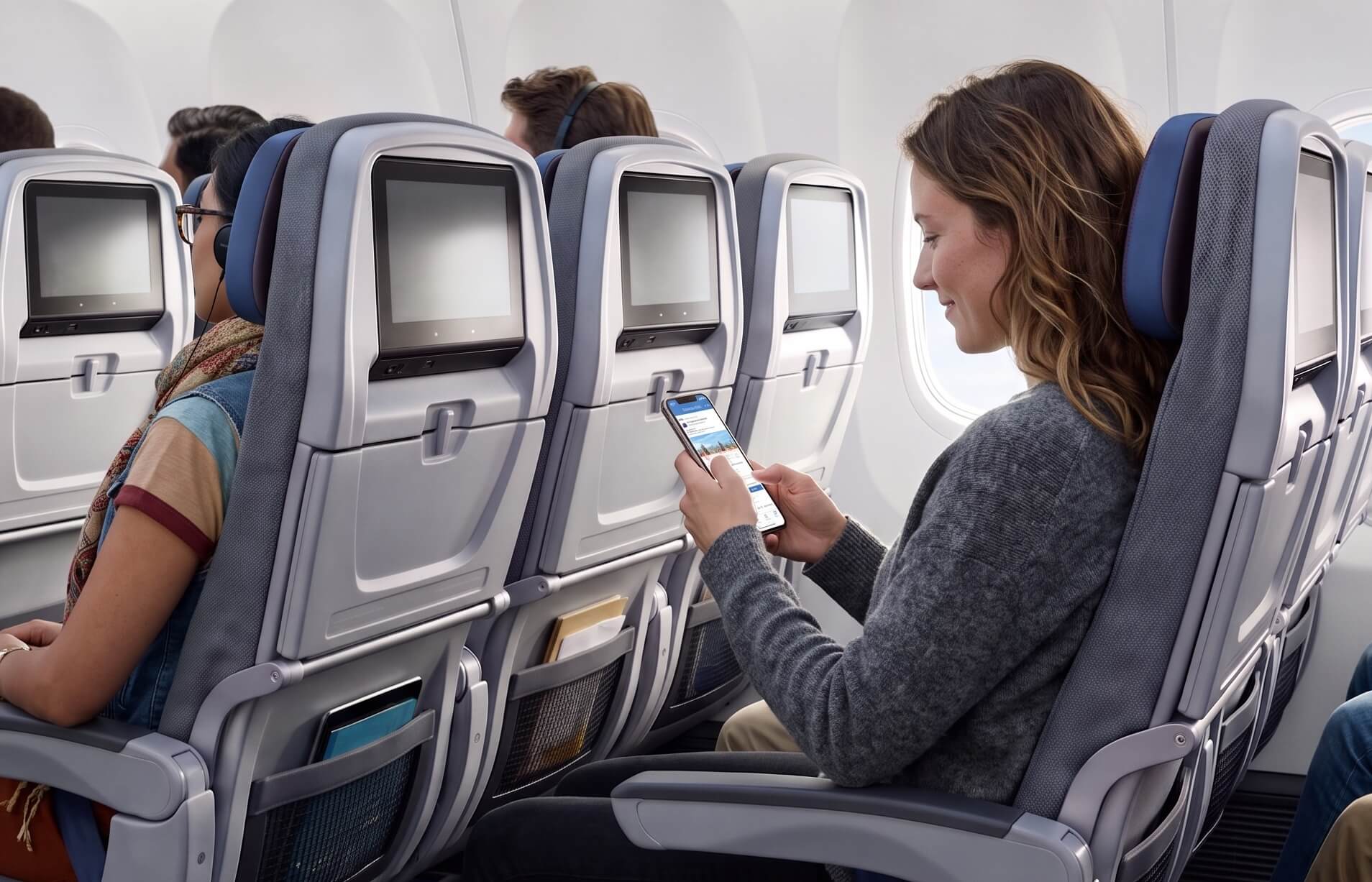
As the pace of satellite innovation technology surges, the importance of building flexibility into connected aircraft amplifies
Connecting APAC and beyond
In August, ViaSat-3 F3 entered service in APAC, delivering greater flexibility, coverage and capacity across the network, setting the provider up to pursue growth opportunities in an underserved, attractive market.
“It has added an immense amount of flexible, steerable capacity in some of the fastest-growing aviation markets in the world. It is serving the global carriers that fly through the region every day too,” Smith says.
The news comes as Viasat heads to Singapore for APEX FTE EXPO next month where Smith expects conversations to lean toward digital products, entertainment and the passenger experience rather than pure connectivity plumbing. Which, he says, is reflective of Viasat’s story this year.
“Part of what that new capacity (from VS3 F3 and VS3 F2) lets airlines do is differentiate themselves and the connected experience they choose, not just get people online,” he says, adding, “If you want to protect that investment over the next decade, prioritize a system that stays reliable and current, not just what it can do on day one.”
