
Touch Inflight Solutions moves beyond traditional IFE content delivery
This is a special feature from the October 2026 MRO Europe issue of PAX Tech, on page 22.

Alex Glavonich, VP of Creative Strategy, Brand & Innovation, Touch Inflight Solutions
As more airlines bring high-speed connectivity onboard, the passenger inflight entertainment experience is rapidly evolving. And with it, the traditional Content Service Provider (CSP) model.
As Alex Glavonich, VP of Creative Strategy, Brand & Innovation at Touch Inflight Solutions tells PAX Tech, “Digital Experience Management, which combines media licensing and technical processing with true experience management, is replacing the traditional CSP model of licensing, encoding and content delivery.”
Content positioning and editorial control can now be managed through web technologies rather than static hardware. Inflight connectivity (IFC) plays a large part in driving this shift which Glavonich calls “a double-edged sword,” because once passengers have unrestricted high-speed access, they can easily switch to the apps they already use on the ground.
For an airline’s IFE platform, the plethora of content choices mean earning passenger attention, rather than assuming it.
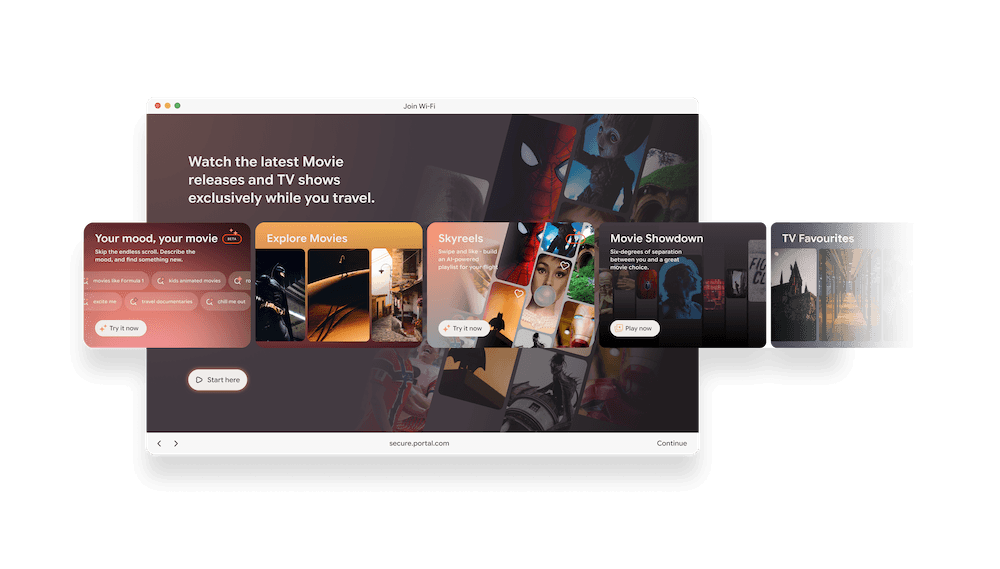
Voyager, Touch’s end-to-end media engagement platform, is designed to give airline teams direct control over the passenger experience via activation campaigns and content presentation
Adapting to demand
Passengers increasingly expect the on-demand access, personalization, multiple formats and freedom to move between screens that they experience in their daily life, while onboard. Touch has adapted to that shift by moving beyond the licensing-and-delivery model.
“Alongside our core expertise in content strategy, curation and licensing, we are using cloud-native workflows, supporting incremental over-the-air delivery and direct streaming models, and expanding into connected formats and services such as OTT, IPTV and FAST where the technology and rights environment allow,” Glavonich explains.
He notes that the changing role of the CSP is no longer just about deciding what goes in the content library, but determining what deserves attention, how passengers access that content and how to make it feel more contextual and relevant to the journey.
“Technology gives us more possibilities. Our job is to turn those possibilities into a better entertainment experience,” he says.

For CSP’s like Touch, the best content strategy embraces the various ways users want to engage with onboard systems
Curation vs. connectivity
For CSP’s like Touch, the best content strategy embraces the various ways users want to engage with onboard systems.
“We do not see curated IFE, bring-your-own-device and connectivity as competing propositions,” Glavonich says. “The strongest experience combines them – connectivity expands the passenger’s choices, technology enables the experience and curation turns abundance into relevance.”
As Glavonich explains, access and curation solve different problems: while passengers have near-unlimited entertainment at their fingertips, curation answers the question of what is worth watching on the journey.
“As access becomes less scarce, relevance becomes more valuable,” he says, pointing to the unique role of curated IFE in delivering this relevance by considering the context of the passenger’s route.
Curation allows an airline to express its brand through the content it champions, the voices it introduces and the experiences it builds around it. Rather than offering exclusive titles, differentiation comes from using passenger data to shape discovery and create a dynamic, engaging entertainment experience tailored to the airline’s audience.
“Good content strategy is also about interpreting why, trying something new and learning from it. That is how curation becomes more than selecting titles and starts becoming part of what makes the airline experience distinctive,” Glavonich says.
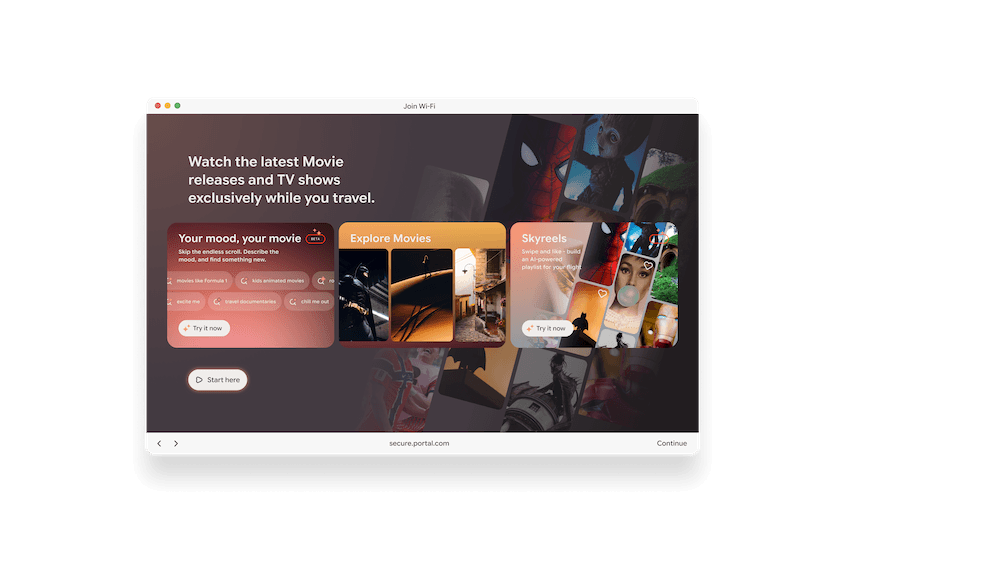
Content positioning and editorial control can now be managed through web technologies rather than static hardware
Personalizing IFE platforms
Using data to personalize the content experience onboard is another way Touch is working to retain passenger attention.
“The IFE platform is built around a closed data loop. Every passenger interaction, from plays and pauses to favorites, UI clicks, and search queries, feeds into a central data lake. That data then helps inform content curation and experience decisions for the next cycle,” Glavonich explains.
Touch is building an agentic system on that foundation for personalization, using contextual and behavioral data to create more relevant content collections for each passenger. Voyager, Touch’s end-to-end media engagement platform, is designed to give airline teams direct control over the passenger experience via activation campaigns and content presentation. Pre-flight, inflight and post-flight are all covered by the same cloud-native system, eliminating the need to manage three separate systems. The platform supports direct cloud streaming where higher-bandwidth connectivity is available, or incremental over-the-air updates to an onboard server for aircraft without dependable connectivity.
The goal, Glavonich says, is to get new content in front of passengers quickly.
“To pioneer an avant-garde and truly intuitive user interface, Touch strategically partners with specialized industry experts such as the renowned London design firm Monokoto, ensuring the digital experience instantly captivates travelers,” he adds.
Touch has already secured a major airline customer on the platform, with further proof-of-concepts underway across other parts of the solution.
