
Rosen Aviation and Axinom unveil cloud powered seatback platform
This is a special feature from the October 2026 MRO Europe issue of PAX Tech, on page 26.
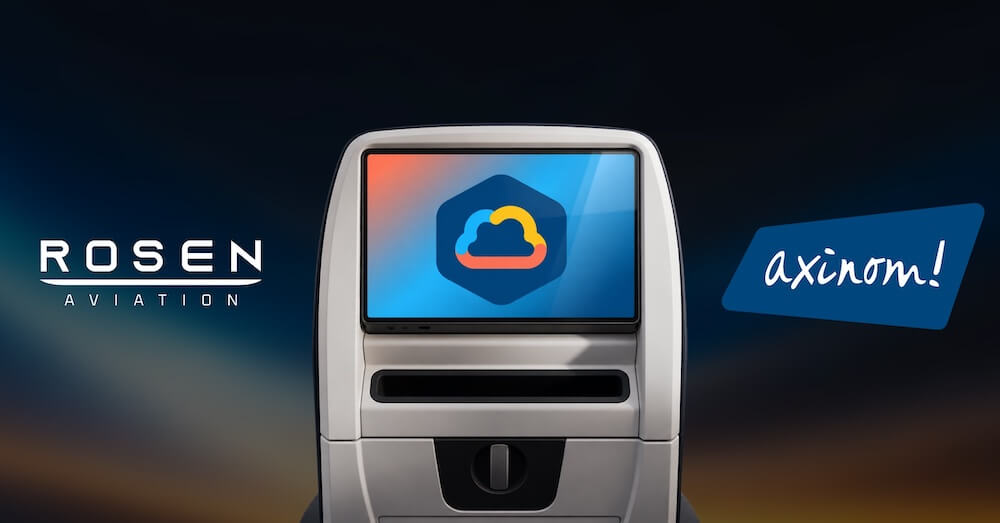
Rosen and Axinom have unveiled the Connected Seatback Platform, a lightweight, cloud-powered wireless seatback solution that positions the screen as the airline’s digital surface in the air
Rosen Aviation and Axinom have unveiled the Connected Seatback Platform, a lightweight, cloud-powered wireless seatback solution that positions the screen as the airline’s digital surface in the air. Combining Rosen’s hardware displays with Axinom’s software, the platform provides a single foundation for entertainment, commerce, loyalty, disruption management and other airline services, with the cloud serving as the system’s “brain.”
The platform rethinks traditional inflight entertainment architecture, replacing bulky seatback systems tied to a vendor’s closed ecosystem with a lightweight, cloud-connected screen at the center of the passenger experience.

Lee Clark, Senior Vice President Strategy, Rosen Aviation
“Taking the data wiring out of the cabin raises the bar for the display. Each screen has to run the airline’s applications on its own and hold up in a commercial cabin for years,” Lee Clark, Senior Vice President Strategy at Rosen Aviation, tells PAX Tech. “That is the standard we have built toward in business aviation for decades, and we are bringing it to commercial volumes.”
LEO leads the way
Axinom and Rosen Aviation are presenting the Connected Seatback Platform as a new approach to IFE enabled by LEO satellite connectivity.
According to Axinom CEO Ralph Wagner, traditional seatback systems relied on onboard content servers and closed vendor systems because aircraft internet was slow and limited. Faster, gate-to-gate connectivity now allows for a more flexible, cloud-connected approach.

Ralph Wagner, CEO, Axinom
Rosen builds the display, while Axinom supplies the software connected to the cloud. Traditional systems bundle screens, servers, software and content synchronization under one supplier, with all components designed and updated together.
“What makes the partnership work is that two specialists come together, each doing what they do best,” says Wagner. “To get the full benefit of a fleet connected over LEO, the airline's software should be designed for the cloud, for servers onboard, and for the seatback screens alike, and connect to the aircraft's own systems, from avionics data to cabin devices.”
The partnership separates hardware and software, giving airlines flexibility to choose and upgrade each independently. Axinom's software is hardware-agnostic and works across hardware platforms while Rosen Aviation's displays are software-agnostic and support various programs, allowing airlines to replace individual components without overhauling the entire system.
“What the airline gets is not a turnkey entertainment system, but a foundation it owns and builds its services on,” Wagner explains.
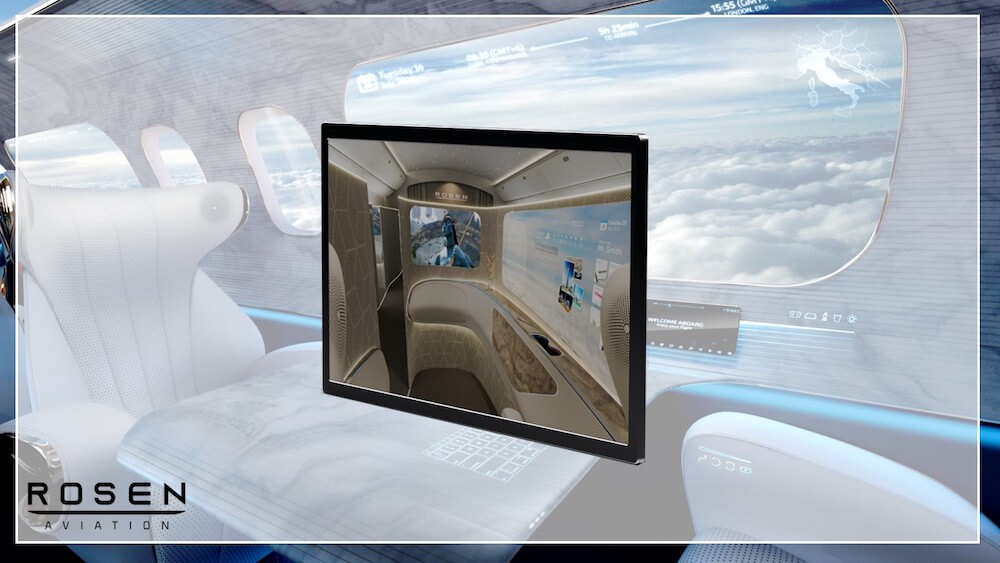
Rosen Aviation offers a variety of lightweight displays, ranging from 11 to 97 inches, ideal for Economy seatbacks to large shared cabin surfaces
The platform and partnership
Rosen Aviation sources displays from major manufacturers and carries out avionics engineering, electronics development and structural integration in-house, delivering displays that are built to the airline’s specification. The design features enable lightweight displays, ranging from 11 to 97 inches, ideal for Economy seatbacks to large shared cabin surfaces.
In-seat spatial audio adds a personalized three-dimensional sound field at the seat, potentially eliminating the need for headphones. Where to invest is a decision per cabin, Rosen’s Clark says. The same software foundation provided by Axinom runs across the whole aircraft, while the fit-out is chosen class by class.
“For decades, the seatback screen has been seen purely as an entertainment system. We see it as the one screen in the passenger journey that the airline fully controls,” Axinom’s Wagner explains. “With this platform the airline can finally use it that way, but entertainment is one application among many.”
On the software side, the platform reaches beyond the screen. Cloud-managed certificates make each display a trusted device in the airline's infrastructure, while the open ARINC 853/CSMIM standard for cabin messaging allows screens to exchange data with the rest of the cabin, such as lighting, seats, sensors and crew devices.
A system that scales
Wagner points to passenger engagement as the key benefit for airlines in adopting the Connected Seatback Platform.
“For the first time, the airline knows who is sitting in the seat,” he explains. “The passenger pairs the airline's app on their phone with the seat via the cloud, and the screen loads their profile. The airline can then tailor what it shows.”
Beyond entertainment, passengers can manage their whole trip from the seat. Relevant flight information, such as disruption alerts, reaches the seat in real time, allowing passengers to rebook from their seat, rather than on a small phone screen or queuing at a transfer desk.
“With the seatback connected, the cabin becomes one more touchpoint in the ecosystem the airline already runs, rather than a gap between two airports, and the journey carries on before the flight, onboard and after landing. The data flows back to the airline, which can leverage it to keep improving the passenger experience on every future flight,” Wagner says.
The approach also supports fleet-wide scalability, with apps, content and software updates delivered through the cloud, allowing airlines to introduce new features and services without modifying onboard hardware.
“Installation and retrofit take considerably less effort, and a single display can be swapped and registered from the ground without touching the rest of the system,” adds Wagner.
