
Live sport reshapes IFE strategies for FIFA World Cup 26™ and beyond
This is a special feature from the June/July 2026 Seating & IFEC issue of PAX Tech, on page 36.
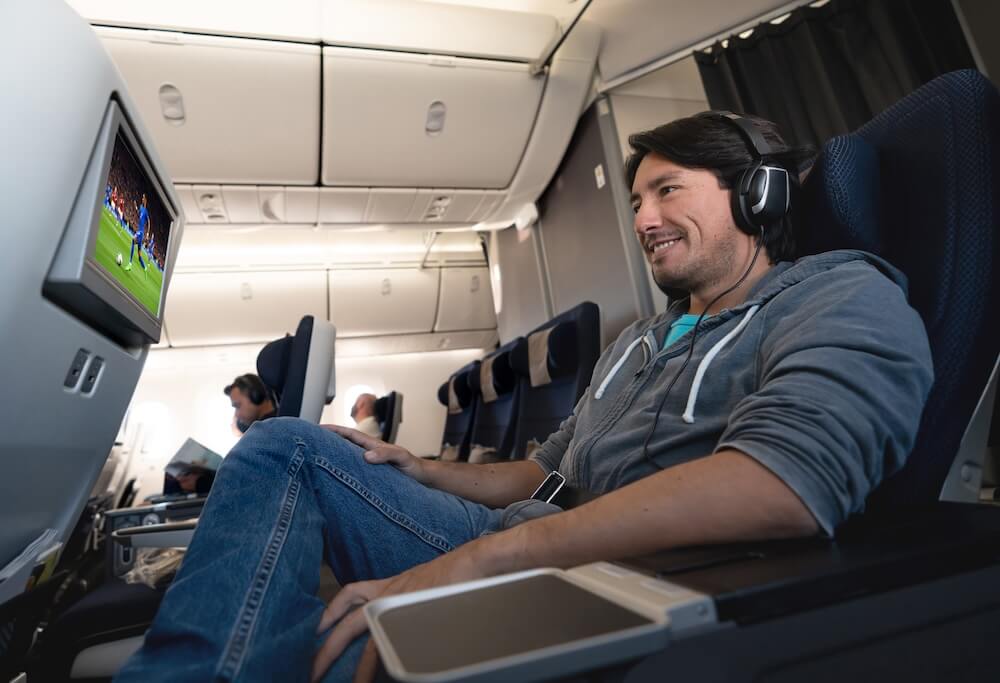
IMG’s recent passenger survey findings show that 72 percent of passengers would consider switching airlines if their preferred carrier did not offer live sports coverage during a major tournament
FOMO (the fear of missing out) is a natural extension of the desire for human connection. People want to feel included in social events and cultural moments, especially as the world becomes more digitally connected.
For airlines, this expectation creates the ideal opportunity to deliver a collective onboard experience through live entertainment, creating shared moments that passengers will not only feel like they are part of, but will reminisce on for years to come. This summer, the can’t-miss event is FIFA World Cup 26™.
No missed moments
Suppliers are supporting airlines through navigating the complex technical realities of delivering live content onboard.
IMG has been broadcasting live sport inflight for the last 14 years via its dedicated Sport 24 and Sport 24 Extra channels. It is the exclusive onboard broadcaster of FIFA World Cup 26 on international and domestic routes outside the U.S. and Canada, and a non-exclusive onboard broadcaster on routes within the countries.
Beyond licensing the rights to inflight content, IMG works closely with airlines, connectivity providers and inflight entertainment partners to ensure live matches are delivered seamlessly to passengers.

(From left) Richard Wise, SVP Content & Channels, IMG; Kimberly Twiggs, Vice President, DIRECTV IN FLIGHT; Edwin Edillon, Head of Product, Viasat
“The FIFA World Cup is one of those rare events that captures global attention regardless of geography, and our job is to ensure passengers do not have to choose between traveling and staying connected to those moments,” Richard Wise, SVP Content & Channels, IMG, tells PAX Tech this summer.
For airlines, the World Cup presents an opportunity to offer something exciting to passengers.
As Kimberly Twiggs, Vice President of DIRECTV IN FLIGHT says, “We have seen demand for live sports continue to grow as airlines look for new ways to elevate the passenger experience. Major global events such as the FIFA World Cup 26 are especially important because they bring together audiences from around the world and create a shared viewing experience that few other forms of content can match.”
With 80 percent of travelers revealing it is important for airlines to offer IFE, the need for live coverage intensifies.
As a result, Twiggs says airlines tend to view premium live sports, and the unmissable moments that come with them, as a valuable differentiator.
Similarly, IMG’s recent passenger survey findings show that 72 percent of passengers would consider switching airlines if their preferred carrier did not offer live sports coverage during a major tournament.
“The expectation around connectivity has changed dramatically. Today's travelers are used to being connected wherever they are, and increasingly that extends to live sport,” IMG’s Wise affirms.
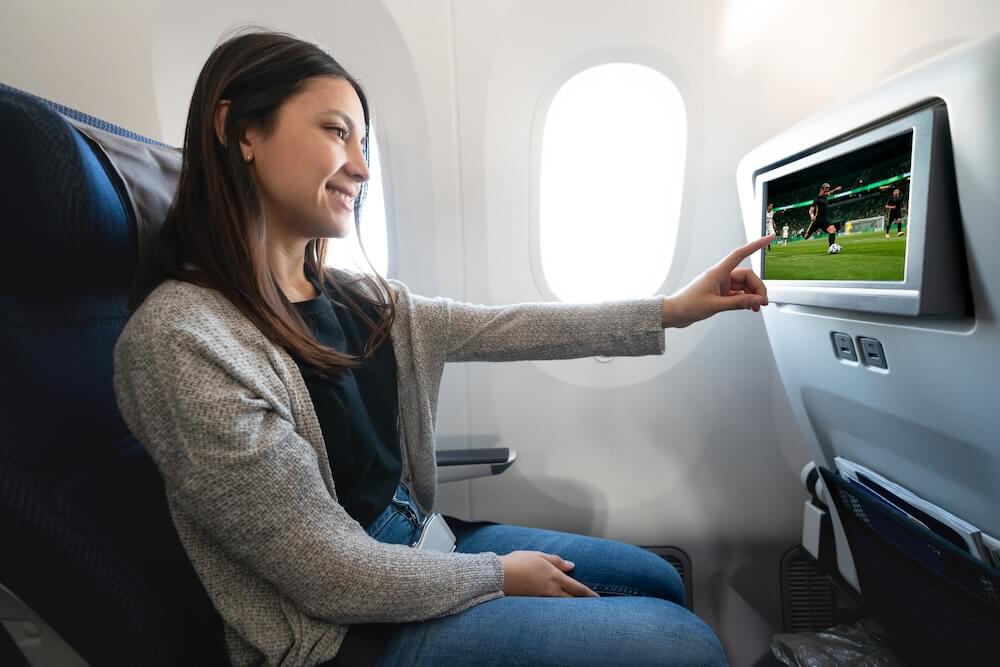
When evaluating live sports programming, DIRECTV’s Twiggs says airlines are typically focused on three priorities: relevance, reliability and reach.
“They want access to marquee events that resonate with a broad passenger base, confidence that the content will be delivered consistently throughout the flight and a solution that can scale across routes and fleets,” she explains.
The FIFA World Cup 26™checks all three boxes, offering airlines the opportunity to connect passengers to one of the world's largest sporting events in real time, ensuring they never miss a cultural moment.
Navigating unique challenges
Suppliers are rising to the occasion, though it presents unique technical challenges.
As IMG’s Wise explains, the inflight ecosystem has evolved rapidly, with advances in connectivity, onboard technology and content delivery giving airlines more ways than ever to offer live sport coverage.
DIRECTV’s Twiggs echoes this, underscoring the challenges around licensing live events for onboard viewership.
“Bringing live FIFA World Cup 26™ content from the pitch to the aircraft cabin requires both the right content rights framework and a highly reliable distribution infrastructure,” she explains.
Providers must secure rights for onboard FIFA World Cup 26™ coverage and ensure regional compliance through coordination across rights holders, broadcasters and distribution partners.
When evaluating live sports programming, DIRECTV’s Twiggs says airlines are typically focused on three priorities: relevance, reliability and reach
From a connectivity perspective, Viasat’s Head of Product Edwin Edillon cites concentrated demand on the network as the primary challenge.
“The hard part is not volume, it is concentration. On an ordinary flight, demand is spread across hundreds of people doing hundreds of different things,” he tells PAX Tech in June. “During a live match, that often flattens into a single spike: everyone wants the same moment at the same instant.”
Viasat leans on both its network optimizations and Viasat In-Flight TV to deliver.
“While we are able to push many individual streams to hundreds of seats, Viasat In-flight TV delivers live channels efficiently to the whole cabin at once,” Edillon explains. Passengers can either stream via their own subscriptions or access airline-licensed broadcasts onboard, with both options supported.
Ensuring passengers are all experiencing the event simultaneously, with no spoilers from the row ahead or notifications before the moment plays out on screen, is crucial.
For Viasat, this requires focusing on protecting real-time traffic, adaptive bitrate, streaming efficiency and giving live video priority.
“We have purpose-built delivery like Viasat In-Flight TV for the biggest events, but it all rests on a network designed from the ground up to absorb synchronized, high-intensity demand,” Edillon says.
Shared screens and experiences
For IMG, the most powerful sporting moments are not about the action on the pitch, but about the shared memories they create for viewers. That is the philosophy behind Sport 24’s FIFA World Cup 26™ campaign, Where Will You Be?
“Everyone remembers where they were for iconic World Cup moments, whether it was watching Lionel Messi lift the trophy in 2022, a dramatic last-minute winner or a historic upset that captured the world's attention,” Wise says.
Key to fostering these shared experiences onboard is industry collaboration between content rights holders, broadcasters, technology providers and airlines.

For IMG, the most powerful sporting moments are not about the action on the pitch, but about the shared memories they create for viewers
“At DIRECTV IN FLIGHT, we view collaboration as a key enabler of innovation and service quality,” says Twiggs, highlighting that major sporting events test content distribution systems, requiring ecosystem-wide alignment.
She adds that passengers never witness the complexity behind the scenes that goes into delivering the content they want to see onboard. Nor do they care. Their perception is purely shaped by the quality and breadth of the content available.
Passengers expect content to be available as the match starts, a standard that only strong partnerships can reliably deliver during major global sporting events, she says.
Check your FOMO at the gate
Broadcasting major sporting events inflight creates opportunities for brand differentiation, passenger engagement and commercial activation across campaigns, onboard experiences and sponsorship.
“It is a premium feature, but it is also a loyalty driver: passengers remember the airline that let them stay in the moment,” shares Viasat’s Edillon. “Some of the best marketing we have seen was not ours at all—it was passengers filming a whole cabin erupting at a live goal and posting it themselves.”
More broadly, he says live events act as a visible proof point for the network itself, taking connectivity from utility to part of the product.
“Airlines increasingly see inflight connectivity as part of their brand promise, and a network that delivers live coverage reliably, across regions and full cabins, is a differentiator passengers can feel,” he explains.
For carriers that want to stand out from the crowd and build a reputation for leading in the IFE space, a commitment to live inflight coverage is a necessity. With millions of people traveling for FIFA World Cup 26™ this summer, and many of the journeys coinciding with key matches, IMG’s Wise says airlines have a powerful opportunity to transform the cabin into a “stadium in the sky.”
“Passengers are not simply consuming content; they are sharing a live experience with fellow travelers, celebrating goals together and witnessing history unfold in real time,” he concludes.
