
Guest column: IdeaNova urges industry to embrace PEDs for IFE
This is a special feature from the June/July 2026 Seating & IFEC issue of PAX Tech, on page 24.

Carol Felton, Marketing Director at IdeaNova Technologies
In this guest column, Carol Felton, Marketing Director at IdeaNova Technologies, examines why PEDs are not a problem to be solved but a reality to be designed for.
At a recent industry event, someone asked me: “Should airlines give up and let passengers watch TikTok?”
The question points to something real. Watch a cabin at boarding and it is clear where attention goes—to phones. Platforms like TikTok have trained passengers to expect instant, highly personalized content.
Against that, many IFE systems still feel like they belong to another era.
Airlines will not hand the cabin over to social media, but they do need to understand why passengers reach for it instead of the seatback screen.
The TikTok gap
TikTok is not IFE's competitor. It is IFE's benchmark.
Passengers do not think in categories. They do not ask themselves, "shall I use IFE, or shall I use my personal device?" They just want to be entertained and have been conditioned by Spotify, Netflix and TikTok to expect content that knows them. When IFE does not meet that bar, the phone wins. It is as simple as that.
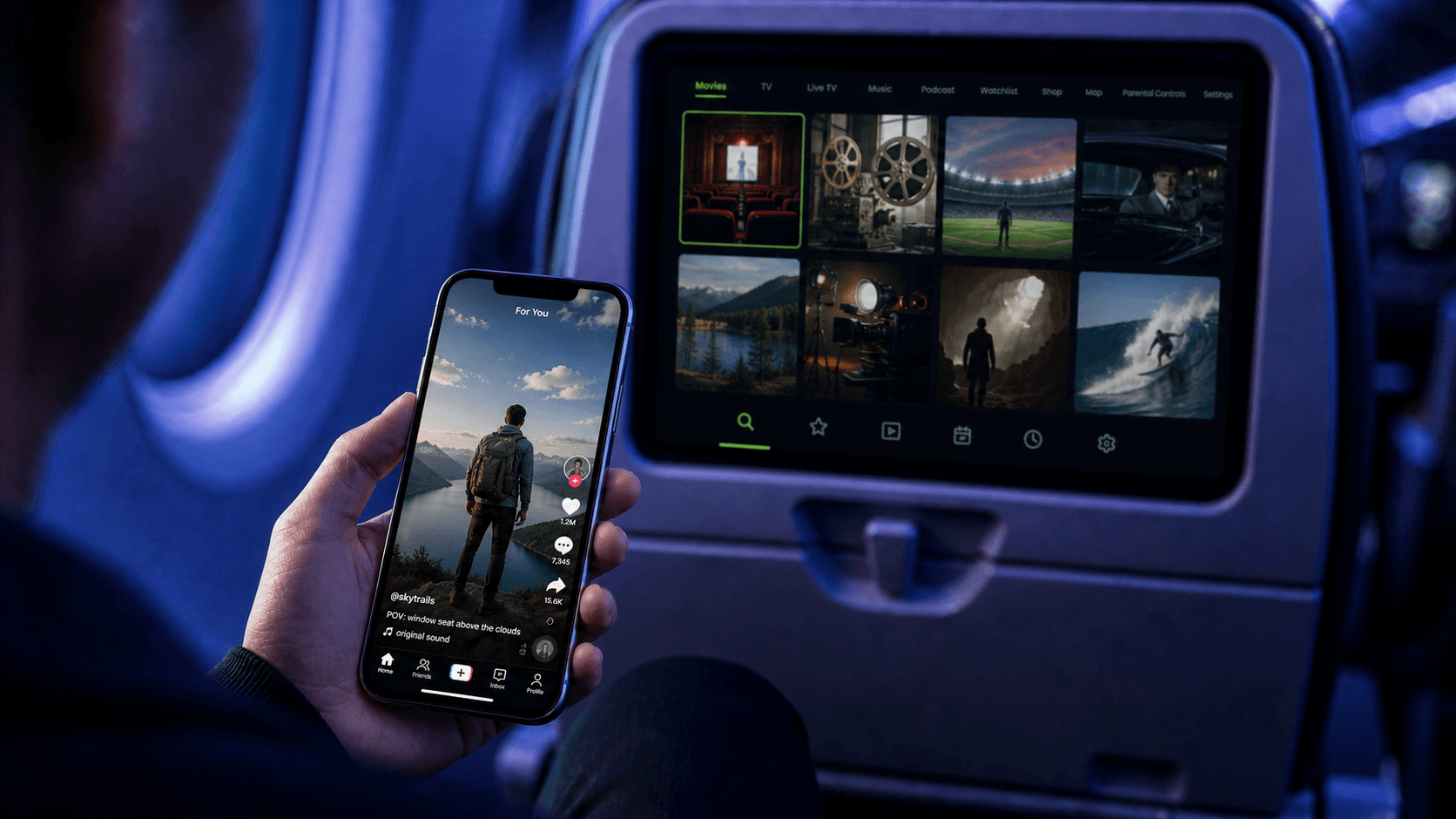
PEDs are not a challenge to eliminate, but a reality to integrate into the inflight experience
The real question is: what does IFE need to become for passengers to use it? And what can it offer that a social media app structurally cannot? The answer, as it turns out, is quite a lot.
Outpacing the algorithm
Premium content requires controlled delivery. The studio films, first-run television and live sports that make up IFE’s most compelling content come with strict licensing requirements. Rights holders require DRM, auditable delivery environments and clearly defined distribution parameters—conditions that open social platforms cannot guarantee.
At IdeaNova, we have spent nearly two decades building secure streaming and DRM systems. The rights holders supplying IFE with its most valuable content have little appetite for platforms they cannot audit or control.
That content supply chain runs through IFE. Period.
Content providers have a role to play as well. Reintroducing early viewing windows for airlines—making content available onboard before it reaches streaming platforms—would immediately restore some of IFE’s premium appeal. Even a brief period of exclusivity could have a significant impact on passenger perception, although I understand this is wishful thinking.
Airlines cannot afford unpredictability. While platforms like TikTok thrive on user-generated, constantly shifting content, that model is incompatible with the cabin environment. Duty of care, corporate policies, and a mixed-age audience require editorial control, not open-ended feeds.
Connectivity may be improving, but it remains variable. IFE should not be. Social media platforms and connected apps depend on consistent bandwidth to deliver a seamless experience. At cruising altitude over the Pacific, or on routes where connectivity is still limited, that cannot always be guaranteed. By contrast, an offline-first IFE platform delivers a reliable experience regardless of satellite coverage or network performance.
Another limitation that is often underestimated is that TikTok lacks specific passenger information that airlines possess. That contextual awareness is one of IFE’s most powerful advantages. When used effectively, it allows carriers to surface content that is not just personalized in a generic sense, but genuinely relevant to the journey.
Personalization does not require connectivity, as we proved when launching Inplay AI earlier this year. Yet personalized content makes passengers feeling understood. As the industry's first offline inflight personalization engine, Inplay AI processes data locally on existing onboard hardware, adapting to individual passenger behavior in real time without transmitting personal data outside the aircraft. That is a meaningful differentiator for privacy-conscious travelers.
Hybrid is here
Passengers are going to keep using their phones on flights. That is not a problem to be solved, it is a reality to be designed for.
The passengers who reach for TikTok are not lost to IFE forever. They are telling us exactly what they want: an experience that flows across the devices they already carry. The answer is not to fight against the phone screen. It is to make IFE the most compelling option in the cabin.
That is the thinking behind Inplay Flow, which lets passengers move between the seatback screen and personal device without losing their place. They can start a film on the seatback, continue it on their phone, pick it back up when they settle back in. For a passenger used to this continuity from Netflix on the ground, its absence is jarring. Its presence is noticed.
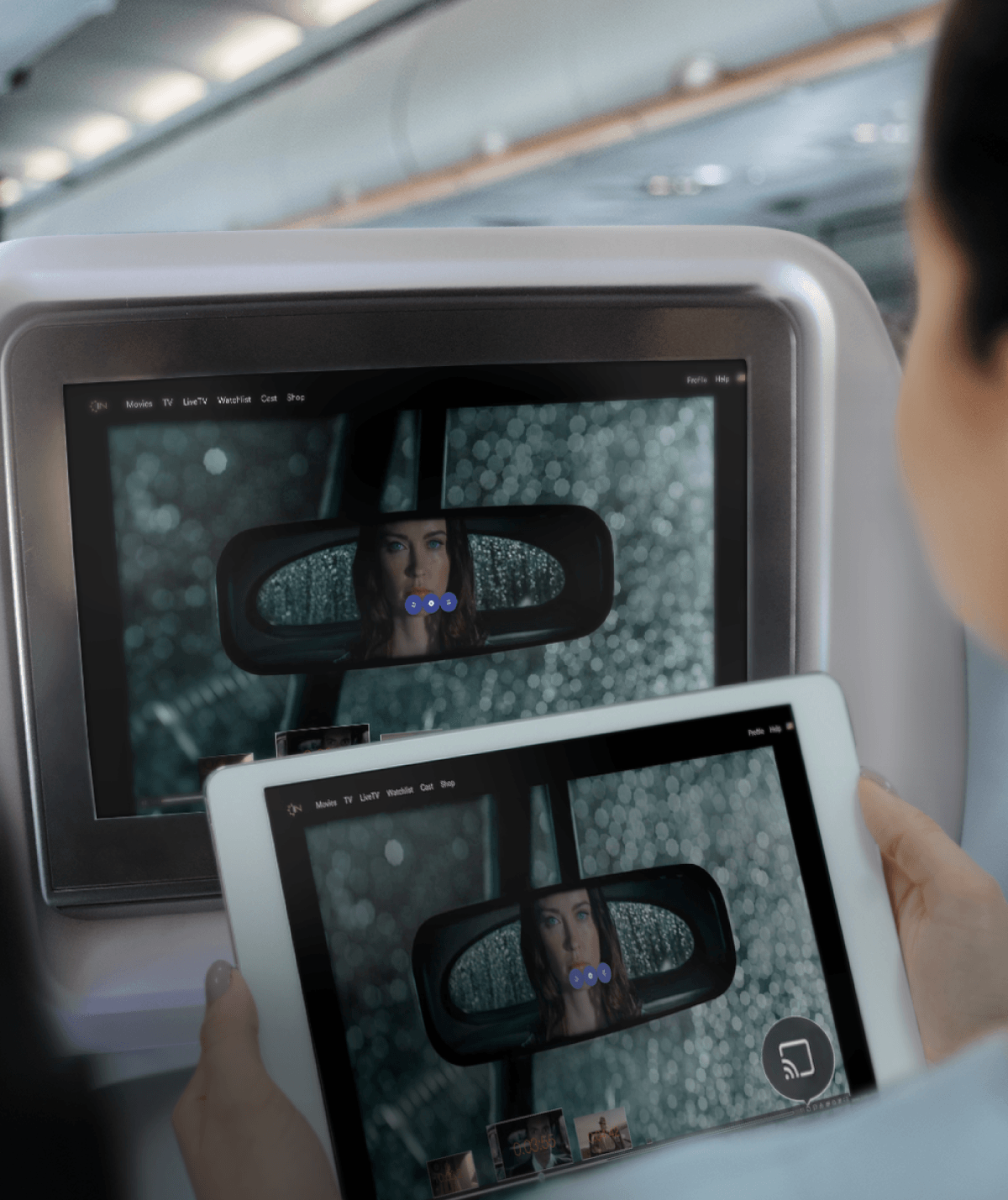
Inplay Flow enables seamless viewing across seatback screens and personal devices, allowing passengers to pause and resume content without losing their place
For routes where connectivity is available, Inplay Edge takes this further by giving passengers access to online content directly through the IFE portal without additional data costs – while improving passenger experience, turning the system into a genuine gateway rather than a closed library.
Combined with offline-first personalization via Inplay AI and robust DRM through our Inplay Suite, these are capabilities airlines can deploy today, in many cases on hardware already onboard. We have done exactly this with carriers such as Delta and United.
The question was not, "Should we rip out the IFE system?"
It was, "How do we make what we have significantly smarter?"
The answer, almost always, focuses on software rather than seatbacks or personal devices.
Software that is smarter
As we wrote in these pages last year, the mission for airlines is clear: to deliver an experience so fluid, engaging and context-aware that passengers come to see IFE not as an add-on but as a defining feature of the journey. This is even more urgent now.
To the worried airline executive–stop treating IFE as a hardware problem. The carriers winning on passenger satisfaction are the ones who have invested in making the content layer smarter, more personal and more consistent across every device in the cabin.
Modernize the software before replacing the hardware. Legacy IFE systems still have significant life if approached correctly. Software upgrades enabling offline personalization, cross-device continuity and secure streaming can make older systems feel modern—without the cost and disruption of a full retrofit.
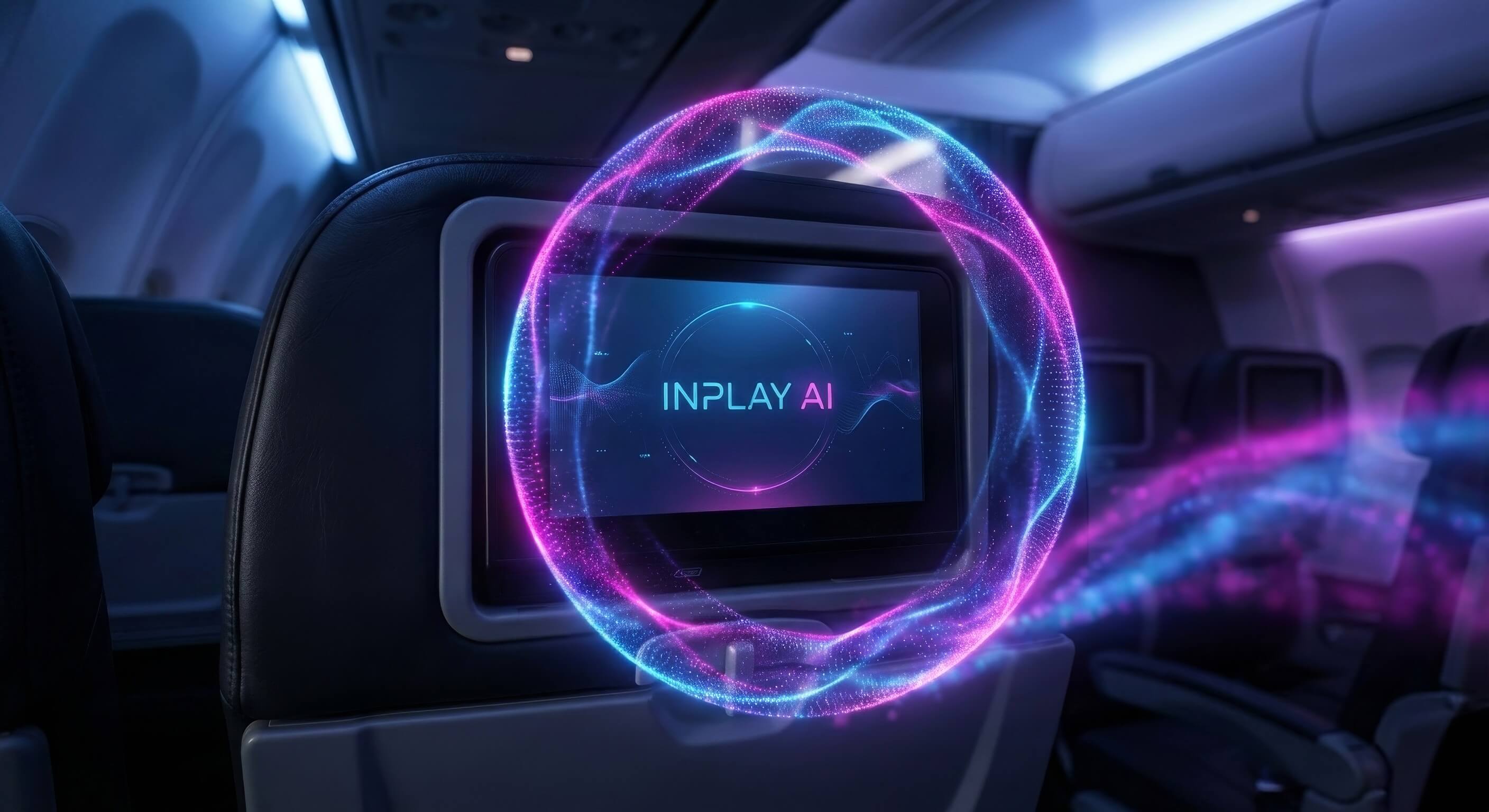
Inplay AI delivers offline, on-device personalization, adapting content in real time without transmitting passenger data off the aircraft
Take passenger data seriously and use it. Airlines sit on extraordinary insight into passengers. That knowledge is the one thing TikTok does not have and cannot get. Using it intelligently, privately, and in ways that genuinely improve the experience is IFE's most durable competitive advantage.
For airlines considering advertising, use what you know. Serving a relevant ad to a profiled passenger on a known route is a fundamentally better proposition than a generic impression, for both the passenger and the advertiser.
Treat IFE as an experience layer, not a check box. The best implementations are not just content libraries with a remote. They are an integrated part of the airline's relationship with the passenger — one that starts before boarding, evolves through the flight and creates moments that make people feel genuinely looked after.
Many airlines are already heading this way. Seeing your name on the screen when you sit down is a small thing, but it signals something larger — that the airline knows who you are and is paying attention. That is just the entry point. The deeper opportunity is using that knowledge to serve passengers the most relevant content, products and services throughout the flight.
The honest answer is that airlines need safety, reliability, editorial control and premium content that only a purpose-built IFE ecosystem can provide. The real competition is not IFE versus social media, but between systems that have evolved with passenger expectations and those that have not.
The gap is closable. The tools and data exist. What is needed now is the will to use them.
