
Panasonic bridges IFEC gaps with retrofits, LEO connectivity and self-service tools
This is a special feature from the May 2026 Post-AIX/PAX Awards issue of PAX Tech, on page 76.
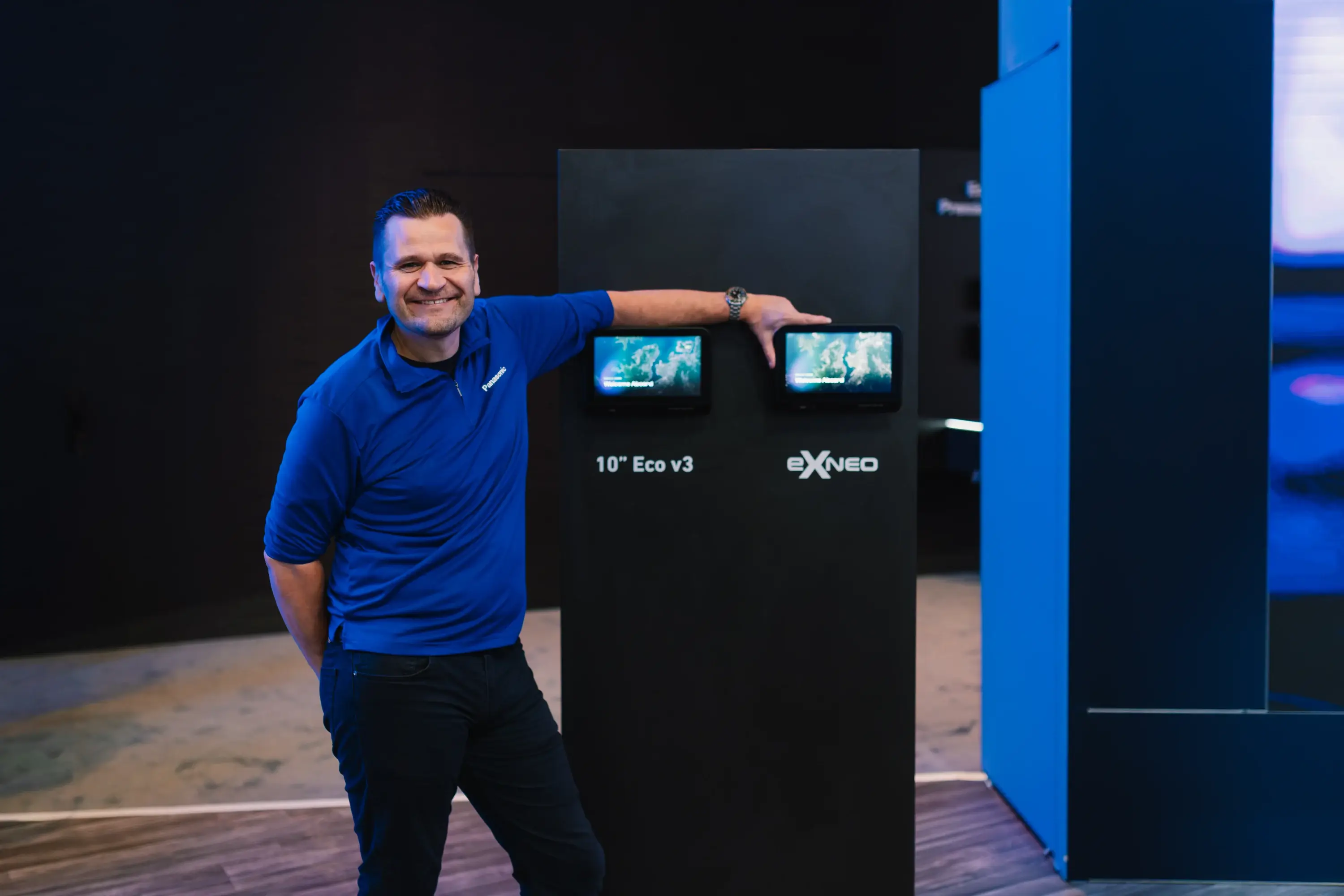
Panasonic’s Andy Masson with exNeo at AIX 2026 in Hamburg, Germany
Panasonic Avionics Corporation (PAC) is signaling a major step forward in closing the longstanding gaps in inflight entertainment (IFE) and connectivity, providing updates on Astrova and unveiling eXNeo as an upgrade to its legacy X-series IFE systems. The company also recently announced LEO satellite partnerships, reflecting the industry-wide push to bring an on-the-ground IFEC experience to passengers in the cabin.
Reviving legacy systems
Andy Masson, Senior Vice President Product & Strategy, PAC, underscores Astrova as the company’s most popular IFE platform to date.
“It has had an enormous response in the market,” he says. “It is lightweight, modular and upgradable, which is lowering the total cost of ownership significantly.”
Panasonic also launched eXNeo at Aircraft Interiors Expo last month, which Masson coins as a “pragmatic product” for airlines that already have legacy Panasonic X-series systems onboard. eXNeo offers carriers that cannot upgrade the seats or delivery lines at present a chance to bring a product with the same capabilities as Astrova onboard.
eXNeo is a seatback modification that minimizes certification efforts, helping airlines accelerate deployment while reducing complexity and downtime. It uses existing harnesses and interfaces to simplify installation, reduce aircraft downtime and minimize cost. The product will be available to existing Panasonic X-series customers for retrofit, bridging the gap with newer fleets that feature Astrova and Converix.
The new in-seat monitor leverages the latest generation CPU and GPU technologies available. Storage and RAM are increased, offering up to eight times more than older X Series monitors.
“This is the digital experience of Astrova on the X-series in terms of capability,” Masson explains. “We are doing a one-time replacement of all the CPUs, GPUs, RAM and other componentry and the X-Series. It will not have an OLED screen, but it has the compute capability of Astrova.”
As part of the retrofit program, Panasonic will install the eXNeo system by removing existing onboard monitors and replacing them with new units, while also upcycling the legacy equipment.
“We are constantly working on how to improve the market, how to improve our delivery process,” Masson says. “We are never resting on our laurels.”
No dead zones
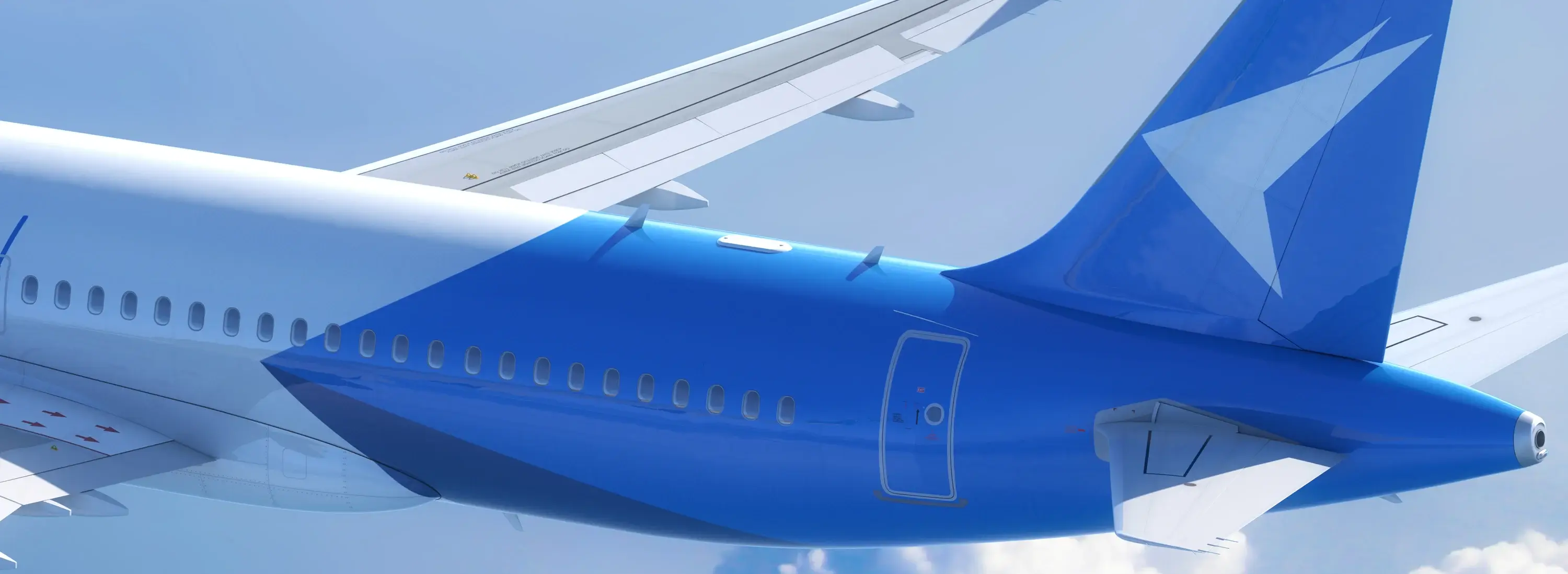
In February, PAC signed an MoU with Spacsail to explore opportunities to add Spacesail’s LEO satellite constellation to Panasonic’s IFC global network
As for inflight connectivity, Panasonic is moving into multi-network LEO connectivity. In February, the company signed a memorandum of understanding (MoU) with Shanghai Spacesail Technologies (Spacesail) to explore opportunities to add Spacesail’s LEO satellite constellation to Panasonic’s inflight connectivity global network.
“We already have our agreement with Eutelsat OneWeb for LEO and we fill in the gaps with GEO satellite capability,” Masson explains. “Spacesail is going to be imprinting into our network, so you will be able to use both networks depending on where you fly.”
As a result of the partnership, passengers will no longer experience connectivity gaps when flying through regions not currently covered by Eutelsat’s LEO network, including China.
“We will be able to go to a different LEO network to provide that consistent global high bandwidth, low latency coverage,” Masson explains.
Interactive updates onboard
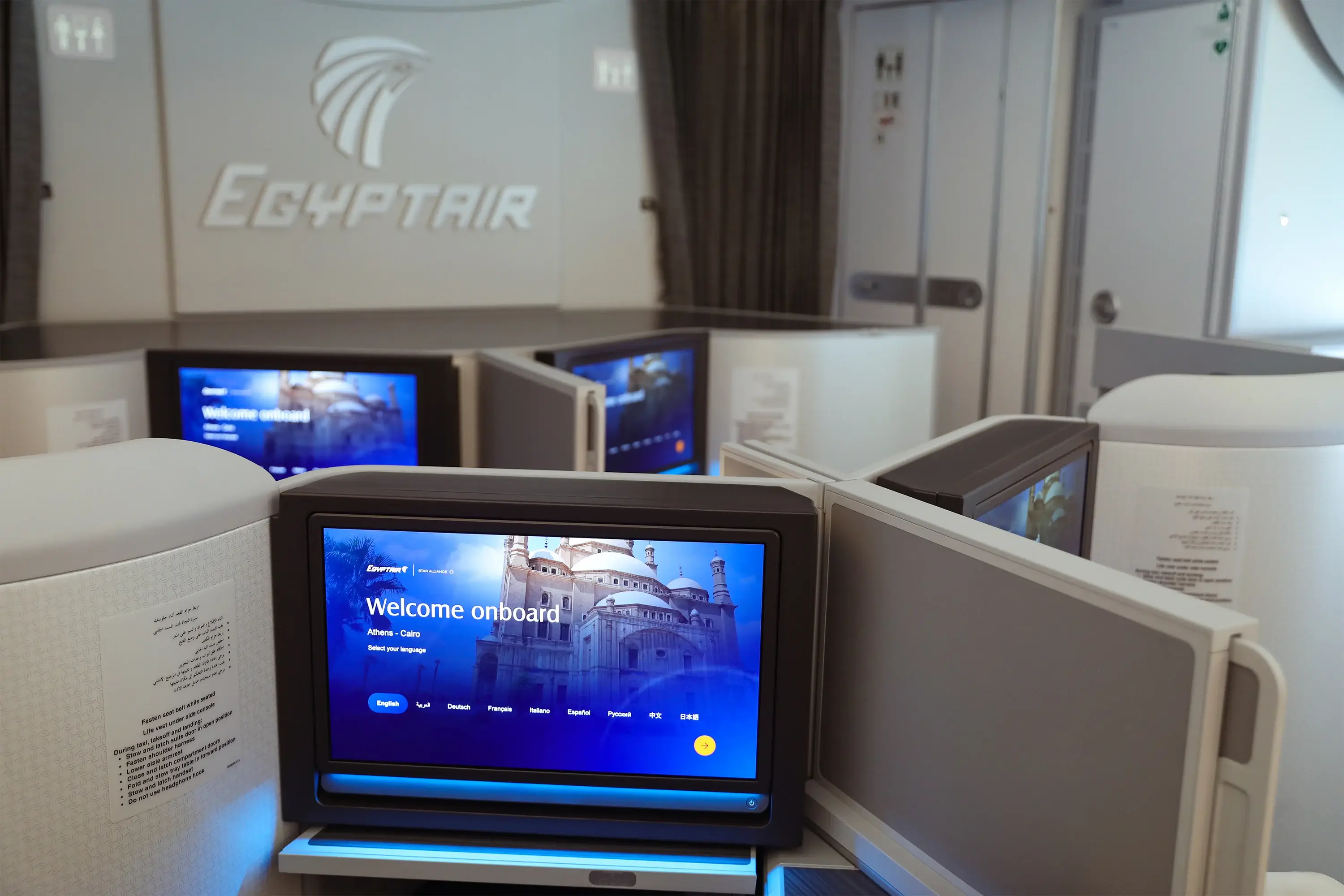
Panasonic’s Astrova IFE on EgyptAir
Panasonic Avionics is also bridging the gap between ground-based digital capabilities and onboard systems with its fully integrated IFE interactive design and publishing tool – Modular Interactive (MI). In March, EgyptAir became the first airline to fly globally with MI onboard.
MI is the industry’s first interactive authoring and publishing platform, and is a key part of Panasonic Avionics’ vision to redefine the inflight experience and integrate IFEC as a third digital channel for airlines. The cloud-based platform enables EgyptAir to update and tailor its inflight experience quickly and seamlessly via a flexible, modular architecture.
Masson calls MI “a self-service tool” for airlines.
The tool allows airlines to test variations of onboard content and layouts across individual aircraft, analyze engagement through A/B testing and then seamlessly roll out optimized updates fleetwide over the air without requiring manual installation. He notes that because it is an editing tool, it continues to function efficiently onboard as monitor sizes scale up.
MI also offers an opportunity for EgyptAir to better understand passenger habits and preferences. Panasonic supplies airlines with comparative IFE engagement data across routes with and without LEO connectivity, helping the carrier to make informed strategic decisions.
“It has performed significantly above expectations, both in terms of its robustness and its reliability,” Masson says.
