
RAVE Aerospace builds on seatback success
This is a special feature from the April 2026 AIX Hamburg issue of PAX Tech on page 68.
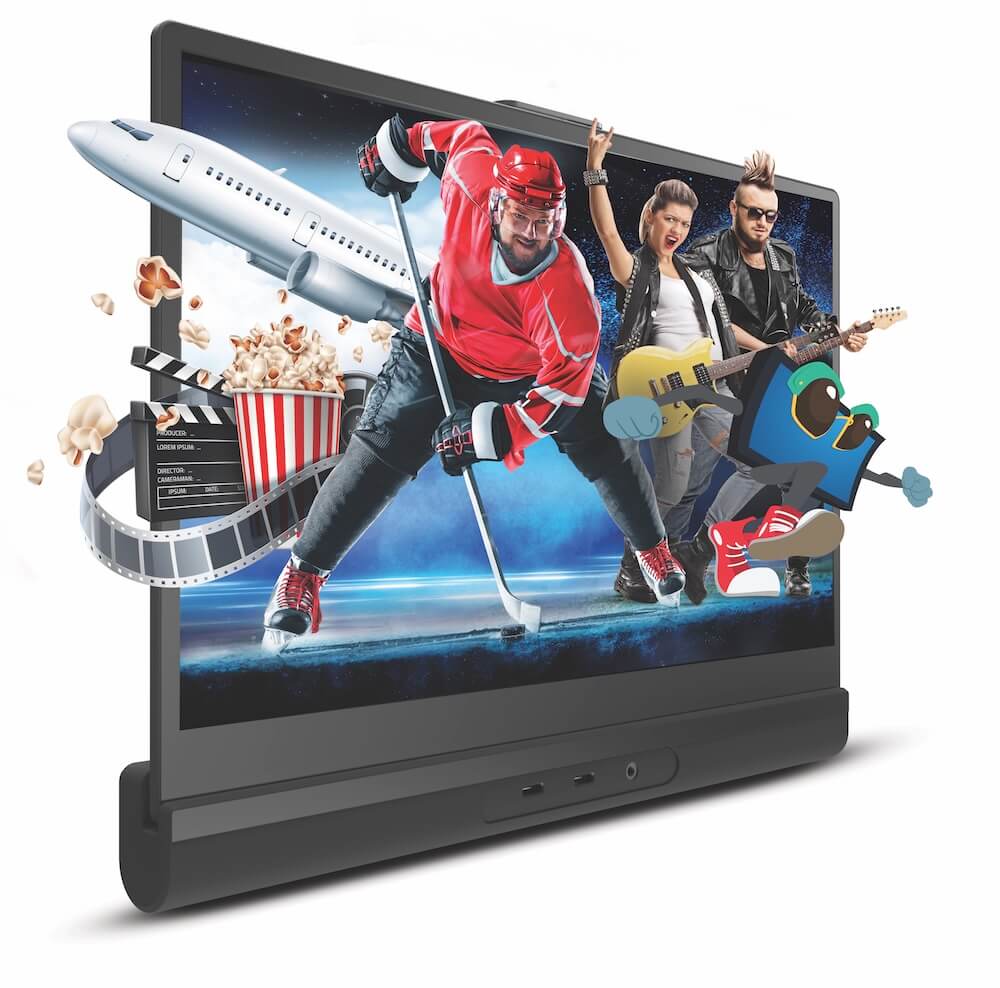
RAVE is making a shift to support its customers in driving consistency with an open platform approach
Following the successful acquisition of Safran Passenger Innovations by Kingswood earlier this year, SPI has been renamed RAVE Aerospace, and will continue to build on its two-decade strong RAVE brand.
Amid this transition period, Ben Asmar, Vice President, Products and Strategy, RAVE Aerospace, says that in the context of data-driven IFE, seatback systems are the “aggregation point,” making them a critical focus for airlines in the age of the connected aircraft cabin.

Ben Asmar, Vice President, Products and Strategy, RAVE Aerospace
“Seatback IFE systems give airlines a really interesting opportunity to bring their brand to life in front of a passenger,” he tells PAX Tech. “Suppliers, like RAVE, have to build compelling digital experiences that convince people to go and use that channel, because it drives value for the airline. If there is a channel that is not interesting or does not have what the passenger wants, they will use the internet and their phone and disappear into the ether.”
Therefore, creating an engaging experience for the passenger that aligns with the airline’s brand and brings multiple touchpoints together, is key for suppliers. In future, Asmar suggests the seatback screen will do more than entertain, becoming a driver of onboard retail and airline loyalty programs.
Aligning architecture and digital strategy
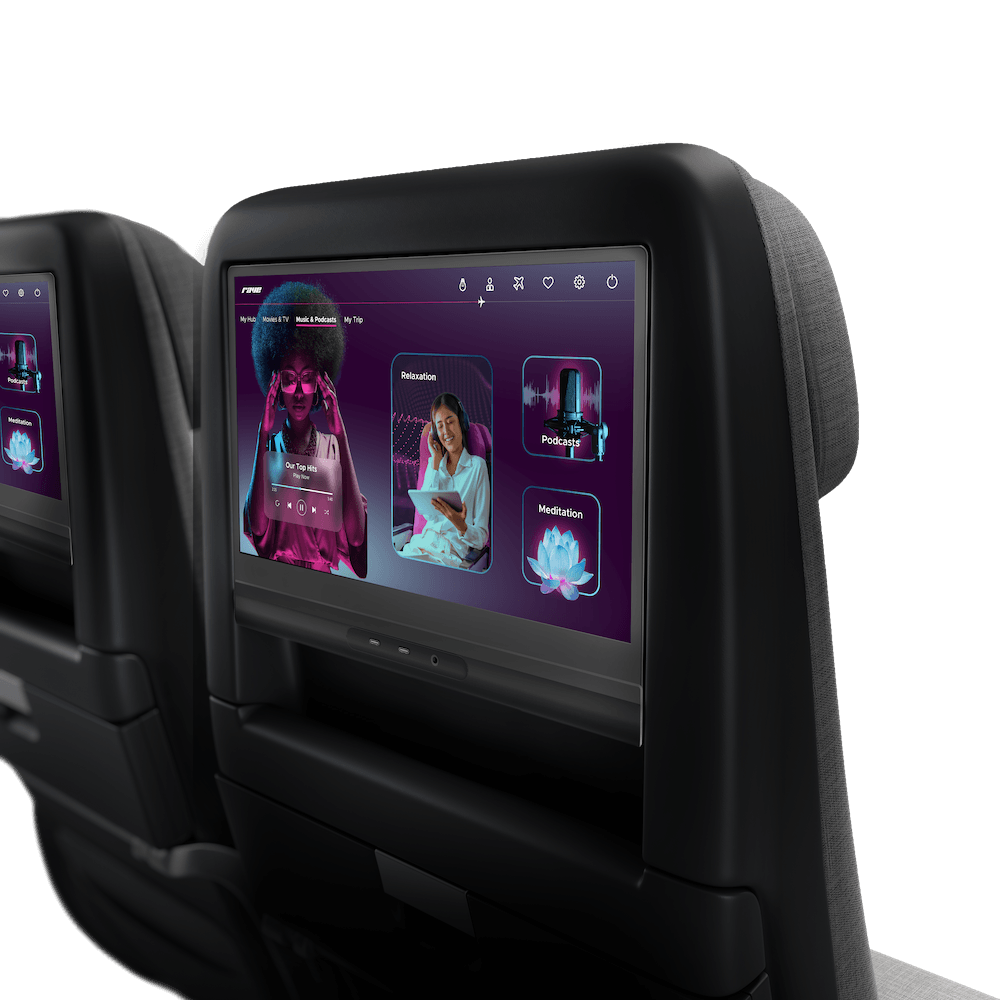
RAVE Ultra OS seatback IFE system
In terms of airlines’ IFE architecture and broader digital strategy, Asmar says the two must be closely aligned to engage passengers.
“A lot of airlines are appointing Chief Digital Officers. That is not by mistake. I think these things used to either sit within the IT department or in a CTO role. It is evident that now someone needs to be looking at digital strategy across the board,” he explains.
RAVE is doing exactly that. Asmar says the supplier is examining its digital strategy and how that plays into supporting airline customers. He emphasizes the importance of an integrated approach.
“If you are building a website, that website should have continuity with your app. The app should have continuity with the IFE system. The IFE system should have continuity with the app as you get off the aircraft. It should know that you are departing and taking the next part of your journey. But also, remember for your return flight or your next flight what you did last time,” he explains.
This type of continuity helps build more meaningful passenger experiences and allows for personalization specific to each user. In turn, this can drive loyalty for the airline.
“At the end of the day, I think all airlines see loyalty as the winning recipe for continued revenue,” he says.
For Asmar, the loyalty thread ties right back into the IFE system. While he calls the personalization onboard today “rudimentary,” there is a potential for next-level engagement inflight where passengers are buying flights or burning points onboard, taking those actionable next steps while traveling.
Futureproofing with modularity
The ability to independently update, upgrade or replace various hardware and software components of IFE systems is integral to a system’s longevity. Asmar calls mixed fleets a challenge, particularly when there is IFE equipment onboard from multiple suppliers, resulting in differing passenger experiences across the network.
“In the past, the RAVE system has been a standard system. We make products that are modular and can be put together in a certain way, based on a set of standards,” he explains. “Our user interface is common and while it can be configured and set up brand-wise for a particular airline, we have never gone down the path of a custom UI because that has not been our goal for our product concepts.”
But now, RAVE is making a shift to support its customers in driving consistency with an open platform approach. This essentially means inviting other third-party developers to make applications or UIs on top of the RAVE platform.
Asmar says that RAVE understands that to move at speed in the aviation industry, IFE suppliers cannot be responsible for building every software element or every application onboard.
“This approach allows us to have our customers harmonize their experience across multiple suppliers’ systems,” he explains. “The RAVE system is still standard. And then the UI is using our APIs to pull the RAVE features into a custom UI without the compromise of having to customize our underlying software. The openness is important in driving that consistency across digital ecosystems.”
Asmar says the goal for RAVE is to implement this approach to as many generations of product as possible so that all airline customers, regardless of the age of the equipment, can deliver a consistent passenger experience across all fleets.
