
Panasonic Avionics marks Astrova milestones amid Middle East growth
This is a special feature from the February 2026 Pre-AIX/Middle East Report issue of PAX Tech, on page 22.
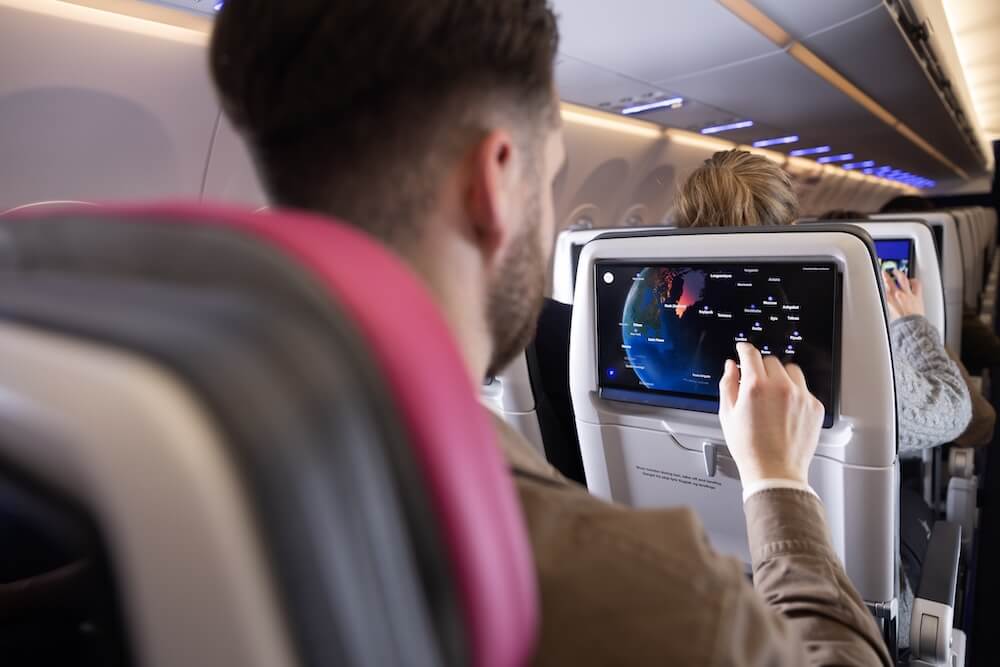
Panasonic closed out 2025 with a significant milestone as its Astrova IFE solution achieved 100 individual airline programs across 30 airlines
Panasonic Avionics Corporation (Panasonic) closed out 2025 with a significant milestone as its Astrova inflight entertainment (IFE) solution achieved 100 individual airline programs across 30 airlines.
Speaking to PAX Tech, Andy Masson, Senior Vice President Product & Strategy at Panasonic Avionics Corporation, says the achievement is a strong validation of Astrova’s design philosophy and strength in a highly competitive market.
Among its customers are Emirates and flydubai, wins that Masson says underscore Astrova’s strong momentum, with adoption in the Middle East outpacing Panasonic’s previous IFE solutions.

Andy Masson, SVP Product & Strategy, Panasonic Avionics Corporation
“We are talking about a region that continues to expand its influence within the global aviation market, showing no signs of letting up and making it an increasingly important area for Panasonic Avionics to establish and grow a strong footprint.”
He continues, “Importantly, our offerings in the region extend beyond IFE and Astrova. When you combine Panasonic Avionics’ inflight connectivity (IFC) solutions and our Panasonic Technical Services (PTS) team, which is the world’s most extensive MRO network, it positions us strongly to support airline partners end-to-end.”
With its repair station in Dubai and a line maintenance station in Beirut, Panasonic is uniquely equipped to deliver responsive, localized support across the Middle East, reinforcing its position in the region.
In addition to Astrova, Emirates has also selected Panasonic Avionics’ 3D moving map, Arc™, while flydubai has adopted Converix™, Panasonic’s new open and neutral application-hosting platform.
As Masson explains, Converix provides a complete, aircraft-wide solution for non-safety-critical services, supporting IFEC integration, cabin and galley operations, lighting and other in-cabin applications.
“We see Converix as a gamechanger in the industry and evolving the market for the next decade through its core elements, including the AI Virtual Assistant and Developer Platform,” he says. “These tools will allow airlines to maximize digital engagement, drive loyalty economics and improve operational efficiencies.”
Masson also highlights that Converix makes installation and long-term upgrades far simpler for airlines and supports smoother integration between IFE, connectivity and data services.
“This positions flydubai to deliver a more seamless experience for passengers while also giving airlines smarter tools and better operational data. Ultimately, it lays an important foundation for the next generation of connected cabins, where systems work together more intuitively across the entire aircraft,” he notes.
Despite targeting different markets, Masson says both Emirates and flydubai made it clear to Panasonic that passenger expectations are becoming more demanding with higher levels of expectation for top quality inflight engagement.“Airlines today, whether they are full-service or more cost-focused, are under pressure to reduce total cost of ownership while keeping up with fast-moving passenger technology expectations,” he explains.
In the past, airlines had to choose cabin technology years before an aircraft entered service, often leaving IFE systems outdated from day one. Astrova changes that by letting airlines upgrade individual components over time, ensuring passengers enjoy a fresh, up-to-date experience while protecting long-term investment.
The flexibility is especially valuable for mixed fleets and different operating models. Full-service carriers can deploy premium configurations, while low-cost or hybrid airlines can choose a more streamlined setup and still benefit from the same underlying platform. The system is also designed to be retrofitted easily and cost-effectively, which reduces downtime and operational disruption.
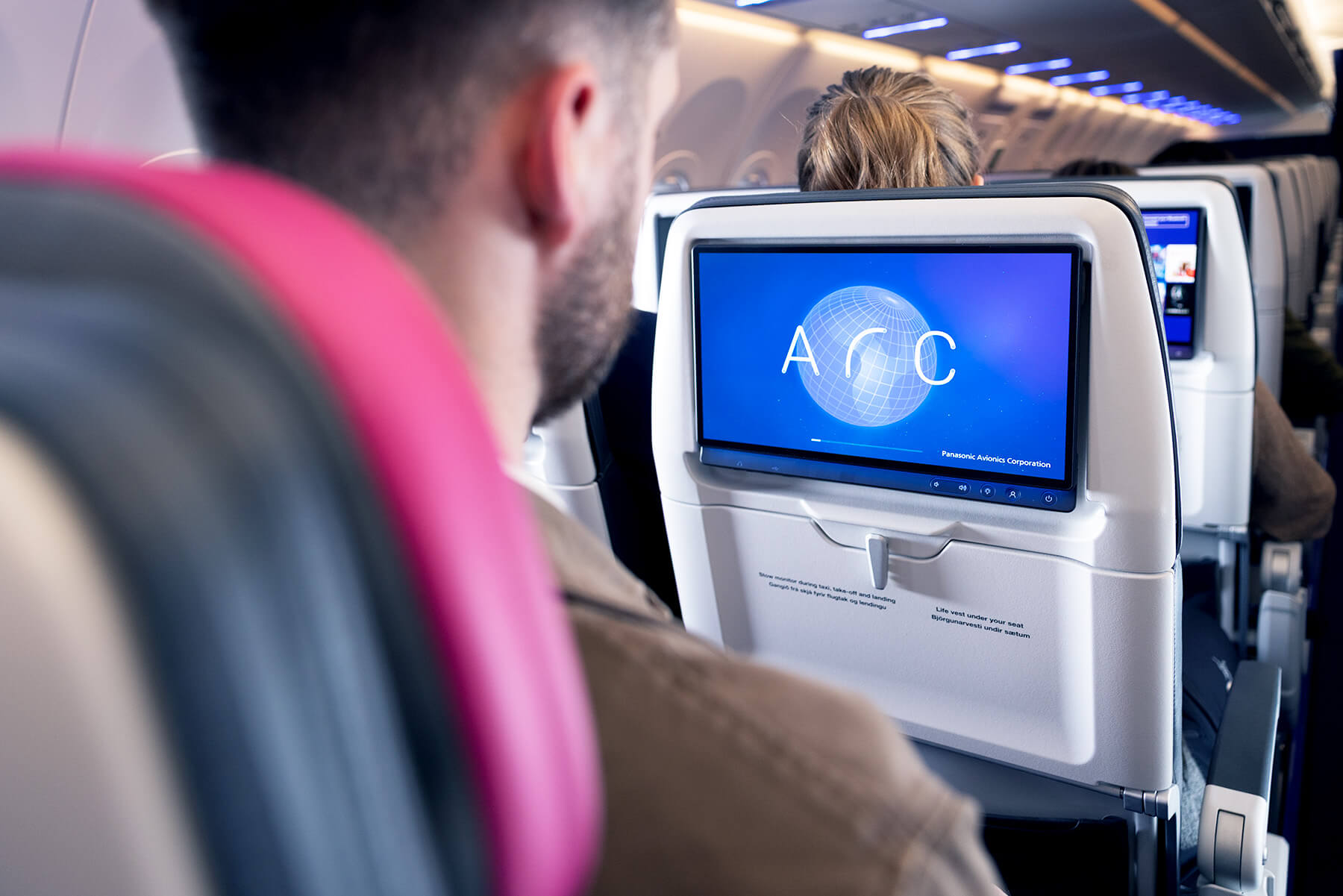
In addition to Astrova, Emirates has also selected Panasonic Avionics’ 3D moving map, Arc™
In conversation with PAX Tech, Masson says that the airline programs and expansion in the Middle East are both key milestones in Panasonic’s long-term vision for the future of IFEC. At its core, that vision is about transforming IFEC from a standalone cabin system into a fully integrated digital platform that airlines can use to enhance passenger experience, improve operations and unlock new sources of value throughout the life of the aircraft.
The rapid adoption of Astrova underscores a broader industry shift, with airlines moving away from static, one-time technology investments. Masson notes that carriers now “want flexible, scalable platforms that can evolve alongside changing passenger expectations, business models, tailored to their own digital strategies.”
Growth in the Middle East highlights this trend. “The region’s airlines are among the most innovative in the world when it comes to cabin experience,” he says, pointing to the adoption of Astrova, connectivity solutions and platforms like Converix as evidence of a strong appetite for integrated, data-driven IFEC ecosystems.
Combined with Panasonic Avionics’ global connectivity capabilities and full lifecycle support, Masson emphasizes that the company is positioned to serve airlines not just today, but throughout the entire life of the fleet.
