
Rosen Aviation advocates for collaborative innovation
This is a special feature from the September 2025 APEX Global EXPO issue of PAX Tech, on page 24.
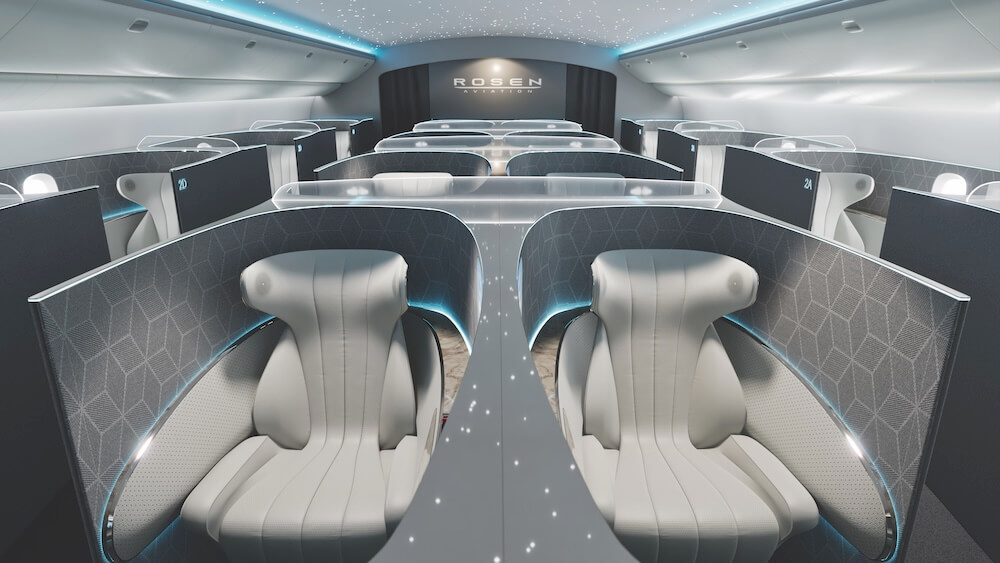
Rosen's Maverick VR First Class / Business Class demo with AudioSphere
There is a telling sentence on Rosen Aviation’s website: “Rosen’s mission is, simply, ‘Advocacy,’ which forms the basis for the way we are organized, the way we think and the way we behave.”
As Lee Clark, Senior VP Strategy, explains, this is more than just a statement of purpose for a company with more than four decades of expertise behind it. “We know the OEM relationship and know how to make it successful for both parties,” he tells PAX Tech.

Lee Clark, Senior VP Strategy, Rosen Aviation
He highlights the expansive network and ease of communication as just one benefit of working closely in a collaborative partnership with Rosen. “We view ourselves as an integrated element within the customer’s organization, not just a team assigned to an account. Project collaboration and technical support are as easy as walking down the proverbial hall.”
Call on the experts
In a perfect world, Rosen would be involved at the earliest ideation stages, says Clark, long before any drawings, statements of work or engineering requirements have been drafted. While this does happen at times, the company’s point of entry into a project can vary significantly.
According to Clark, the value of being introduced in the concept phase is immense, which is why the company constantly pushes to be brought in as early as possible. Doing so, he says allows Rosen to help shape requirements from a technology expert’s perspective.
“We do not expect OEMs or operators to be experts in contemporary communication protocols, the latest video processing or mechanical analysis of raw sound waves for in-seat audio systems–we expect them to be experts in building and operating safe, efficient aircraft,” he states.
Through that lens, Clark says he wants customers to lean into Rosen more heavily, and trust in the company’s design and delivery expertise.
“Innovation does not happen in isolation, which is why our approach leverages transparency and collaboration within the cabin supplier ecosystem,” he explains.
Short supply, high demand
One of the greatest obstacles in the path of innovation is aligning systems with OEM production cycles and certification processes. The reality, Clark notes, is that evolving cabin technologies, especially in a truly value-added way, takes time and collective resources–two things that are in short supply and high demand for most OEMs and operators.
To overcome this, Rosen first aligns R&D with production and certification road maps. In the example of a customer scheduled for a major block change in five years, and with plans to integrate new IFE or CMS systems, Clark stresses the need to “start working with us to develop solutions now.”
“With how quickly technology evolves, you may only get a small window of opportunity before the process needs to start all over,” he cautions.
The second step is for OEMs and operators to place a heavier emphasis on engineering development, namely non-recurring costs, and to repay development costs throughout the life of the program. As Clark points out, the cost to develop new technologies is rarely small or insignificant, and overcoming this barrier frees up development immensely.
Looking ahead, Clark says that the industry, is doing all the right things, working towards the same goal: satisfied passengers—and more of them.
“It is key to remember that we are all essentially collaborating to solve and overcome the same challenges. We might compete on a micro level, but really our collective successes bring value to us all on a macro level. And not just Rosen and suppliers like us, but OEMs, operators and integrators too,” he emphasizes. “We need to, as an industry, continue to both pursue and celebrate innovation.”
