
Connected cabin transforms passenger experience with content-driven innovation, says IdeaNova

Juraj Siska, CEO at IdeaNova
In the rapidly evolving world of inflight entertainment (IFE), quarterly or even monthly content upload cycles are no longer acceptable by demanding, content-savvy passengers. With the rise of connected aircraft, passengers now have the option to watch content provided by the IFE system or content they are accustomed to watching at home via their personal electronic devices (PEDs). Today, content truly is king, playing a pivotal role in enhancing the overall journey and setting new standards for inflight entertainment and engagement, explains Juraj Siska, CEO at IdeaNova.
To stay competitive, airlines must leverage technology to learn about passengers, their habits, and their journey in order to provide cutting edge content that makes onboard IFE the obvious choice. Siska says technology can assist in maximizing entertainment options while minimizing operating costs associated with content delivery.
Ensuring Frequent Content Updates
The importance of regular content updates cannot be overstated. Low frequency of content updates makes the content less relevant. Technology should allow content to be cached quickly and seamlessly. Content distribution should also be seamless, with minimal or zero operational effort. This can be achieved in several ways.
Fleet management system for seamless content distribution
An effective fleet management system must distribute content to all aircraft whenever connectivity allows, at the cost acceptable to the airline, securely and unceasingly (interruption of content upload should resume from the point of interruption). It must also provide accurate reporting available at the fingertips of authorized users. Automation of content upload allows the creation of the concept of “near live content.” If done frequently enough (for example, daily), it gives passengers the perception of live streaming, even if the content is locally cached. This, of course, requires that every part of the content processing workflow be automated. The removal of manual input is key to meeting demanding frequency and volume requirements, Siska emphasizes.
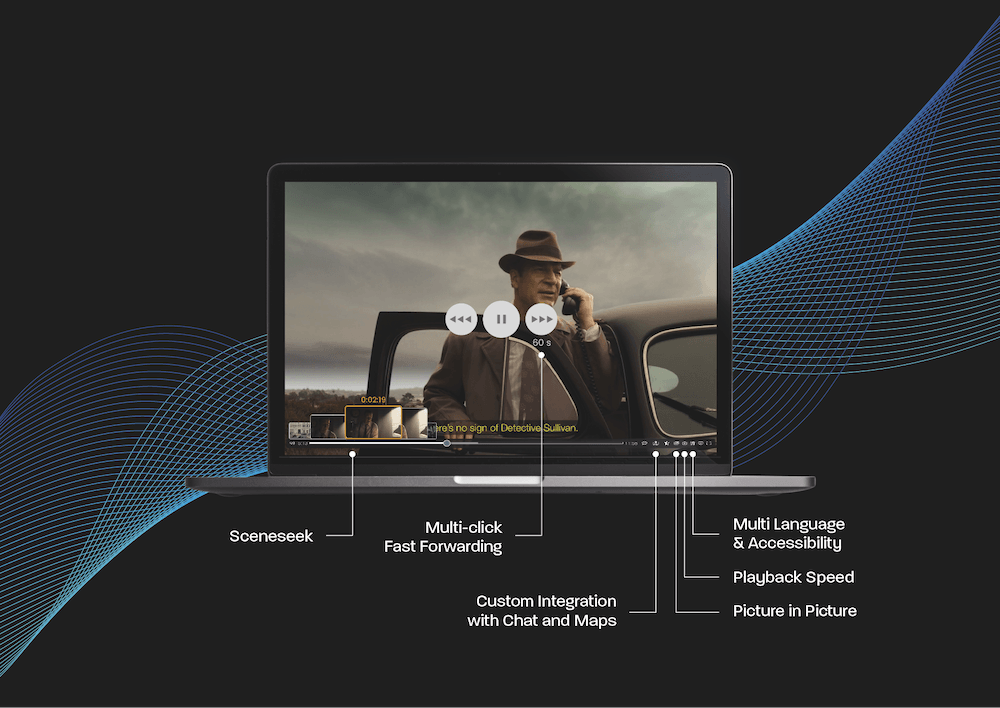
IdeaNova’s Inplay Player is part of the content discovery Inplay Portal platform and is used by millions of passengers worldwide
Smart caching to help keep content fresh
Smart caching is another tool that minimizes effort for persisting content on an aircraft. It allows end users to trigger content upload instead of an operator. Popular content is therefore loaded from a local cache by subsequent users, reducing the strain on bandwidth multiple times for the same content. By leveraging smart caching, airlines can enhance the passenger experience by providing quick access to popular content. This ensures that passengers can enjoy their preferred entertainment without delays or interruptions.
Enhancing the passenger journey by transforming IFE into Info-tainment
Inflight entertainment is no longer just the ability to watch IFE (when the system works). To stay competitive in this space, airlines need to up their game. Otherwise, what once was a captive audience is an audience that will choose other forms of entertainment. Many travellers, especially younger ones, prefer using their pre-loaded content on their personal devices instead of watching airline provided entertainment. IFE must become info-tainment at the fingertips of passengers. The barrier to entry should be minimal, literally a click away, and content must be fresh and unique.
Personalized Content for Passenger
Airlines can further leverage their passenger knowledge to provide content relevant to the destinations, language, or flyer status. Clever integration with the flight map provides another opportunity for airlines to compete with either preloaded SVOD content or streamed content on connected aircraft.

IdeaNova’s smart caching product Inplay Edge loads popular content from a local cache by subsequent users, significantly reducing bandwidth strain and allowing passengers to entertainment without delays or interruptions
AI-Driven Content Personalization
Often the role of AI in IFE is reduced to metadata driven content selection and translation. While these play an important role in the growing number of titles soon to be available to passengers, IFE should not stop there. AI’s ability to generate destination specific content that can be presented to passengers in the language of their choice, match ad content with IFE content, and provide real-time, content (not metadata) based filtering are just some examples of the vast impact AI might have on IFE. AI can generate personalized content based on the passenger’s destination, enhancing the relevance and engagement of the IFE system.
The Future of IFE
The new era of IFE is both exciting and challenging, Siska tells PAX Tech.
"Airlines and IFE providers that embrace technology will gain much more than just positive reviews for a flight; they can create a dedicated following of frequent flyers," he says. "Conversely, those who neglect to innovate risk being left on the sidelines. By embracing the philosophy that 'Content is King,' airlines can create memorable and enjoyable journeys that keep passengers coming back for more."
