
Guest column: Why every airline should be looking at embedded payments
This is a guest column published in partnership with AIX and PEC.
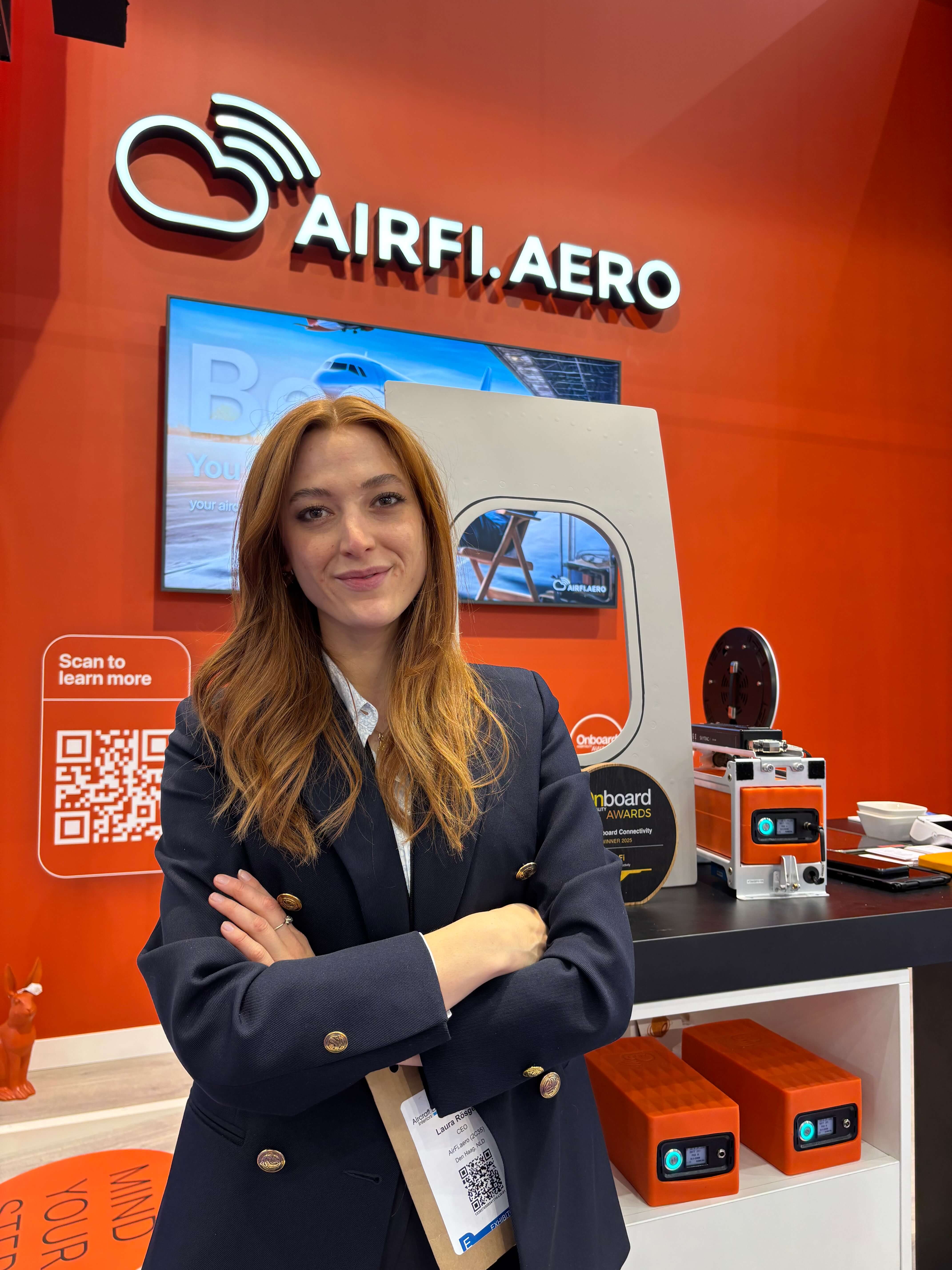
Laura Roesges, CEO, AirFi
Most passengers do not want a coffee badly enough to flag down cabin crew. They will think about it, maybe glance at a menu, but when it comes to catching a crew member's eye, waiting for them to return with a payment terminal, and digging out a card, the moment has passed. The impulse dies somewhere between wanting something and the effort of getting it.
This is the core issue with traditional inflight retail. It is not that passengers will not spend. It is that the existing process comes with too much friction at precisely the wrong time. The solution is not better service or faster crew, it is removing the steps entirely. That is what embedded payments do: they put the purchase inside the experience rather than bolting it on as a separate interaction.
In an aircraft cabin full of strangers, most people would rather go without than draw attention to themselves. Only a small minority will bother, while the rest quietly decide it's simply not worth the effort.
Subtler social cues also play a role. If the passenger sitting beside you happens to be snoozing, you are unlikely to wake them. If your baby is finally fast asleep, you may avoid moving even an inch. If you miss eye contact with crewmembers or feel uncomfortable calling out, you simply wait to avoid perceived awkwardness. Many passengers think, “If the crew comes by, I might order. Otherwise, I will not.” In each case, a potential sale has gone.
This friction affects the crew, too, who already juggle multiple responsibilities and are not primarily retailers. Embedded or order-to-seat payments actually make their jobs easier. Orders could be already collected right after boarding before takeoff or within defined service windows, allowing crew to deliver items in structured waves. For example, hot and cold items can be distributed on separate passes to reduce repeated aisle runs, minimizing confusion, and avoiding awkward moments … such as asking who ordered something or apologizing for stock shortages. With clearer visibility into demand, cabin crews can better manage inventory and expectations.
Self-service payments take this concept further. Passengers browse and order on their own devices during a defined service period. They complete checkout using preferred payment methods or digital wallets, such as Apple Pay, without handing over cards or sensitive information, limiting crew involvement to delivery. The idea is essentially to “Shopify” onboard retail: apply proven e-commerce logic to the inflight environment.
AirFi is well aware of the objections airlines might raise. One is that passengers value personal interaction with crewmembers. However, self-service does not eliminate human contact; it simply removes reliance on brief, rushed interactions to complete transactions. There is also a hesitation around control: if the payment happens on a passenger's own device, it can seem like it sits outside the airline's ecosystem. This hesitation usually stems from unfamiliarity, yet we are at a stage where e-commerce systems are well-established and trusted.
Cost comes up often, but the economics favor self-service. Airlines can shift from investing in hardware to paying transaction-based fees they would incur anyway, and continuous internet access is not required. While we encourage bringing fleets online (and offer a highly cost-effective way to do this with our LEO Connectivity products) to enable real time authorization, payments can also be batched and processed after landing. Real-time connectivity enhances the experience, but it is not essential.
Ultimately, if you make it easy for passengers to spend, more of them will. Not because they are being sold harder, but because the thing that was stopping them was never the price or the product. It was the friction. Remove that, and the revenue follows.
This topic will be explored further in a session at the Passenger Experience Conference (PEC) at the Hamburg Messe on Monday, April 13. PEC takes place ahead of Aircraft Interiors Expo (AIX) on April 14 to 16. For more information and tickets visit: www.passengerexperienceconference.com
