
Quvia puts connectivity performance into perspective
This is a special feature from the November 2025 APEX FTE Asia Expo issue of PAX Tech, on page 17.
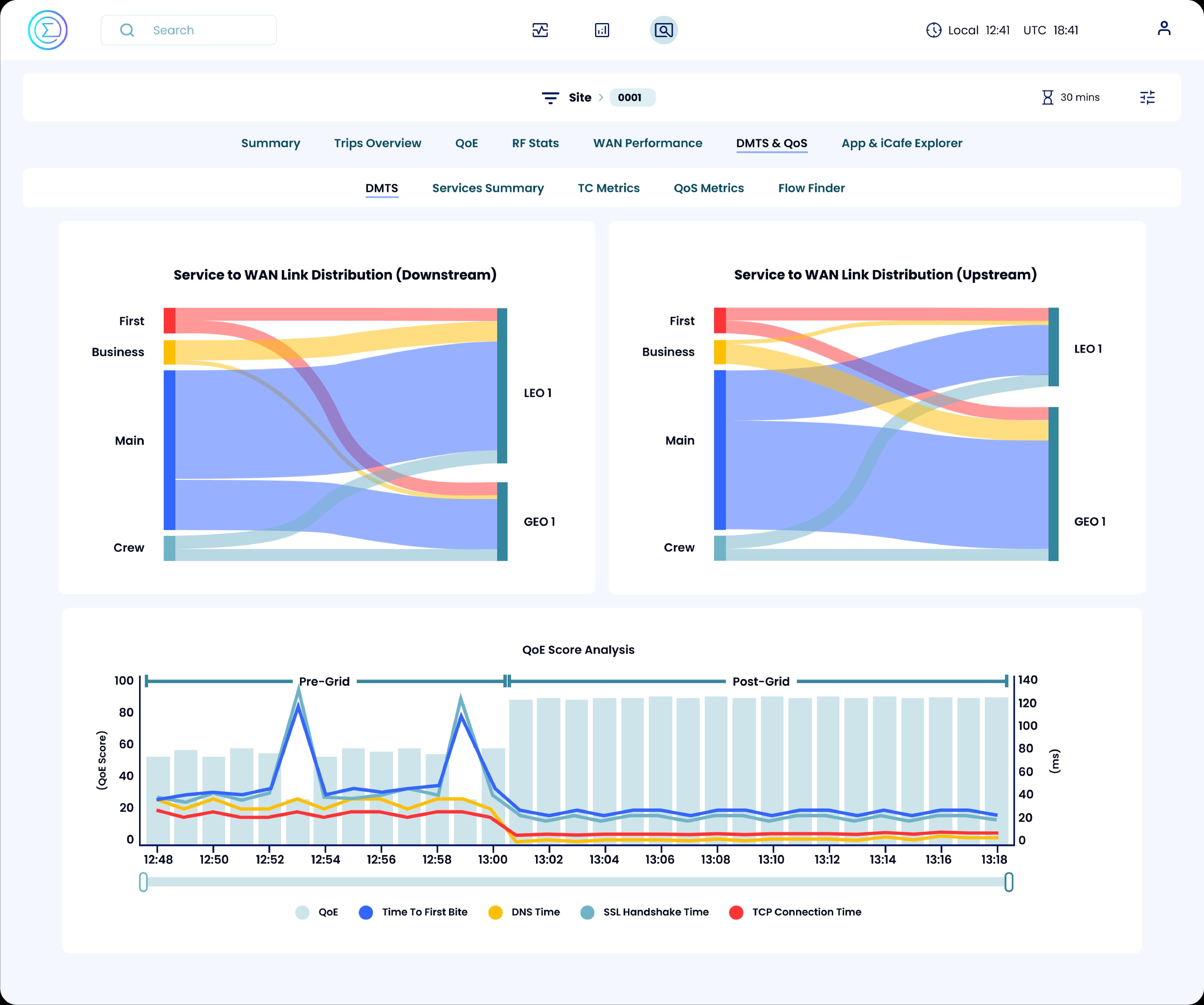
Quvia Grid gives airlines control of the in-cabin network today and a path to multi-link orchestration
The realization that traditional network metrics do not tell the whole story when it comes to
onboard connectivity performance prompted Quvia to look beyond traditional dashboards and reimagine how data is captured and represented.
As Mike Moeller, SVP, Aviation, Quvia, tells PAX Tech, “What is often missing is the passenger’s point of view. Too many tools still focus on the network itself—throughput, latency, uptime—but those numbers do not tell you what is actually happening in the cabin. Instead, airlines have had to rely on anecdotal reports from crew and passengers to understand the onboard IFC experience.”

Mike Moeller, SVP Aviation, Quvia
Quvia is helping its customers move from manual and reactive monitoring to minute-by-minute insight, allowing airlines to access a real-time view of system performance from the passenger perspective, measured by a Quality of Experience (QoE) score.
“That level of visibility matters because even small disruptions can change how people experience connectivity onboard,” explains Moeller. “Passengers do not experience ‘throughput’ or ‘latency.’ They experience whether their apps load, their videos stream or their messages send.”
Quvia was built to capture that real experience and depict how connectivity performs for passengers and crew.
Measuring the passenger experience
Quvia provides feedback in the form of a QoE score, measuring the quality of someone’s digital experience, such as how fast a page loads, how smoothly a video plays and how reliably an app responds. While traditional metrics like Quality of Service (QoS) focus on network behavior, QoE looks at outcomes, reflecting what the user experiences, not just what the system reports.
Moeller calls QoE Quvia’s “north star” for understanding connectivity performance.
“That score is powerful because it speaks the same language as the passenger,” Moeller explains. “If the QoE score drops, it means users are feeling the impact—whether it is congestion, coverage or something else. Airlines can see where and why, and work with the provider(s) to improve the experience.”
Quvia’s Pulse, 360 and Grid products each focus on a different part of the IFC experience and together provide airlines with complete visibility and control. Pulse measures and monitors IFC QoE in real time. It factors in fleet type and demand and produces QoE scores that help airlines assess reliability, manage expectations and identify opportunities to improve.
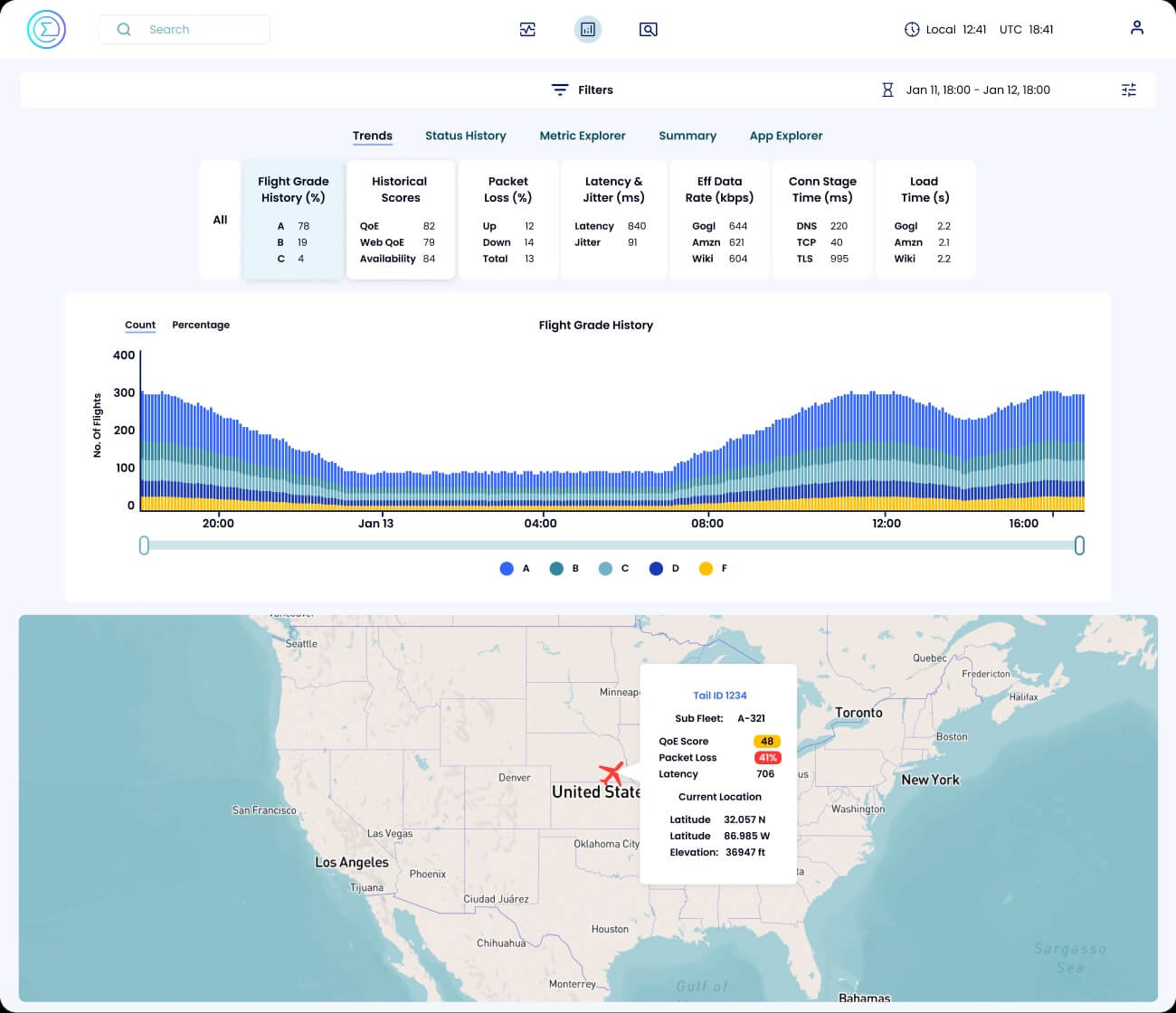
Quvia Pulse measures and monitors IFC QoE in real time
360 provides a deeper operational view, capturing key aircraft data including antenna and WAP performance, connected users and other indicators that explain what is driving performance. It gives airlines additional context to understand what is happening and respond quickly.
Grid gives airlines control of the in-cabin network today and a path to multi-link orchestration. It allows teams to configure onboard network settings, monitor access points and troubleshoot issues in real time, all from a single platform. As connectivity evolves, Moeller says Grid will enable airlines to manage and balance traffic across multiple links and networks, creating a foundation for end-to-end orchestration.
“Used together, these tools create a foundation for how airlines will manage the full digital experience inflight,” he explains. “At the end of the day, it is about grounding connectivity in human experience.”
Making metrics matter
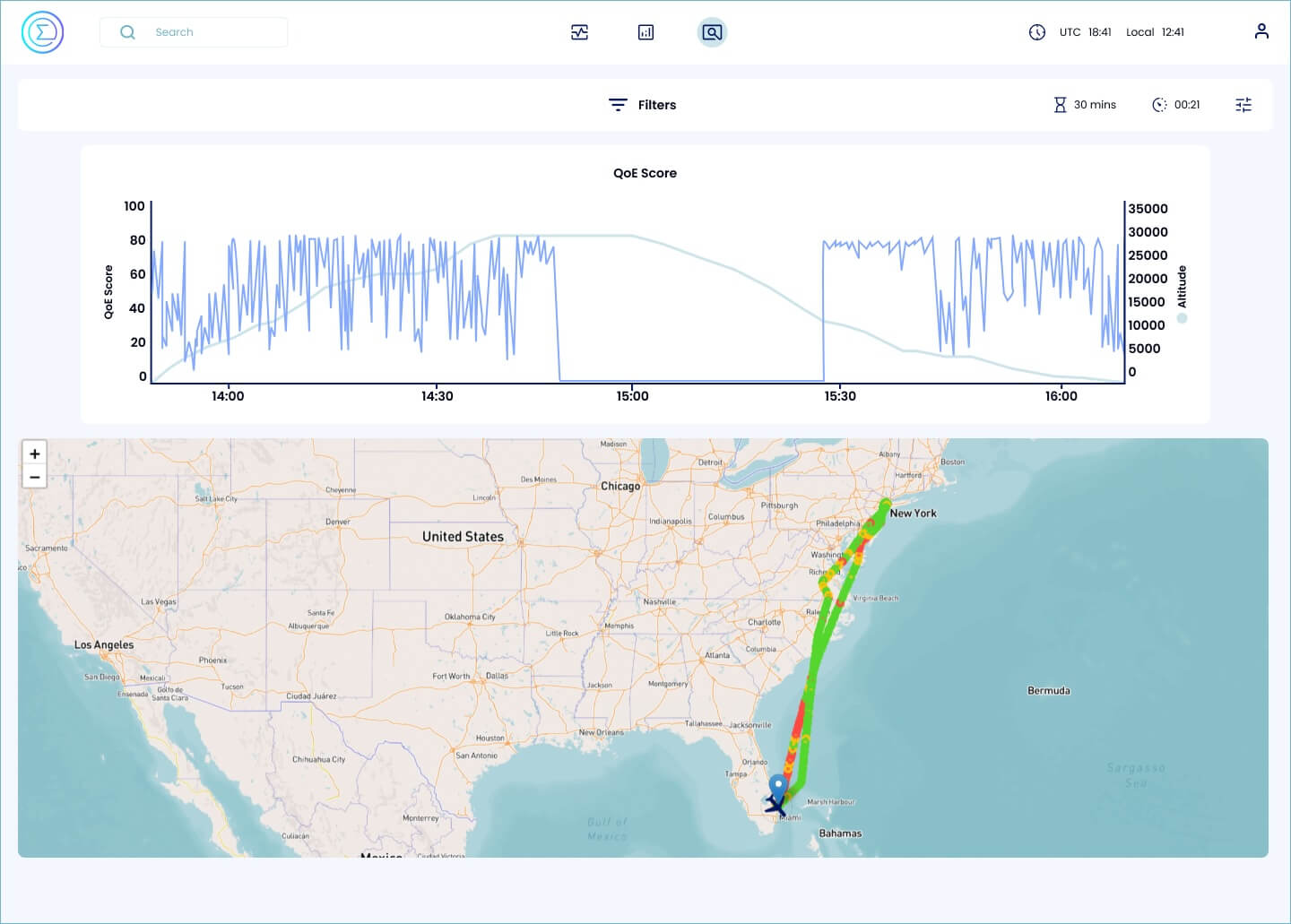
Quvia provides feedback in the form of a QoE score, measuring the quality of someone’s digital experience
As the IFC landscape evolves to include multiple network types, Quvia is ready to adapt and was designed to be network- and provider-neutral from the beginning.
“The shift toward multi-orbit and multi-link systems plays to our strengths because we focus on outcomes—the passenger experience—not just the underlying network,” Moeller emphasizes.
With Quvia, airlines can evaluate how different networks (GEO, MEO and LEO) perform simultaneously and better understand how each contributes to overall QoE. As airlines begin to integrate multiple providers, Quvia can provide a clear, data-driven view of performance across every aircraft and region.
“Our role is to give airlines the flexibility and insight to make that ecosystem work seamlessly for passengers,” says Moeller.
He adds that the convergence of IFC and IFE is the next step for the industry, requiring airlines to understand how passengers use both connectivity and content, not just one or the other.
“Quvia is in a strong position to make that possible,” Moeller reveals. “We are expanding our platform to bring those data sets together, giving airlines a single, real-time view of the entire digital experience onboard.”
With more in the pipeline, Quvia’s goal remains the same: to help airlines deliver digital experiences in the air that work as seamlessly as they do on the ground.
“Metrics only matter if they reflect what passengers actually experience when they fly,” Moeller concludes.
