
Viasat delivers free inflight Wi-Fi in exchange for inflight ad viewing
This is a special feature from the September 2025 APEX Global EXPO issue of PAX Tech, on page 34.
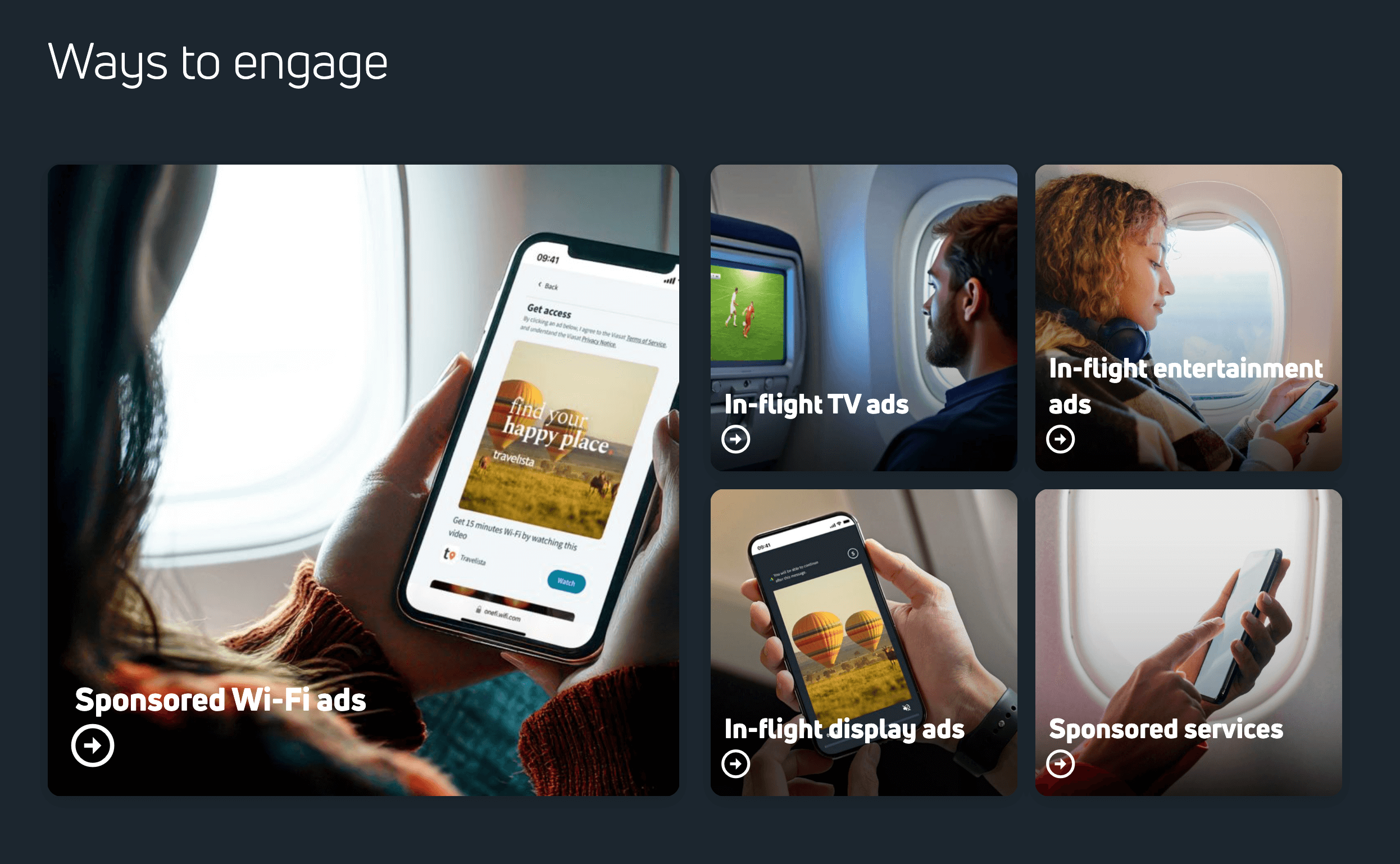
The Viasat Ads platform allows brands to reach airline audiences with digital inflight advertising
Driven by evolving passenger demands and expectations for inflight connectivity, the trend toward free onboard Wi-Fi is growing. While not all carriers are yet offering full, fast, free connectivity, providers such as Viasat offer cost-effective ways to meet this demand.
The Viasat Ads platform allows brands to reach airline audiences with digital inflight advertising and is currently serving 13 airline clients. Through this platform, Viasat delivers millions of free Wi-Fi sessions per month, explains Chris Demange, Vice President, Digital Services and Partnerships on Viasat’s Commercial Aviation Business.

Chris Demange, Vice President, Digital Services and Partnerships on Viasat’s Commercial Aviation Business
“Viasat’s powerful connectivity platform enables monetization options across all channels, including on the airline’s portal and through passengers’ interactions with the inflight property and internet,” he tells PAX Tech.
Viasat entered the market supporting JetBlue’s FlyFi launch in 2013 and has since leveraged years of experience to develop meaningful ways for airlines to realize the full potential of IFC investments.
“It is important to understand that there are many flavors of free; many business models to consider, including options that help the airlines offset the cost of the service,” Demange says.
The flavors of free
The various business models that airlines can use to enable complimentary internet access range from ad-supported models to sponsored Wi-Fi.
Ad-supported models allow passengers to access Wi-Fi services for free in exchange for watching advertisements. Viasat offers a diverse range of inflight ad formats such as IFE pre-roll video ads that play before inflight content, live TV ad-insertions that are placed within commercial breaks of broadcasts, and portal banner display ads that can be seamlessly integrated into the airline's Wi-Fi portal.
“This model drives both passenger engagement and can generate revenue, without compromising the passenger experience. Overwhelmingly, passengers report they are happy with this exchange,” reveals Demange.
In supporting this model, Viasat provides airlines with full-service management of the advertising ecosystem, from advertiser acquisition to campaign activation.
Airlines can also offset the cost of offering complimentary inflight connectivity by securing brand sponsorships for the Wi-Fi service
Viasat’s Connected Partner Platform (CPP) helps airlines monetize connectivity investments by integrating partner applications such as food and beverage or inflight retail. These solutions drive ancillary revenue and help offset the cost of providing inflight connectivity.
According to Demange, one of the most unique opportunities this space offers advertisers is the chance to connect with a captive audience, with minimal disturbances present. In contrast to typical online ads, this results in increased attentiveness and higher levels of engagement.
In addition to accessing a high-value audience, advertisers can also target campaigns to specific destinations or routes to ensure messaging is relevant to passengers.
Finding a balance
While there are benefits of complimentary Wi-Fi for both passengers and the airline, carriers must strike a balance between offsetting costs without negatively impacting the IFE experience. The Viasat Passenger Engagement Survey 2024 reveals that 87 percent of travelers are willing to watch ads in exchange for complimentary Wi-Fi.
“This provides brands with a unique chance to take advantage of what passengers consider a fair deal. Our strategy revolves around seamlessly incorporating ads to ensure a favorable experience for passengers,” Demange explains.
Viasat also uses methods like frequency capping to avoid repetitive advertisements and ensure ads remain contextually relevant and engaging for passengers.
“Our initial goal is to comprehend the airline’s objectives and ambitions. We offer adaptable business models that strike a balance between customer experience and revenue generation,” Demange affirms.
Returns and retention
Demange says airlines typically measure the success of the free IFC model using metrics such as return on investment (ROI), net promoter score (NPS) and passenger loyalty.
While ROI can vary by airline, Demange cites strong results from targeted campaigns—such as one run during January’s Consumer Electronics Show (CES) in Las Vegas—as proof of Viasat Ads’ effectiveness.
The campaign targeted ad inventory on six different airlines, all of which were transporting thousands of attendees to the event. Viasat’s approach included a combination of live TV commercials, sponsored internet and messaging content, and pre-roll video ads.
“By utilizing destination-based inflight advertising, Viasat was able to provide advertisers with a highly appealing and impactful opportunity to reach their desired audience,” Demange reveals.
Viasat tailors its ad-supported model to each airline’s goals. Demange explains that low-cost carriers may use it to offset IFC costs or generate revenue, while loyalty-focused airlines can run ads promoting programs to non-members and keep the experience ad-free for existing loyal passengers.
“We collaborate closely with our airline partners to gain a thorough understanding of their brand guidelines, commercial partnerships and brand identity. A priority is to ensure that passengers are not exposed to advertisements that clash with the airline's brand, resulting in a seamless and unified experience,” he explains.
